I Tested LeadBoba as a Real Estate Lead Generation Tool. Here's What Actually Happened.
Finding new clients is the hardest part of this job. So instead of writing another "best lead generation software for realtors" roundup, I actually opened LeadBoba, searched real markets, and tracked what showed up — property managers, investors, commercial prospects, and everything in between.
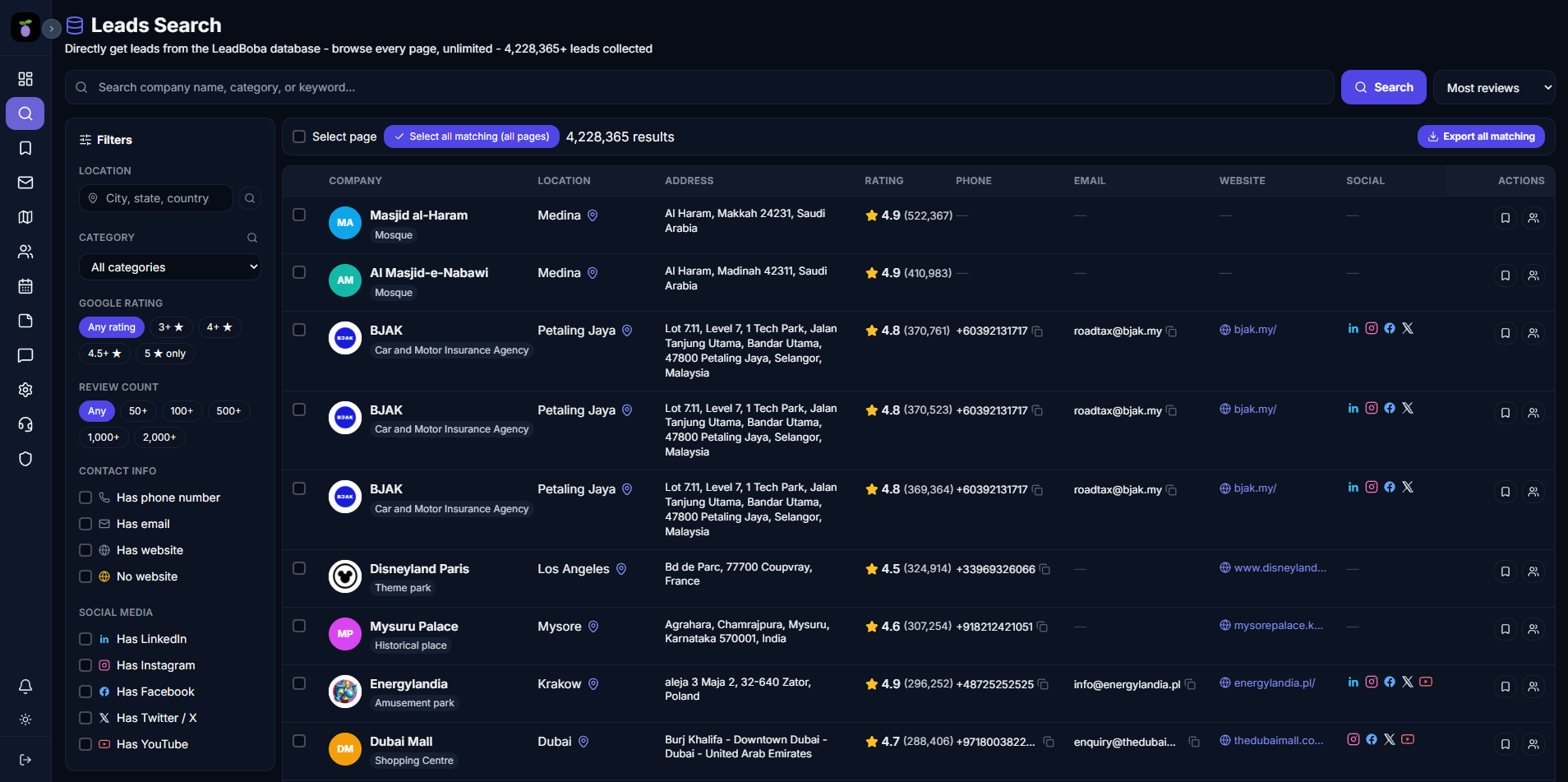
The workspace I actually ran my test searches in
Finding new clients is the biggest challenge for most realtors I know — myself included.
The traditional playbook — paid ads, purchased lead lists, referrals, or manually scrolling Google Maps — is slow, expensive, and doesn't scale well. So before recommending LeadBoba to anyone, I decided to actually test it the way a working realtor would: real searches, real markets, real outreach.
This review covers exactly what I did, what the data looked like, and where the tool fell short — not a marketing pitch.
How I Tested LeadBoba for Real Estate Lead Generation
I ran the same test a realtor would run on day one: pick a market, search for prospects, and see what comes back. My checklist was:
- Can I search by location, industry, and business category without a learning curve?
- Is the contact data current, or is it recycled from an old database?
- Can I actually organize what I find into a workable pipeline?
- Does the AI email tool save real time, or just add another step?
I tested across a few different markets and prospect types rather than a single search, since a realtor's ideal prospect list rarely looks the same twice.
Testing Local Real Estate Prospecting
Real estate is a local business, so this is where I spent the most time. I searched by location, industry, and business category — the same filters I'd use to build a real prospect list for a specific market.
- "Property management companies in London"
- "Real estate investors" filtered by area
- "Commercial property owners" near a target neighborhood
- Local businesses that could become referral partners
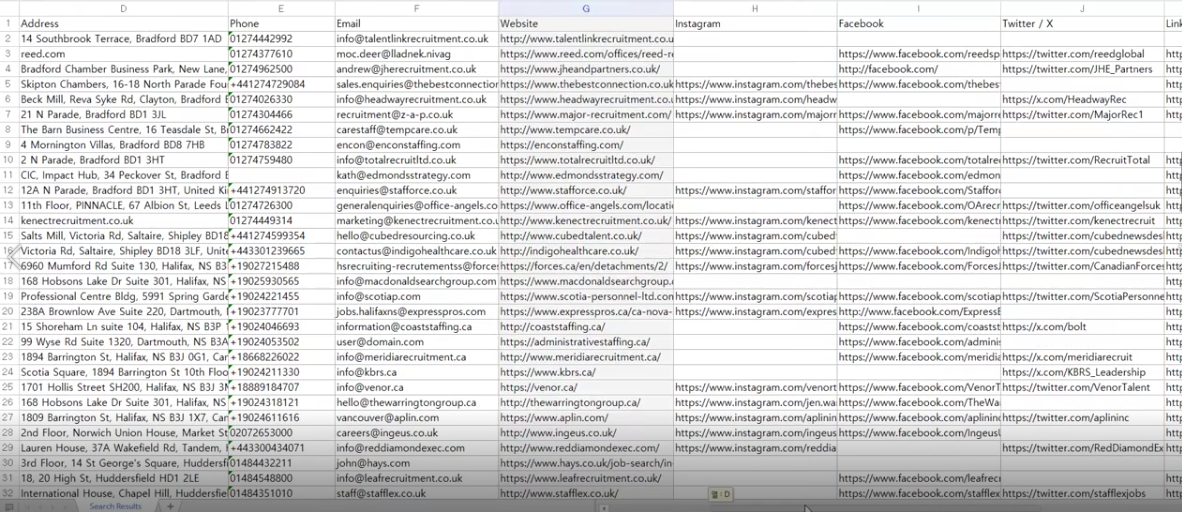
A screenshot of a location-based search (e.g. "property managers in Manchester") fits well here
Each search returned a list I could scan and shortlist within a minute or two — noticeably faster than manually scrolling Google Maps, which is what I was doing before.
Testing Data Freshness: Real-Time vs. Purchased Lists
Outdated data is the single biggest problem I've had with purchased lead databases — old phone numbers, invalid emails, and businesses that closed months ago. So I specifically checked how current LeadBoba's results were.
Every lead I pulled included:
- Business name and address
- Website and phone number
- Google rating and review count
- Social media links (where available)
- Available email information
Because the data is pulled live from Google Maps rather than a static list, I didn't run into the dead-number problem that used to eat up so much of my prospecting time.
Testing How Fast I Could Build a Real Lead Database
Owning your own prospect database matters more long-term than renting one, so I tried to actually build a few targeted lists during testing.
Property Management Companies
Property managers can become steady referral partners. Searching "property management companies" by city returned a clean list I could shortlist and export directly.
Real Estate Investors
Investor relationships can lead to off-market deals and referrals. The industry + location filters made it easy to narrow this down to businesses that actually fit that profile, instead of generic real estate results.
Local Businesses for Commercial Real Estate
For commercial prospecting, I searched retail, restaurant, and office categories to find businesses that might need a new location or expansion — a search I'd normally have done manually, one map pin at a time.
Testing the AI Cold Email Generator
Finding leads is only step one — starting the conversation is the harder part. I ran the AI email tool against a handful of the prospects I'd just found.
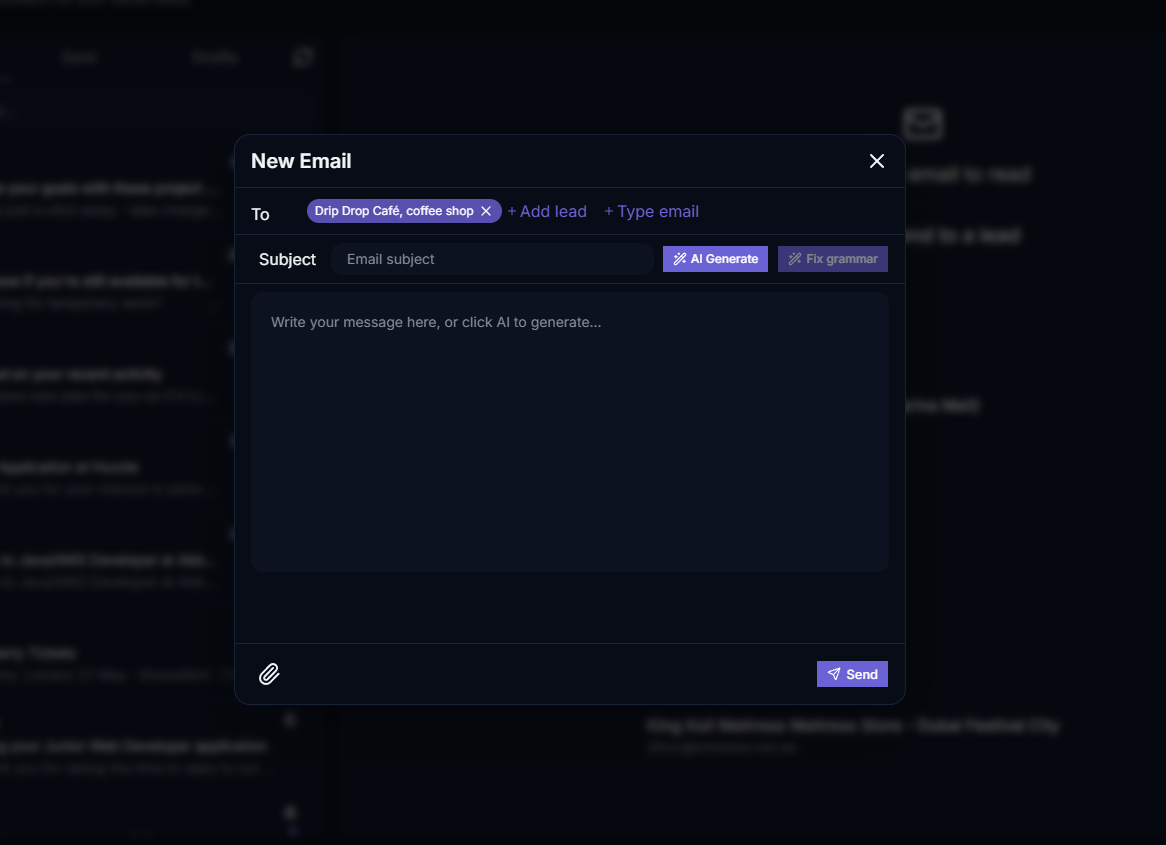
A screenshot of the AI writing assistant fits well here
The drafts pulled in the business name and category automatically, which beat starting from a blank page. That said, I still rewrote parts of every email — the AI draft is a solid starting point, not a finished message, which matched my expectations going in.
Testing Lead Management and Pipeline Tracking
A prospect list is only useful if it doesn't get lost, so I moved a batch of test leads through the built-in pipeline to see how it held up.
- Saved leads
- Kanban-style pipeline tracking
- Lead status management
- CSV/XLSX export
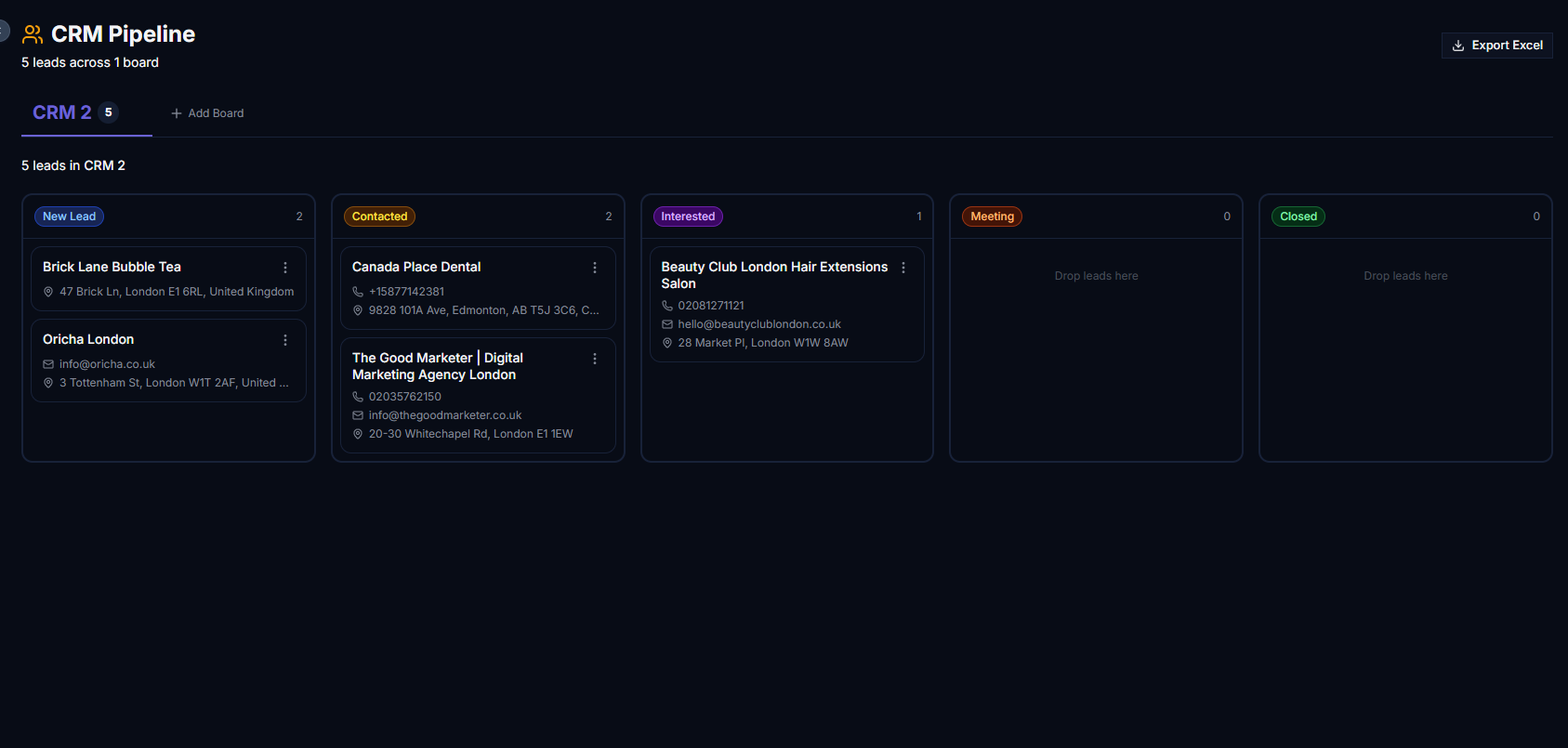
A screenshot of the CRM pipeline/kanban board fits well here
It's not a full-blown real estate CRM, but for keeping a prospecting pipeline organized without switching tools, it did the job during my test.
My Scorecard After Testing LeadBoba
These are my own hands-on ratings from this test — not a comparison against other vendors.
Who I'd Actually Recommend This To
If you're building your own pipeline without depending entirely on paid leads or referrals, this is exactly the use case I tested for.
Useful for teams that need repeatable prospect research across multiple agents and markets.
The category + location filters made it easy to surface businesses that might need a new space.
Good for building targeted local contact lists around specific investment criteria.
Frequently Asked Questions
Would I Actually Use LeadBoba as a Realtor?
After testing it across local search, data freshness, lead management, and outreach, LeadBoba did what I actually needed it to do: help me build my own targeted prospect list instead of renting a shared one.
- Fast, filtered local search
- Fresh contact data pulled from Google Maps
- A workable pipeline for tracking outreach
- AI email drafts that save time, not replace judgment
It's not a magic-bullet CRM replacement, and the AI emails still need a human pass — but as a lead generation tool for realtors who want to own their pipeline, it held up well under real use.
Run your own test — start finding leads today
Search businesses by industry and location, save leads to a pipeline, and send AI-assisted outreach — the same workflow I tested.
Leads Generator
Target businesses you won't find on LinkedInExtract leads from Google Maps, Apple Maps and Bing Maps
Estate Agent in your area