LeadBoba vs Apollo.io: Which B2B Lead Generation Platform Should You Choose in 2026?
Both platforms help you find leads, manage prospects, and run outreach — but they're built on very different philosophies. Here's an in-depth, feature-by-feature look at how LeadBoba and Apollo.io actually compare.
Two very different philosophies
Both LeadBoba and Apollo.io are designed to help businesses discover leads, manage prospects, and improve sales outreach. However, the two platforms are built on very different philosophies.
Apollo.io is primarily a large B2B contact database and sales engagement platform. LeadBoba, on the other hand, focuses on combining real-time Google Maps discovery, live website analysis, CRM functionality, AI-powered email generation, email management, community features, analytics, and geographic lead visualization inside a single platform.
How each platform finds your next customer
Apollo.io primarily relies on its own database of business contacts and company information.
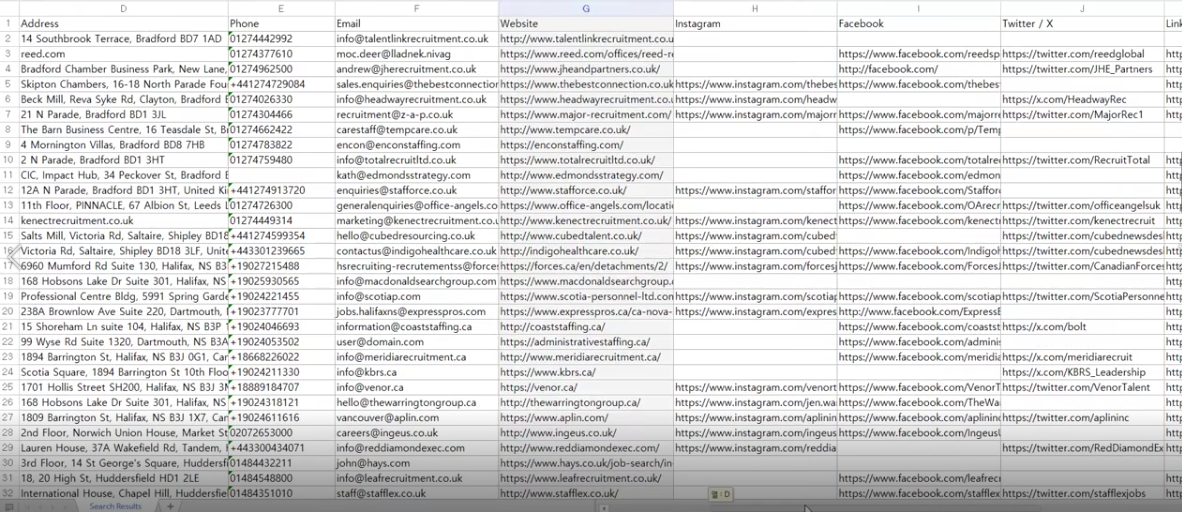
LeadBoba uses a different approach by combining Google Maps data, website analysis, and live data extraction technologies to discover businesses and retrieve information directly from publicly available sources.
- Business names
- Email addresses
- Phone numbers
- Company websites
- Physical addresses
- Social media profiles
- Company ratings and reviews
- X (formerly Twitter)
- YouTube
Fresh data beats a stale database
Many traditional lead generation platforms rely heavily on large, centralized databases.
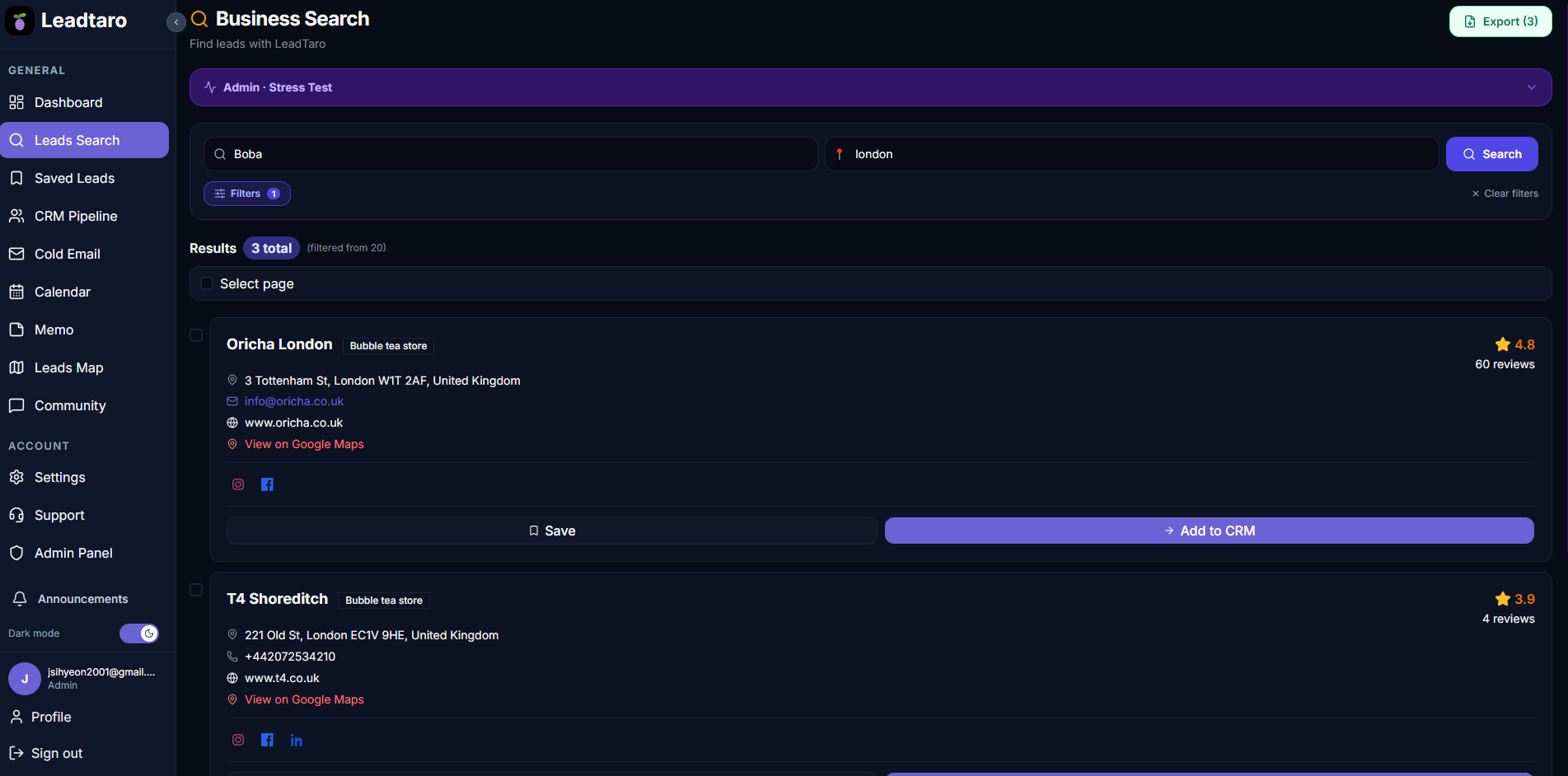
LeadBoba focuses on collecting information from live sources whenever possible. This approach is designed to provide more up-to-date information and reduce the possibility of outdated contact details.
Outdated contact details are one of the most common reasons cold email campaigns underperform — bounced addresses, disconnected numbers, and former employees quietly erode deliverability and response rates. Because LeadBoba pulls information closer to the moment of outreach, campaigns are less likely to be built around a contact that no longer exists.
A search tool that doubles as a lightweight CRM
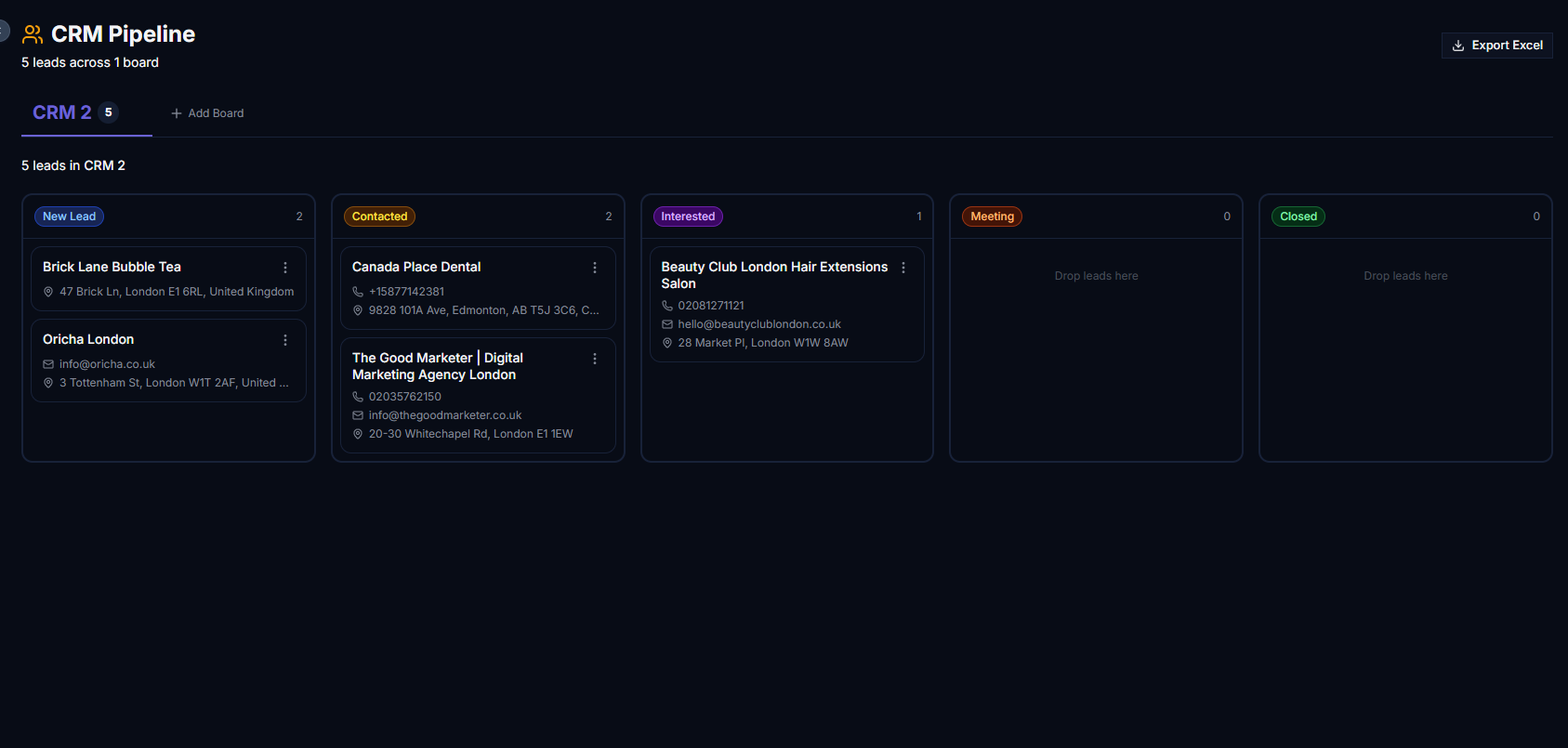
LeadBoba is not simply a lead search tool. It also includes:
- Lead management pipelines
- Lead-saving functionality
- Detailed lead profiles
- Custom notes
- Search history
- Status tracking
- Lead scoring
- Dashboard analytics
Users can organize prospects without switching between multiple applications.
Outreach copy, drafted in seconds
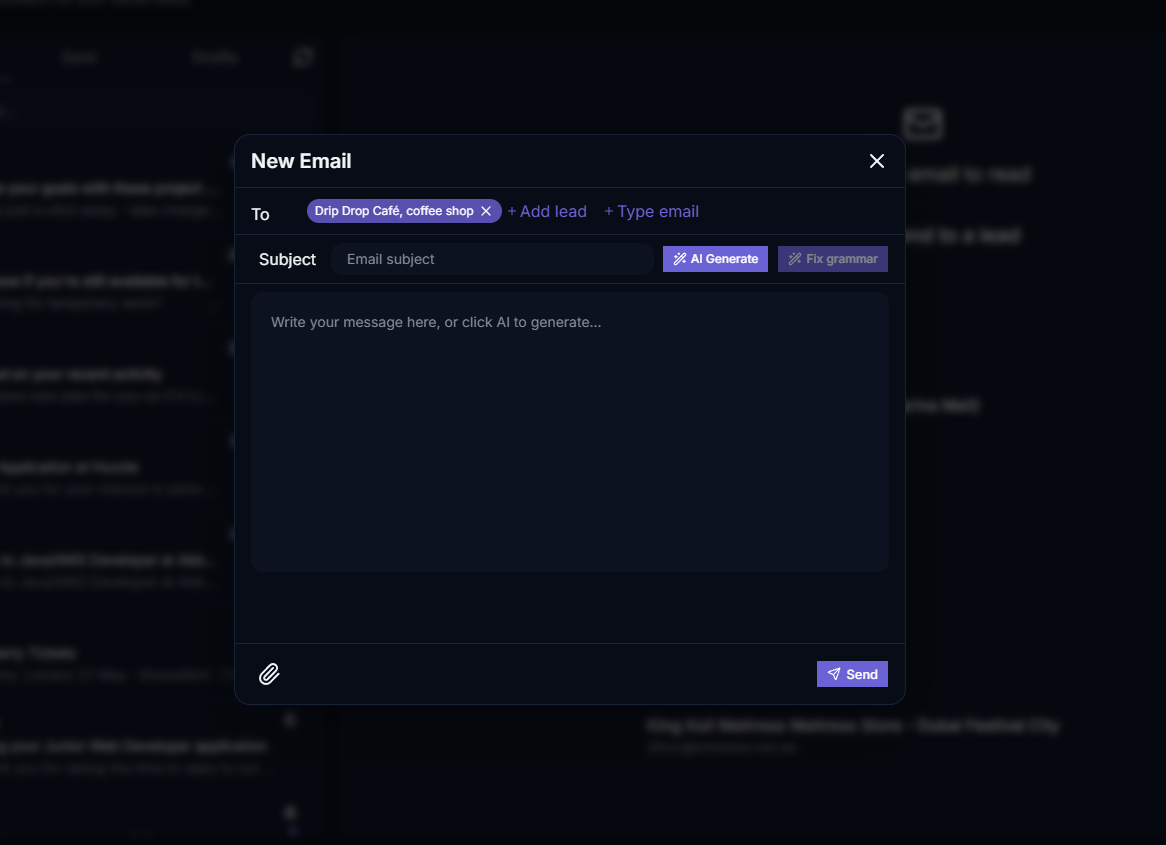
LeadBoba integrates AI directly into the platform. Users can:
- Generate personalized cold emails automatically
- Improve grammar and sentence structure
- Adjust tone and writing style
- Rewrite messages
- Optimize subject lines
- Create more effective outreach campaigns
The goal is to reduce the amount of time users spend creating sales emails manually.
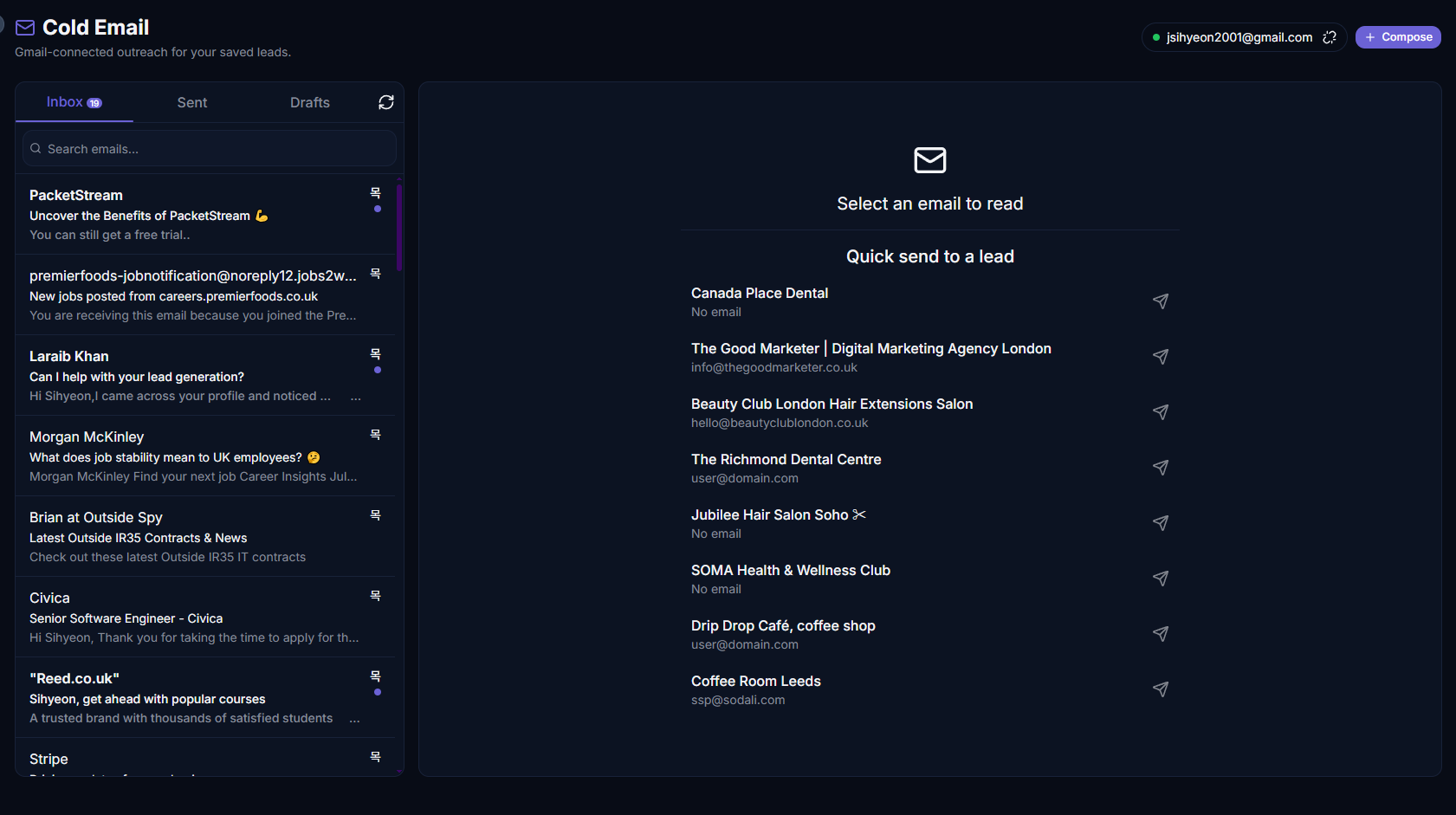
Send and track outreach without leaving the platform
One of LeadBoba's most unique features is its direct Gmail integration. Users can:
- Connect Gmail accounts
- Send emails directly from the platform
- Attach files
- Manage conversations
- Track communication history
- Organize follow-up campaigns
Instead of moving between multiple tools, users can manage everything from one place.
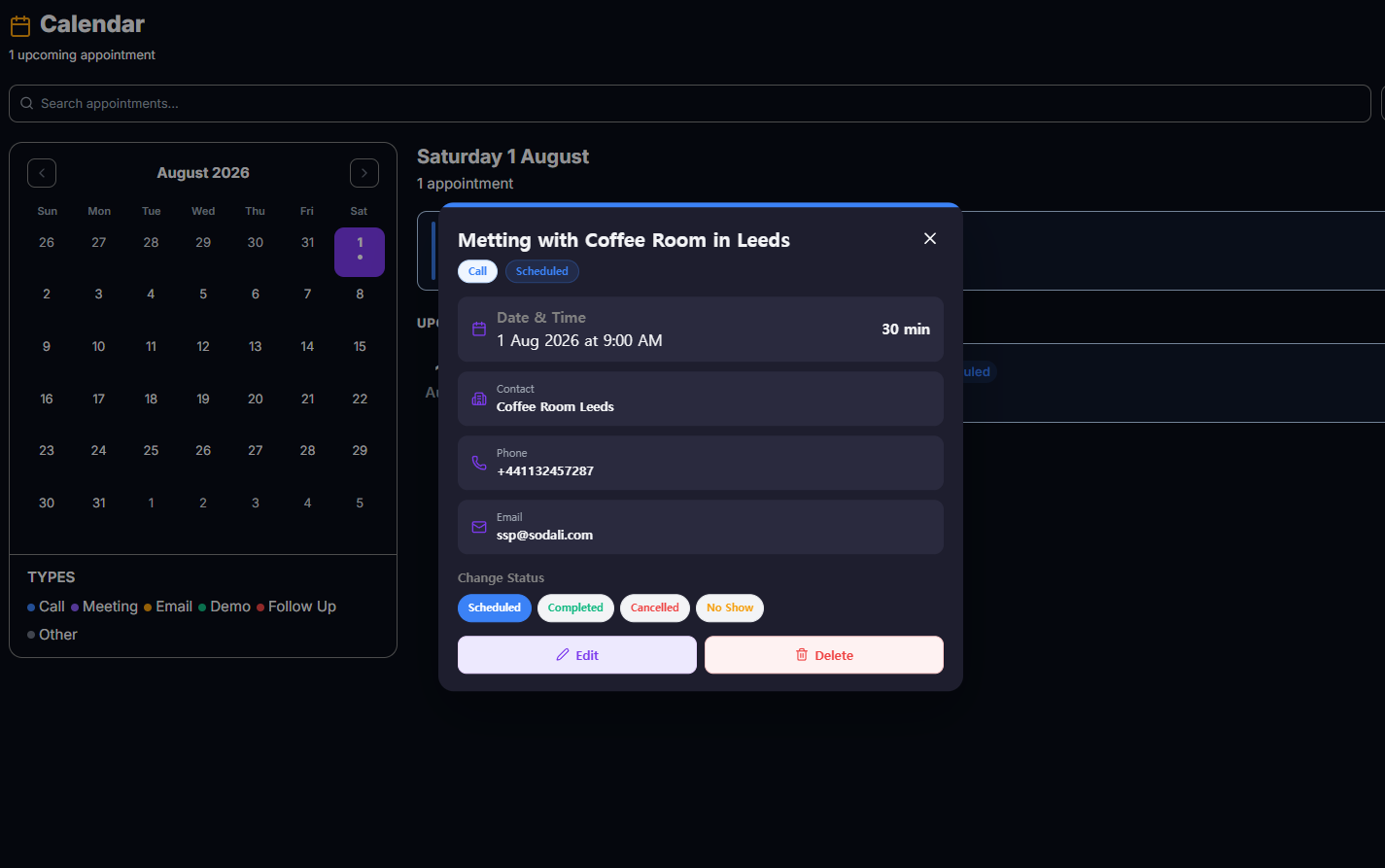
Keep meetings and follow-ups on schedule
LeadBoba includes built-in calendar functionality that allows users to organize meetings, reminders, and follow-up activities.
This helps teams maintain a consistent sales process.
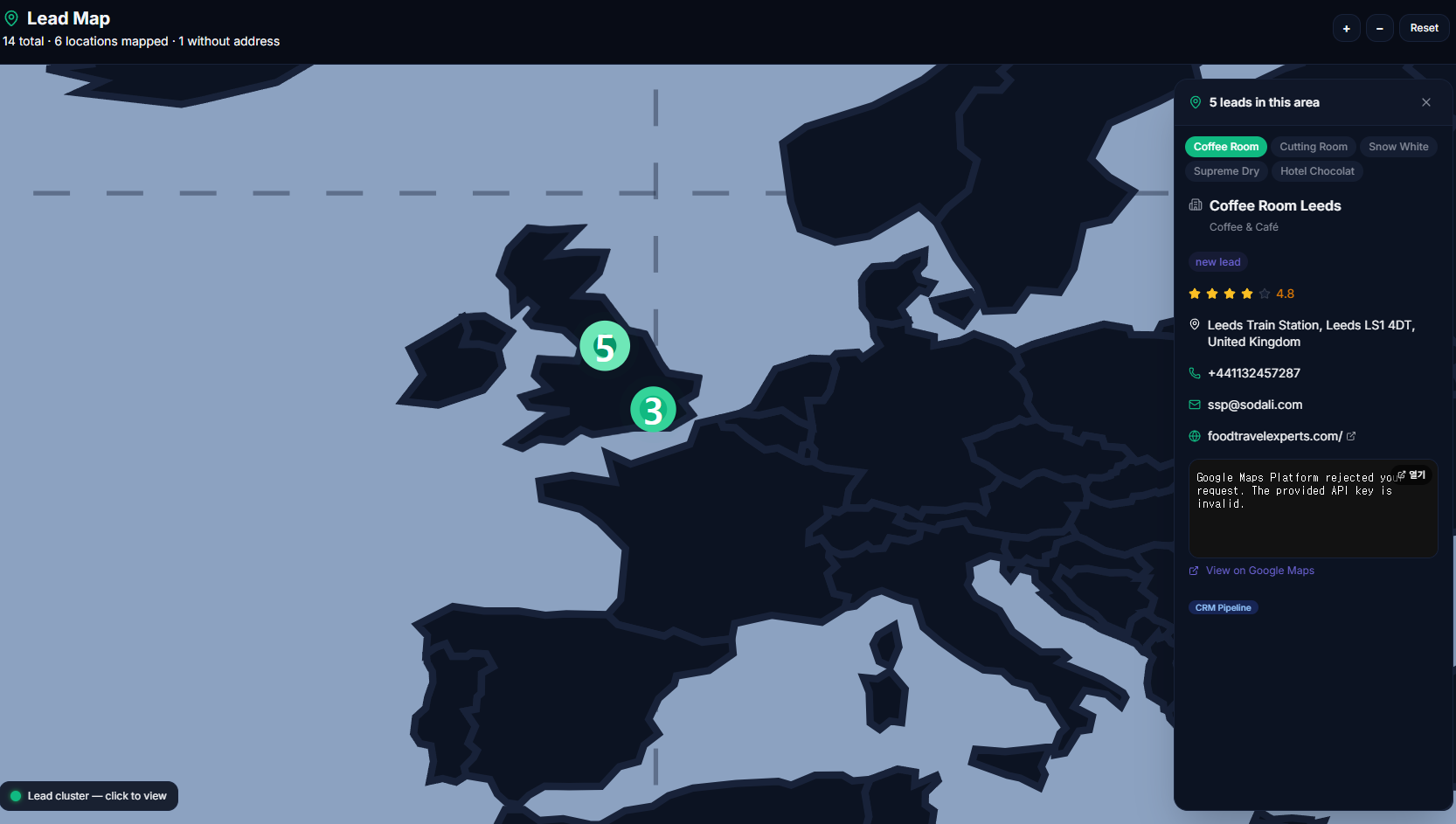
See exactly where your pipeline lives
LeadBoba provides a global map interface that visually displays saved leads. Businesses are represented according to their locations so users can quickly identify geographic trends and opportunities.
This feature allows users to understand the distribution of their leads at a glance.

More than a database — an ecosystem
LeadBoba also includes a community platform. Users can share:
- Sales strategies
- Marketing ideas
- Industry trends
- Lead generation techniques
- Business insights
The goal is to create an ecosystem rather than simply providing access to a database.
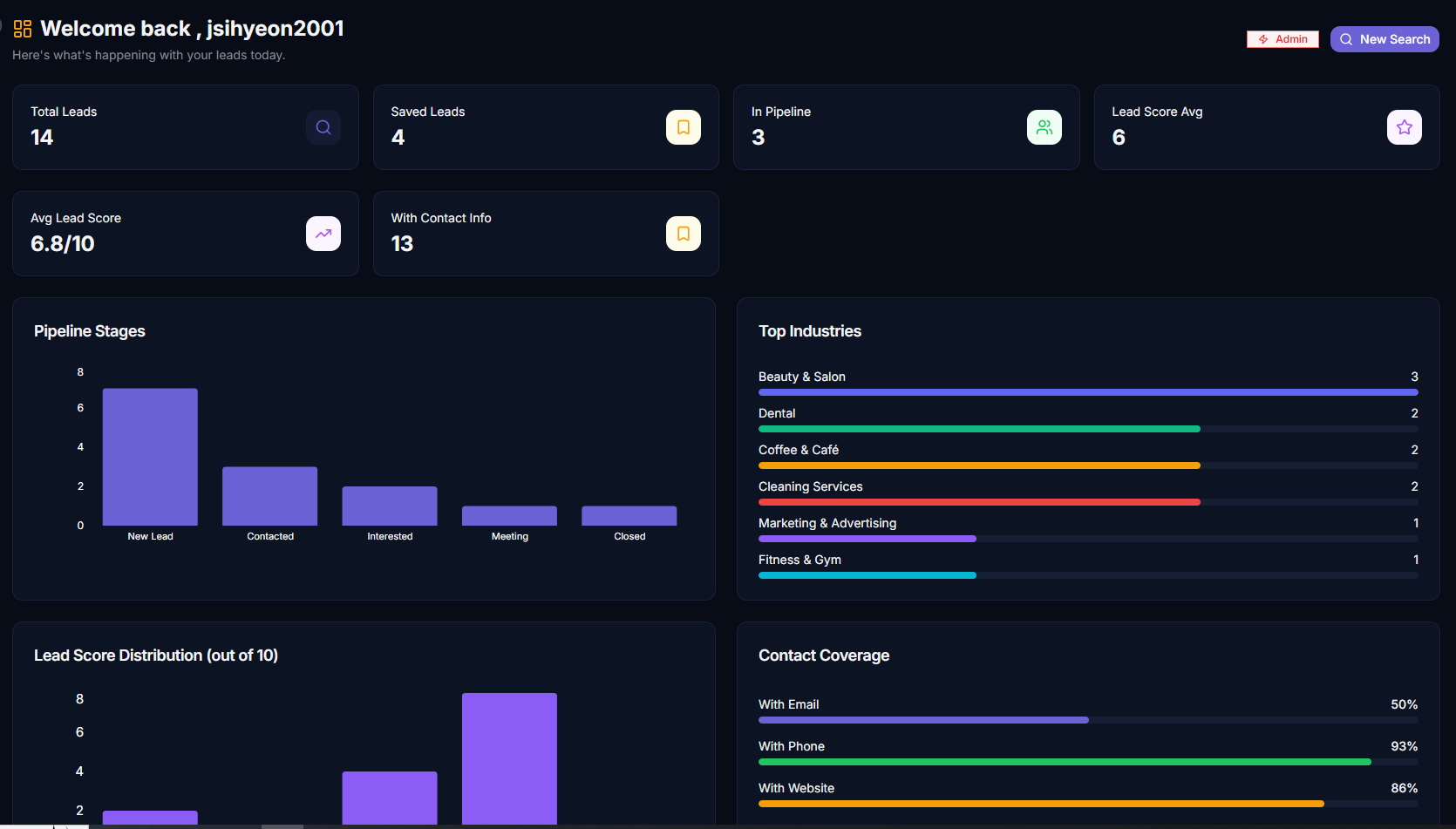
One screen for the health of your pipeline
LeadBoba provides a central dashboard where users can monitor:
- Total searches
- Saved leads
- Lead quality scores
- User activity
- Search history
- Growth metrics
- Outreach performance
This allows businesses to understand the overall performance of their lead generation activities more efficiently.
Who is each platform actually built for?
Apollo.io
- Large sales teams
- Enterprises
- Companies focused on database-driven prospecting
- Organizations with existing sales workflows
LeadBoba
- Small businesses
- Startups
- Agencies
- Local businesses
- Freelancers
- Sales professionals
- Business owners who prefer an all-in-one solution
LeadBoba vs Apollo.io, feature by feature
| Feature | LeadBoba | Apollo.io |
|---|---|---|
| Email discovery | ||
| Phone number discovery | ||
| Website discovery | ||
| Social media extraction | ||
| Google Maps integration | Limited | |
| Real-time data collection | Partial | |
| Built-in CRM | ||
| Gmail integration | ||
| AI email generation | ||
| AI writing improvement | ||
| Calendar features | Limited | |
| Interactive world map | ||
| Community platform | ||
| Dashboard analytics |
So, which one should you choose?
Apollo.io is an established platform with a large database and extensive sales engagement capabilities.
LeadBoba follows a different path. Rather than focusing exclusively on maintaining a massive database, LeadBoba combines real-time discovery, AI-powered automation, CRM tools, communication tools, analytics, community features, and geographic visualization into a unified platform.
Ultimately, the best choice depends on whether you prefer a traditional database-centered solution or an integrated platform designed to simplify the entire lead generation workflow.
Leads Generator
Target businesses you won't find on LinkedInExtract leads from Google Maps, Apple Maps and Bing Maps
Restaurant in your area