LeadBoba vs Zoho CRM: Which Platform Is Better for B2B Lead Generation and Sales Growth in 2026?
One is a mature CRM for managing customers, deals, and sales operations once a lead already exists. The other discovers new B2B prospects through Google Maps and manages the entire journey to outreach. Here's an in-depth look at how LeadBoba and Zoho CRM actually compare.
Two very different philosophies
Customer relationship management is an important part of growing a business — but before managing customers, businesses first need to discover and attract potential customers. A complete sales process includes finding new prospects, collecting accurate business information, organizing leads, communicating with prospects, managing customer relationships, and improving sales performance. LeadBoba and Zoho CRM both support business growth, but they focus on different stages of the sales journey.
Zoho CRM is a powerful customer relationship management platform designed to help companies manage contacts, sales pipelines, customer interactions, and business operations. LeadBoba focuses on discovering new B2B opportunities through Google Maps and website analysis, then helping businesses organize leads, generate AI-powered emails, and manage outreach.
In short: Zoho CRM helps businesses manage existing sales relationships. LeadBoba helps businesses discover new leads and manage the complete acquisition workflow.
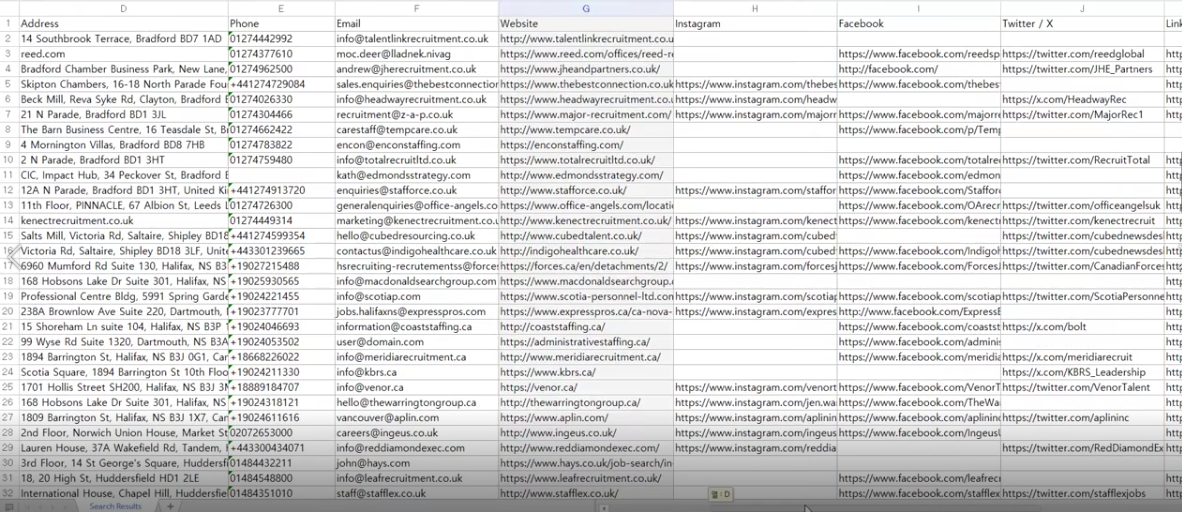
Where the sales process begins
The biggest difference between Zoho CRM and LeadBoba is where the sales process begins. Zoho CRM begins after a lead or customer already exists: add contacts, create deals, manage customer communication, then track sales progress.
LeadBoba begins before the CRM stage: search target businesses, discover potential customers, collect business data, save leads, generate outreach messages, contact prospects, and manage relationships.
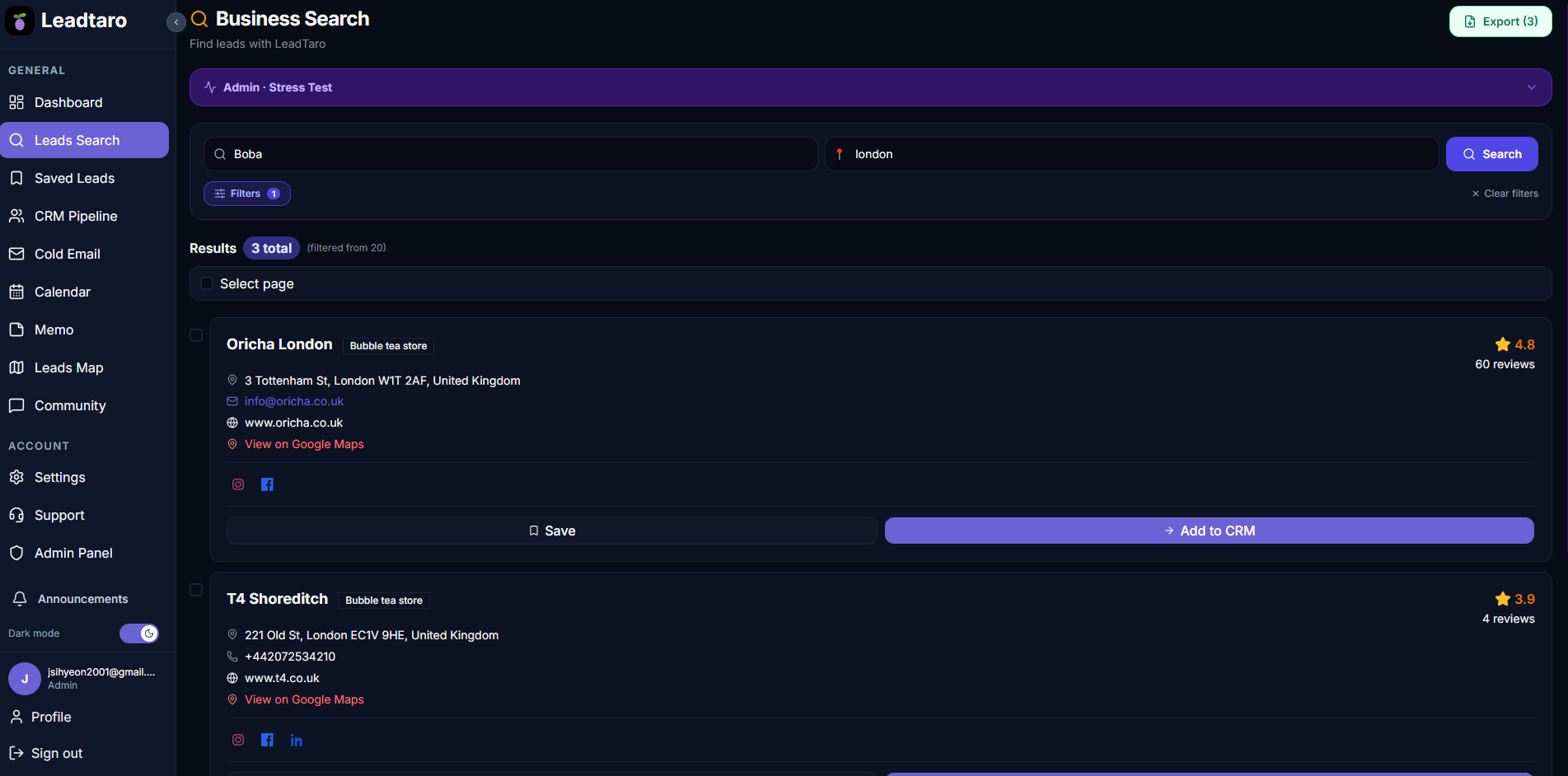
Manual lead entry vs. built-in business discovery
Zoho CRM provides excellent tools for managing leads but does not focus on discovering new businesses automatically. Businesses usually add leads through website forms, marketing campaigns, sales representatives, or external lead generation tools.
LeadBoba provides built-in business discovery. Users can search for things like "plumbers in London," "restaurants in Manchester," "dentists in Birmingham," or "marketing agencies worldwide," collecting business name, address, phone number, website, email, Google rating, reviews, and social media links.
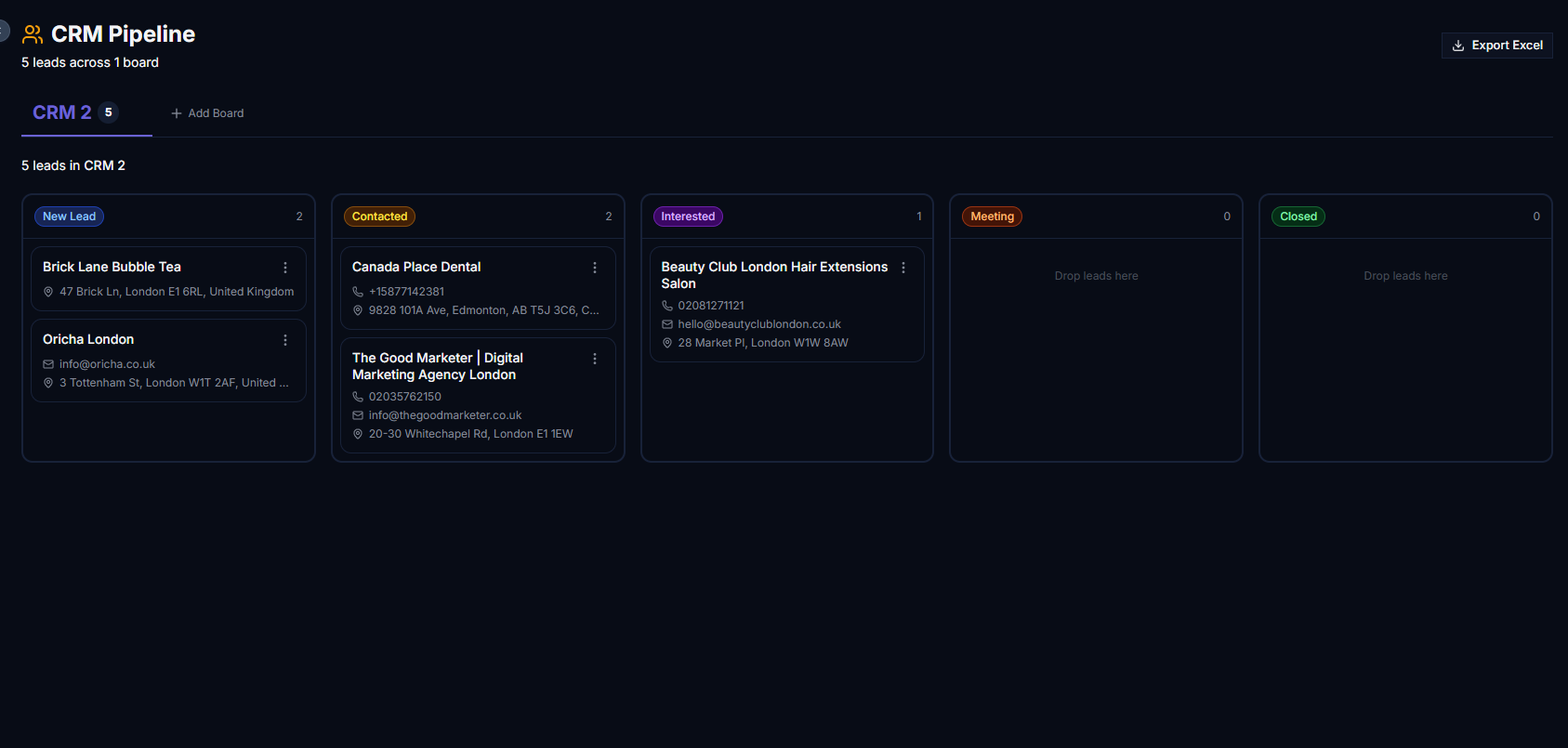
Comprehensive customer management vs. prospecting-focused pipelines
Zoho CRM is a mature CRM solution, with strengths including advanced sales pipelines, custom fields, workflow automation, reports, team management, and sales forecasting.
LeadBoba provides CRM-style lead management focused on prospecting instead. Users can:
- Save leads
- Organize pipelines
- Add notes
- Track lead status
- Manage prospects
The difference: Zoho CRM is built for comprehensive customer management. LeadBoba connects lead generation with sales organization.
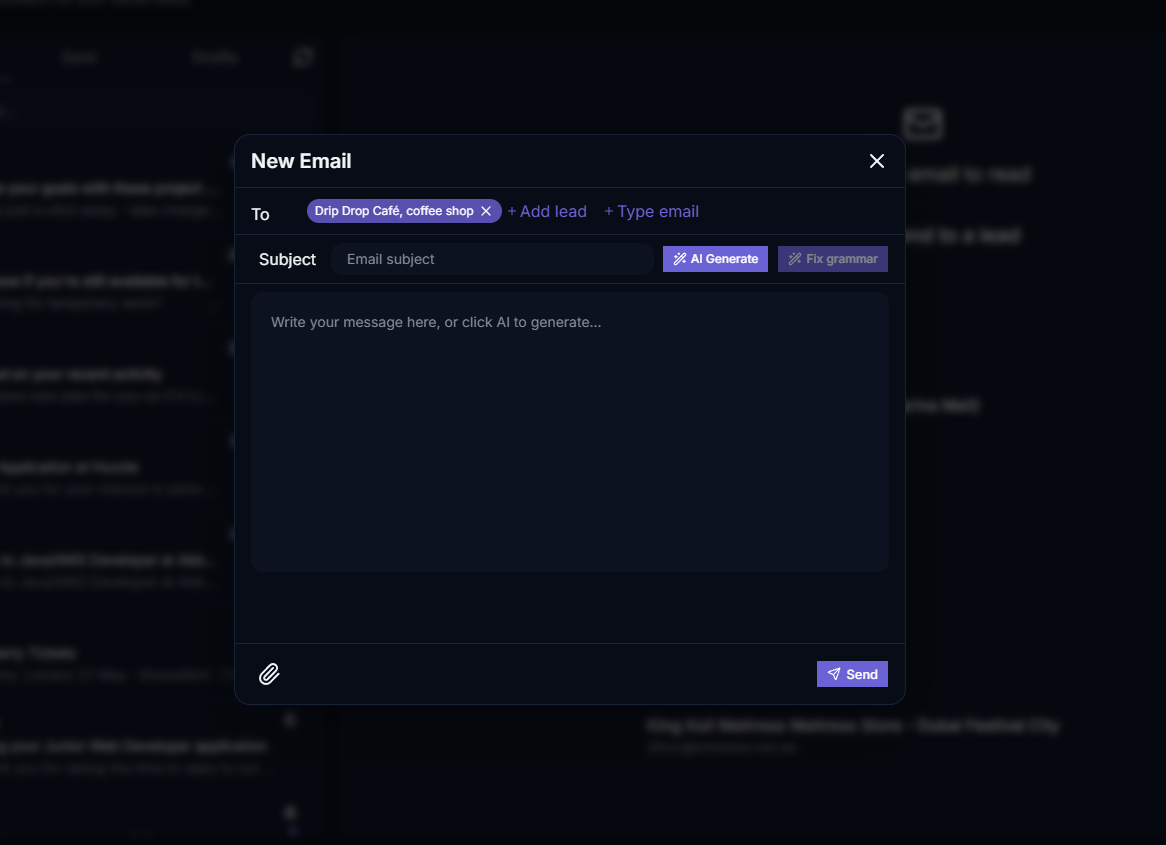
CRM operations vs. AI-generated outreach messages
Zoho CRM includes automation and business intelligence features but focuses mainly on CRM operations.
LeadBoba includes AI-powered writing features that help businesses quickly create professional outreach. Users can:
- Generate cold emails
- Personalize messages
- Fix grammar
- Improve sentence quality
- Adjust communication tone
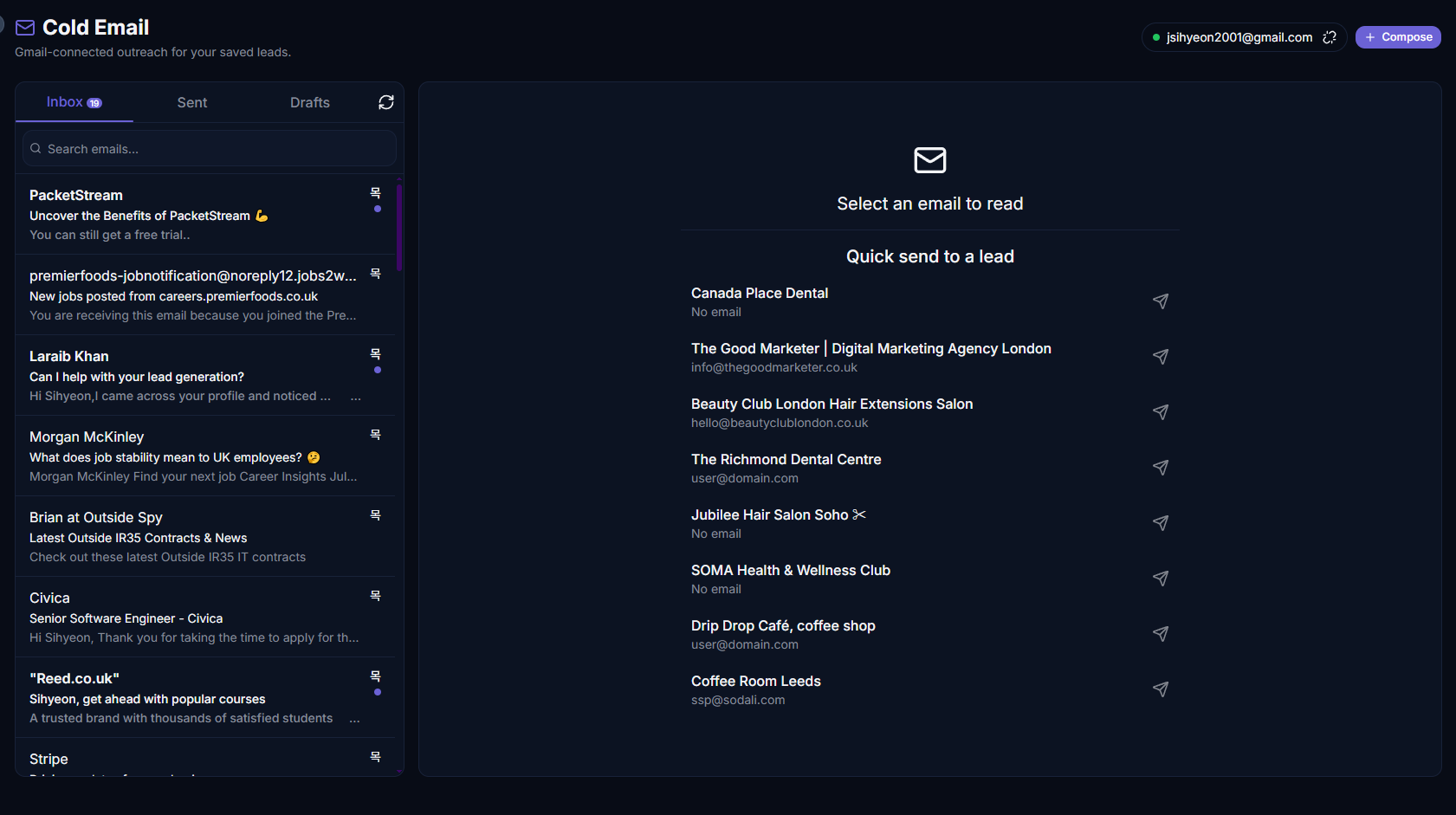
A direct path from prospect to conversation
LeadBoba connects Gmail directly with the prospect workflow. Users can connect Gmail accounts, send emails from LeadBoba, attach files, and keep communication history connected to leads.
This creates a direct path from discovering a prospect to starting a conversation. Zoho CRM provides email management features as part of its broader CRM ecosystem, once a contact already exists in the system.
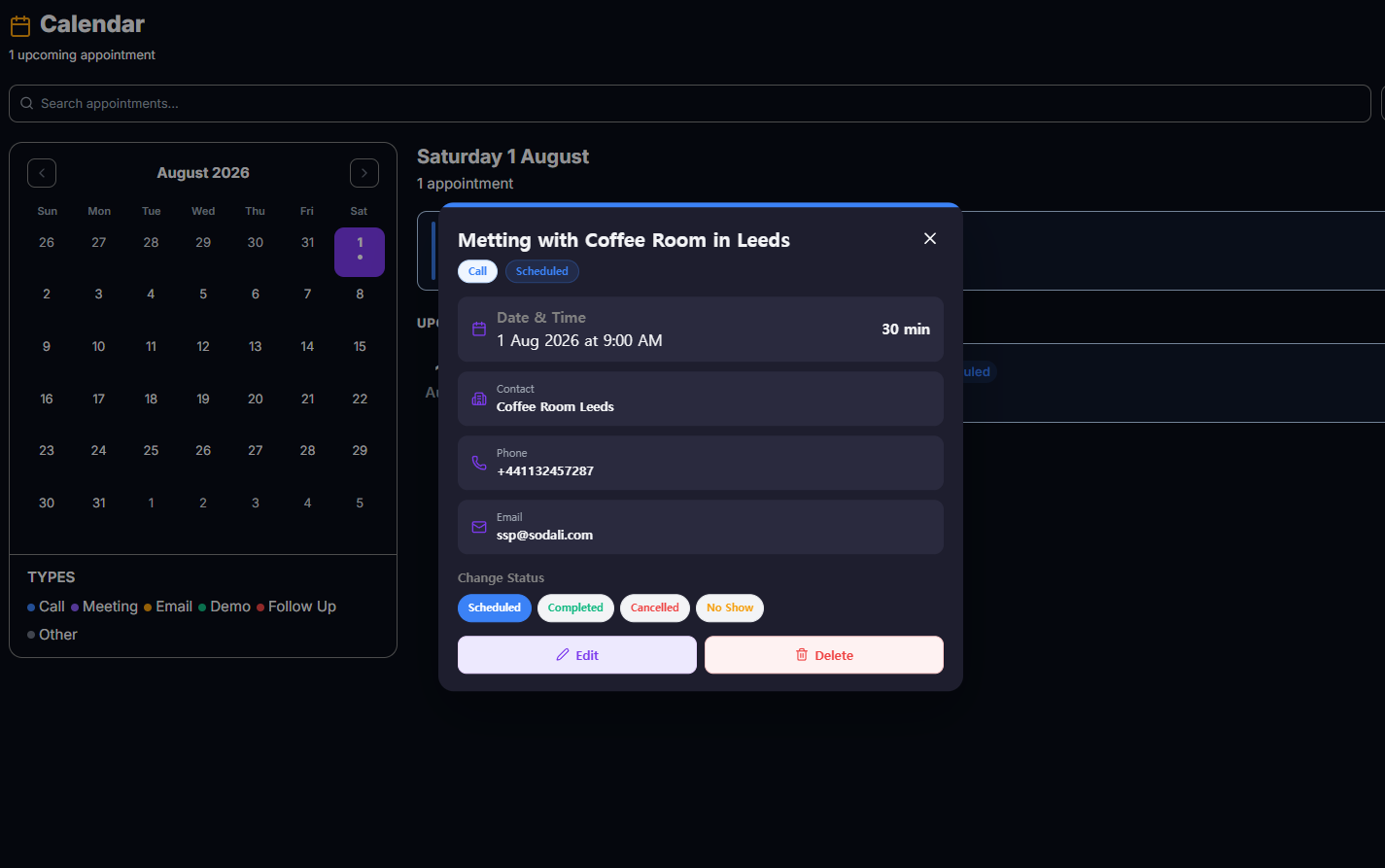
Keeping meetings and follow-ups on schedule
LeadBoba includes built-in calendar functionality that allows users to organize meetings, reminders, and follow-up activities alongside their leads.
Zoho CRM also provides scheduling features, but they sit within its broader CRM suite and are built around managing existing customer relationships rather than early-stage prospecting.
Revenue reporting vs. lead generation analytics
Zoho CRM provides advanced business reporting. Users can analyze sales performance, revenue forecasts, deal progress, and team activity.
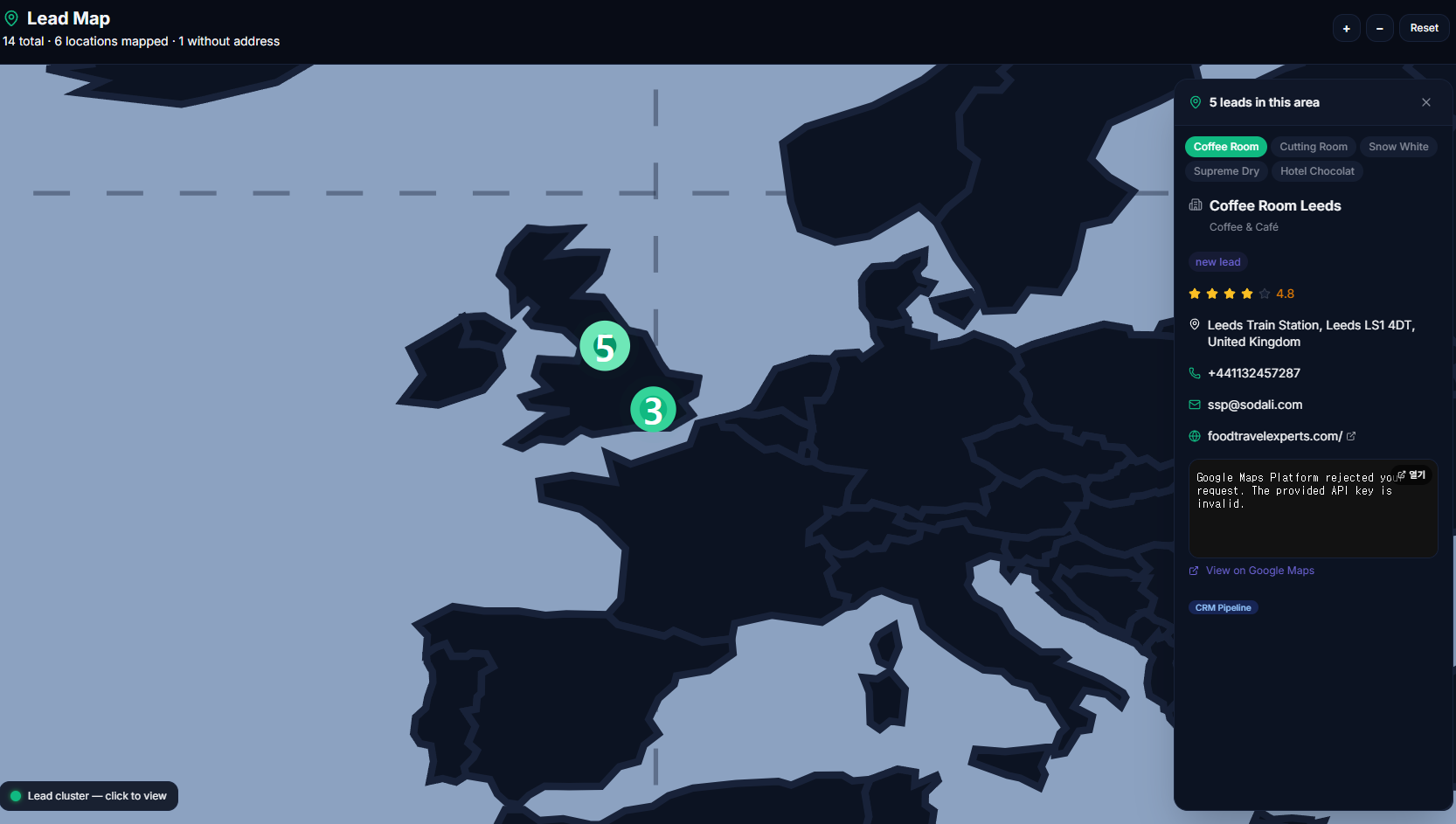
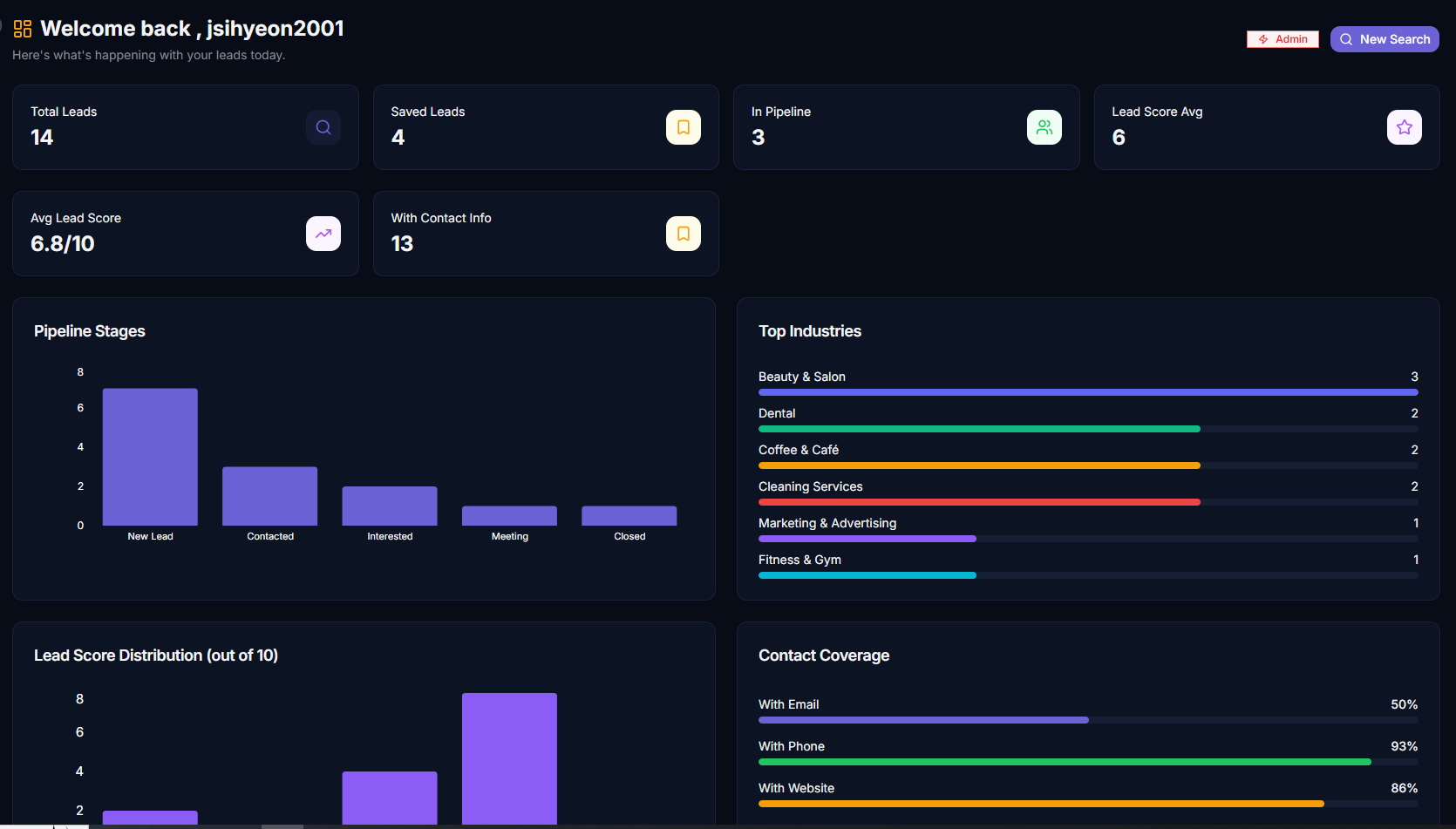
LeadBoba provides lead generation analytics instead — search activity, saved leads, lead scores, outreach performance, and prospect activity — plus a world map visualization showing saved leads by location.
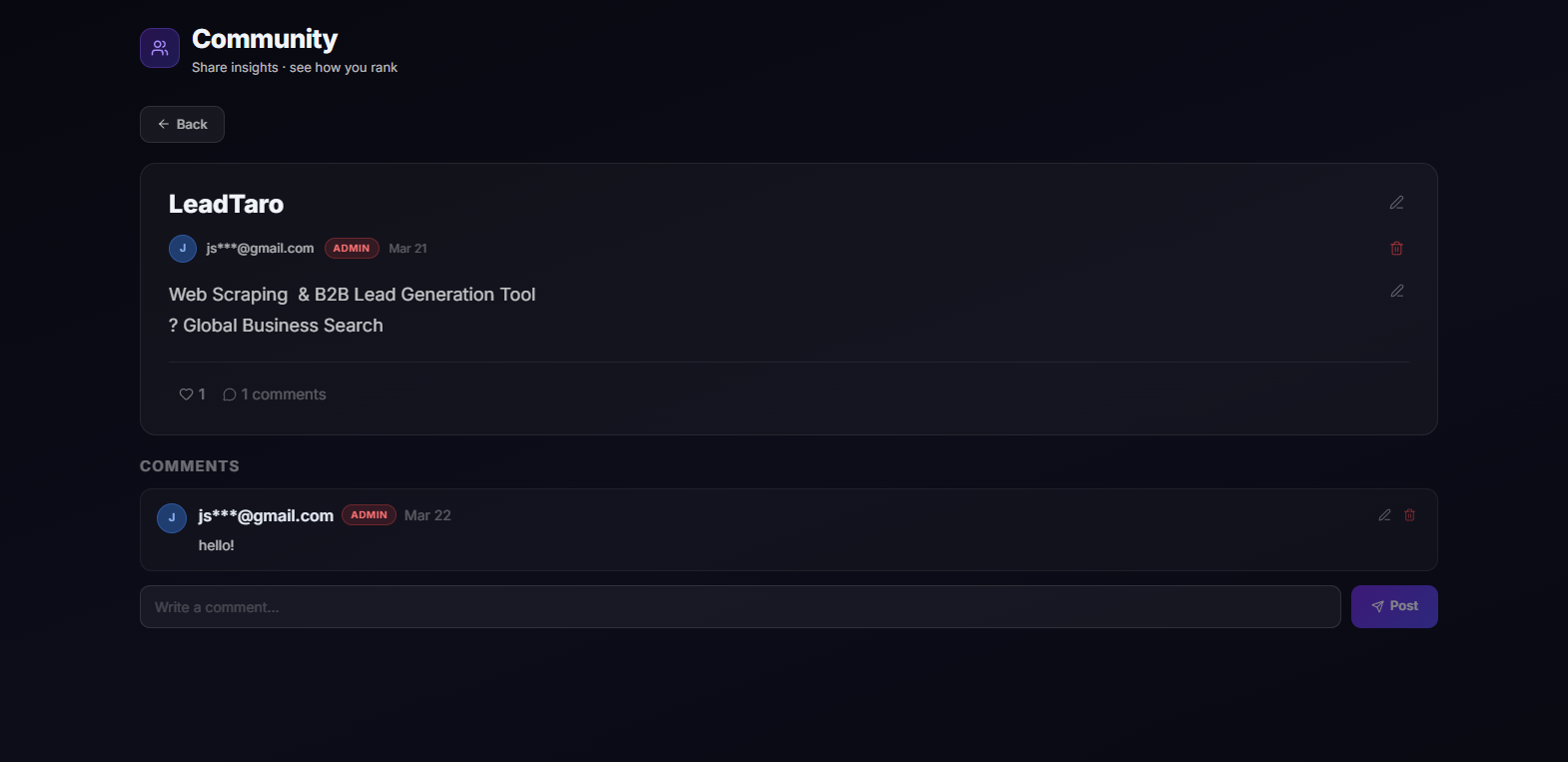
An enterprise CRM suite vs. a sales community
LeadBoba also includes a community space where users can share:
- Sales strategies
- Marketing ideas
- Industry trends
- Lead generation techniques
- Business insights
Zoho CRM is centered on its broader business software suite and enterprise support rather than a peer sales community layer.
Qualifying prospects before they enter the CRM
LeadBoba specializes in location-based business discovery, allowing users to find companies by industry, geographic area, and business category — a marketing agency can find local businesses that need advertising services, a web developer can discover companies with outdated websites, and a freelancer can build targeted prospect lists.
Zoho CRM does not provide native Google Maps lead discovery — it focuses on organizing and managing customer information after it enters the CRM system.
Who is each platform actually built for?
Zoho CRM
- Developers building SEO or SERP-tracking tools
- Data teams doing market or competitive research
- AI builders needing search data for training or retrieval
- Engineering teams that want to build a custom solution rather than use a ready-made one
LeadBoba
- Startups
- Agencies
- Freelancers
- Consultants
- Local businesses
- SMB sales teams
- Non-technical users who need lead discovery, CRM, AI outreach, and sales management inside one platform
LeadBoba vs Zoho CRM, feature by feature
| Feature | LeadBoba | Zoho CRM |
|---|---|---|
| No-code, ready-to-use interface | ||
| B2B lead generation workflow | ||
| Google Maps business search | Limited | |
| Structured search engine data API | ||
| Multi-search-engine coverage (Bing, Amazon, YouTube, etc.) | ||
| Business data extraction | Limited | |
| Email extraction | ||
| Phone number extraction | ||
| Social media discovery | ||
| Developer SDKs (Python, Node, Ruby, etc.) | ||
| Built-in CRM pipeline | ||
| Lead notes | ||
| AI email generation | ||
| AI writing improvement | ||
| Gmail integration | ||
| Sales dashboard | ||
| Lead map visualization |
Frequently asked questions
Is Zoho CRM a lead generation platform?
No. Zoho CRM is a real-time API that returns structured search engine results. It can be used as a building block for a lead generation tool, but it does not include CRM, outreach, or sales workflow features on its own.
Can LeadBoba replace Zoho CRM?
For sales prospecting, yes — LeadBoba provides business discovery, CRM, and AI outreach without any coding. Zoho CRM is better suited to developers who need raw search data for a custom application, such as SEO monitoring or price tracking.
Which tool is better for finding local business leads?
LeadBoba is designed specifically for discovering businesses by industry and location and turning them into a manageable pipeline, with no development work required.
Which tool is better for developers who need raw search data?
Zoho CRM is built for that use case — it returns structured JSON from Google, Bing, YouTube, Amazon, and other engines that developers can integrate into their own applications.
Is LeadBoba a Zoho CRM alternative?
For B2B lead generation specifically, yes. LeadBoba can work as a Zoho CRM alternative for businesses that want a ready-to-use platform for finding leads and converting them into customers, rather than building a custom solution on top of an API.
So, which one should you choose?
Zoho CRM and LeadBoba are built for different audiences and different problems. Zoho CRM is a powerful, well-established API for developers who need real-time, structured search engine data to build their own applications.
LeadBoba provides a complete, ready-to-use B2B lead generation workflow instead: discover businesses, collect business information, organize prospects, generate AI-powered emails, contact customers, manage relationships, and analyze sales activity — with no code required.
For developers who need raw search engine data to power a custom application, Zoho CRM is a strong option. For businesses that want a focused, no-code solution for finding leads and converting them into customers, LeadBoba provides a more complete sales workflow.
Leads Generator
Target businesses you won't find on LinkedInExtract leads from Google Maps, Apple Maps and Bing Maps
Restaurant in your area