Finding the right prospects, reaching decision-makers, and managing follow-ups can take hours every day. AI sales tools help businesses automate repetitive tasks, identify better leads, personalize outreach, and spend more time closing deals.
But with hundreds of sales tools competing for your attention, choosing the right one isn't easy. Some platforms focus on CRM automation. Others specialize in prospecting, email outreach, sales intelligence, or conversation analysis. The best choice depends on your sales process, target audience, and budget.
In this guide, we'll compare eight of the best AI sales tools in 2026, explain what each platform does best, and show you how to build an effective sales technology stack without overspending.
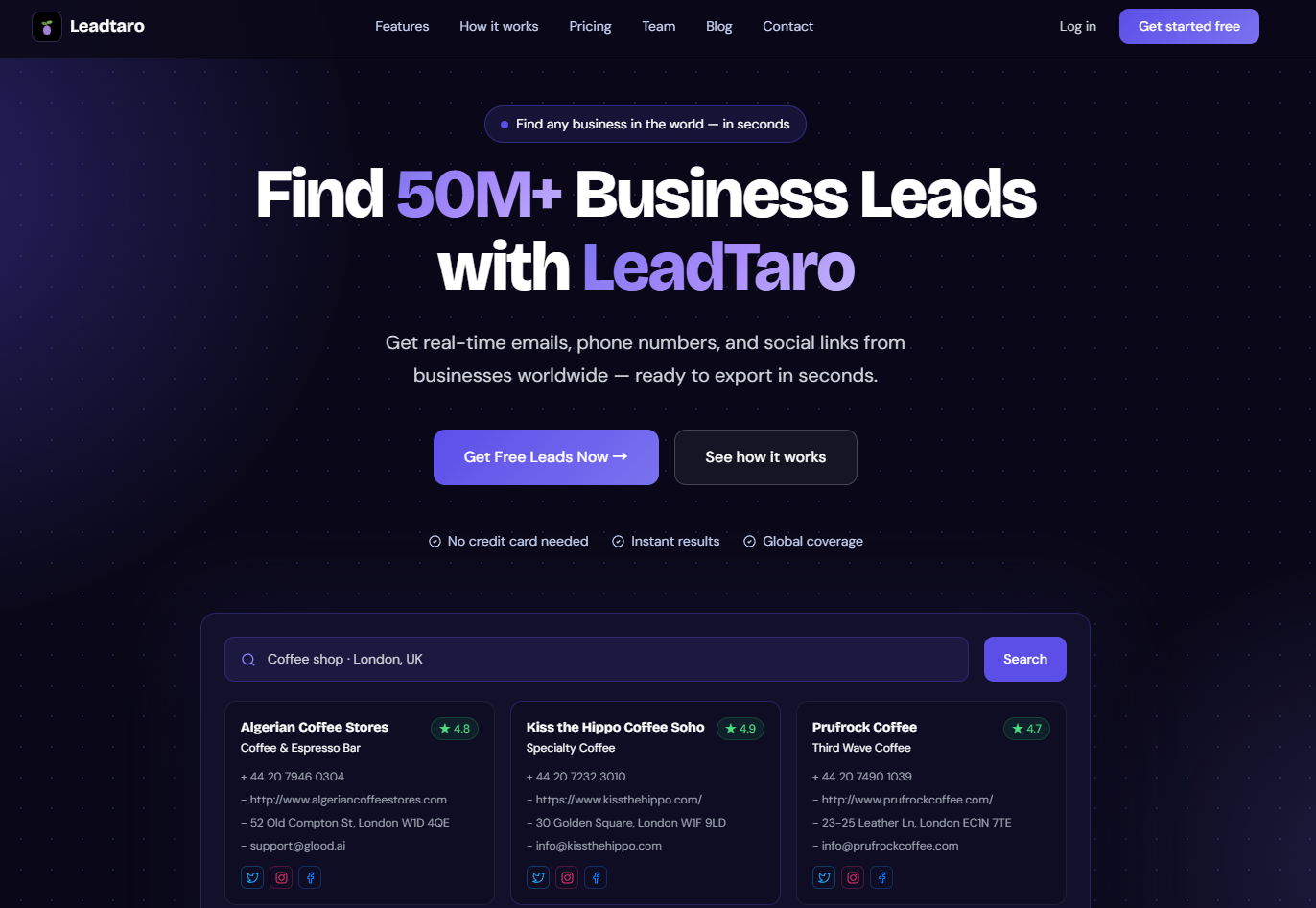
If you're starting with lead generation, LeadTaro offers a free plan that lets you access 60 verified B2B leads without requiring a credit card. It's a practical starting point for startups, freelancers, and small sales teams looking to build their prospect lists before investing in more expensive sales software.
Table of Contents
- Why AI Sales Tools Matter in 2026
- The 8 Best AI Sales Tools for 2026
- How to Choose the Right AI Sales Tool
- AI Sales Trends to Watch in 2026
- Frequently Asked Questions
- Building Your AI Sales Stack
Why AI Sales Tools Matter in 2026
Sales teams spend time on much more than selling. They research companies, identify potential customers, collect contact information, write outreach messages, update CRM records, and schedule follow-ups.
These activities are necessary, but handling everything manually can slow down the entire sales process.
AI sales tools help reduce that workload by automating repetitive tasks and making prospecting more efficient.
Here are four ways businesses can use AI to improve their sales process:
Lead generation: Find potential customers who match your ideal customer profile.
Lead qualification: Prioritize prospects based on company characteristics, engagement, and buying signals.
Sales outreach: Create personalized emails and follow-up sequences at scale.
Sales automation: Reduce manual CRM updates, organize conversations, and streamline repetitive workflows.
However, automation alone doesn't guarantee better results. Sales teams still need accurate data, relevant messaging, and a clear understanding of their target audience.
That's why an effective sales process starts with good leads.
A personalized email sent to a relevant decision-maker is generally more useful than hundreds of generic messages sent to an unqualified list. Combining reliable contact data with AI-powered personalization helps sales teams work more efficiently without sacrificing relevance.
The 8 Best AI Sales Tools for 2026
No single platform is ideal for every sales team. Some tools help you discover prospects, while others manage customer relationships, automate outreach, or analyze sales conversations.
Here are eight platforms worth considering.
1. LeadTaro — Best for B2B Lead Generation
Best for: Startups, small businesses, freelancers, and B2B sales teams looking for potential customers.
Lead generation is the foundation of any outbound sales strategy. Before you can personalize an email or schedule a sales call, you need a list of businesses that might benefit from your product or service.
LeadTaro helps businesses get started with B2B prospecting by providing access to verified business leads.
One of its main advantages is its free plan, which provides 60 verified B2B leads without requiring a credit card. This allows users to explore the platform, evaluate the available lead data, and test their prospecting workflow before committing to a paid subscription.
For startups and small sales teams, this can be a useful way to begin building a prospect database without a significant upfront investment.
Why consider LeadTaro?
Access 60 verified B2B leads on the free plan.
Start prospecting without entering credit card details.
Build an initial list of potential business customers.
Evaluate lead quality before upgrading to a paid plan.
Use business leads as the starting point for personalized sales outreach.
The value of any lead generation platform ultimately depends on how well its data matches your ideal customer profile. Before launching a campaign, review the available contact information and confirm that the prospects fit your target market.
LeadTaro is a practical starting point for businesses that want to test B2B lead generation before investing in a larger sales technology stack.
Getting started: Visit LeadTaro to explore the free plan and access your first 60 leads.
2. Salesforce Einstein — Best for Enterprise CRM Intelligence
Salesforce Einstein brings AI capabilities into the Salesforce customer relationship management platform. It helps sales organizations analyze customer data, prioritize opportunities, and improve visibility into their pipelines.
Rather than maintaining separate systems for every sales activity, businesses can use Salesforce's ecosystem to connect customer records, sales activities, and forecasting workflows.
Key capabilities may include AI-assisted sales insights, opportunity prioritization, forecasting, and automated workflows, depending on the Salesforce products and plan being used.
Best for: Established sales organizations with complex pipelines and an existing Salesforce implementation.
Potential drawback: Pricing, implementation, and administration can be substantial for smaller businesses. Teams should evaluate the specific Salesforce products they need rather than assuming every AI feature is included in every plan.
3. HubSpot Sales Hub — Best for Small Sales Teams
HubSpot Sales Hub combines CRM functionality with sales engagement, automation, and AI-assisted productivity features.
Teams can organize contacts, track deals, manage follow-ups, and use supported AI features to assist with tasks such as email drafting and sales preparation.
HubSpot is particularly useful for businesses that want their contact database and sales pipeline in one place.
Best for: Startups, small businesses, and growing sales teams that need an accessible CRM.
Potential drawback: Advanced automation, reporting, and sales features may require paid subscriptions. Check the current plan details before making a decision.
For companies just starting out, HubSpot can complement a dedicated lead generation platform such as LeadTaro: one helps source prospects, while the other helps organize and manage sales relationships.
4. Apollo.io — Best for B2B Prospecting and Sales Intelligence
Apollo.io combines B2B contact discovery with sales intelligence and outreach capabilities.
Sales teams can search for potential business customers, build prospect lists, research companies, and use supported features to organize and automate outbound campaigns.
Apollo is especially relevant for teams selling to professionals and decision-makers at other companies.
Best for: B2B outbound teams that need contact discovery and sales engagement capabilities in one platform.
Potential drawback: Contact coverage and accuracy can vary by industry, geography, and role. Teams should validate important contact details and review usage limits before selecting a plan.
If you're comparing lead generation tools, consider the quality of the data, the number of relevant prospects available, and the total cost of reaching those prospects.
A large database isn't necessarily better if only a small percentage of its contacts match your target audience.
5. Lemlist — Best for Personalized Sales Outreach
Lemlist focuses on sales engagement and personalized outbound campaigns.
It helps sales teams organize outreach sequences across supported channels and personalize messages using prospect information. This can reduce the time required to prepare individual messages while maintaining a more relevant approach to prospecting.
For example, a sales representative could use company information and relevant business context to create a more specific opening message instead of sending the same generic introduction to every prospect.
Best for: Solo founders, agencies, and small outbound sales teams.
Potential drawback: Results still depend on lead quality, messaging, deliverability, and campaign execution. AI-generated personalization should be reviewed for accuracy before sending.
Lead generation and outreach work best together. LeadTaro can help you get started with business leads, while an outreach platform can help you organize personalized communication with those prospects.
6. Outreach — Best for Sales Engagement at Scale
Outreach is a sales engagement platform designed for organizations managing structured outbound and revenue workflows.
It supports sales teams that need to coordinate prospect communication, manage sequences, track engagement, and improve visibility into their sales activities.
Larger teams may benefit from standardized workflows, shared reporting, and integrations with their existing CRM systems.
Best for: Mid-market and enterprise sales teams with multiple representatives and established outbound processes.
Potential drawback: The platform may be more complex than necessary for solo founders or businesses running small prospecting campaigns. Pricing and feature availability should be confirmed directly with the provider.
For a small business, starting with a reliable lead source and a straightforward outreach workflow may be more practical than adopting an enterprise sales engagement platform immediately.
7. Gong — Best for Sales Conversation Intelligence
Gong focuses on analyzing sales conversations and helping revenue teams understand customer interactions.
Its platform can capture and analyze supported sales calls, surface conversation insights, and help managers identify patterns across deals and sales representatives.
These insights can support coaching, improve sales processes, and help teams understand objections or recurring customer concerns.
Best for: Sales managers, account executives, and organizations with frequent sales conversations.
Potential drawback: The value of conversation intelligence depends on sales call volume, integration requirements, and the team's ability to act on the insights.
Gong is generally more relevant after a business has established a functioning sales pipeline. Companies still struggling to find enough qualified prospects may benefit more from improving lead generation first.
8. 11x — Best for Exploring Autonomous AI Sales Agents
11x is associated with AI sales agents designed to automate parts of outbound prospecting and sales development.
Depending on the offering and configuration, autonomous sales workflows may assist with prospect research, personalized communication, and follow-up activities.
These systems aim to reduce the manual work traditionally performed during the early stages of the sales process.
Best for: Organizations exploring AI-driven sales development and automated outbound workflows.
Potential drawback: Autonomous outreach requires careful oversight. Businesses should evaluate personalization quality, data accuracy, deliverability, pricing, and compliance before allowing an AI agent to communicate with prospects at scale.
AI agents are not a substitute for a sound sales strategy. They work best when the business already understands its target market, has reliable prospect data, and can measure the quality of its outreach.
How to Choose the Right AI Sales Tool
The best tool depends on your primary sales bottleneck. Before purchasing a subscription, identify the part of your sales process that consumes the most time or produces the weakest results.
Choose Based on Your Business Size
Solo founders and freelancers
Start with a simple lead generation workflow and an affordable outreach tool. LeadTaro's free plan gives you 60 verified B2B leads to evaluate before committing to a paid subscription.
Small businesses and growing sales teams
Consider combining a lead generation platform with a CRM such as HubSpot. This provides a way to source prospects, organize contacts, and track opportunities without immediately investing in an extensive enterprise stack.
Mid-market sales teams
Evaluate platforms such as Apollo, Outreach, and Gong based on your prospecting volume, CRM requirements, sales engagement needs, and coaching objectives.
Enterprise organizations
Salesforce Einstein, enterprise sales engagement platforms, and AI sales agents may be appropriate when your organization needs advanced forecasting, standardized workflows, integrations, and management reporting.
Compare Tools by Use Case
Sales requirementTool to considerMain purposeGetting started with B2B leadsLeadTaroAccess an initial list of business leadsCRM and pipeline managementHubSpot Sales HubOrganize contacts and sales opportunitiesEnterprise CRM intelligenceSalesforce EinsteinAI-assisted sales insights and forecastingB2B contact discoveryApollo.ioFind and research potential customersPersonalized outreachLemlistOrganize personalized outbound campaignsEnterprise sales engagementOutreachCoordinate sales engagement workflowsCall analysis and coachingGongAnalyze sales conversationsAutonomous sales workflows11xExplore AI-assisted sales developmentPrices and included features vary by plan, region, and contract. Check the providers' current pricing pages before comparing total costs.
Evaluate These Five Factors Before Buying
1. Data quality
Are the contacts relevant to your target audience? Does the platform provide the information you actually need? Test a sample before building a large campaign.
2. Coverage
Does the tool cover your target industries, company sizes, job roles, and geographic markets?
3. Automation
Can the platform reduce repetitive work without introducing unnecessary complexity?
4. Integrations
Does it work with your existing CRM, email platform, and sales workflow?
5. Total cost
Consider subscription fees, usage limits, additional seats, integrations, and the cost of other tools required to complete your workflow.
The most expensive platform isn't necessarily the best. The right solution is the one that solves your biggest sales bottleneck at a sustainable cost.
AI Sales Trends to Watch in 2026
AI sales technology continues to evolve. Several developments are particularly relevant to businesses building outbound sales processes.
1. AI-Assisted Prospect Research
Sales representatives can use AI to summarize company information, identify potential customer needs, and prepare for conversations.
The quality of these insights depends on the underlying data. AI-generated research should be checked against reliable sources rather than accepted without verification.
2. Personalized Outreach at Scale
AI can help sales teams adapt messaging to different industries, roles, and business contexts.
However, personalization only works when the information is accurate and relevant. Mentioning an incorrect company detail can undermine trust rather than improve response rates.
3. AI Agents and Workflow Automation
AI agents are increasingly being developed to coordinate multiple steps in a workflow, from researching a prospect to preparing communication and managing follow-up tasks.
Businesses should introduce these capabilities gradually, monitor their performance, and retain appropriate human oversight.
4. Better Lead Qualification
Rather than treating every prospect equally, sales teams can prioritize leads using fit criteria, engagement signals, and other available business information.
A clearly defined ideal customer profile remains essential. Without one, automated lead scoring can prioritize the wrong prospects more efficiently.
5. Connected Sales Technology Stacks
Many businesses use multiple specialized tools instead of relying on a single platform for every sales activity.
A practical workflow might combine lead generation, CRM management, personalized outreach, and conversation analysis.
The goal isn't to accumulate software subscriptions. It's to create a reliable process that moves prospects from discovery to meaningful conversations.
Frequently Asked Questions About AI Sales Tools
What is the best AI sales tool in 2026?
There is no single best tool for every business.
LeadTaro is a starting point for businesses looking to access B2B leads. HubSpot is worth considering for CRM and sales pipeline management, Apollo for B2B prospecting, Lemlist for personalized outreach, and Gong for sales conversation analysis.
Choose based on the task you need to improve rather than the number of AI features a platform advertises.
What is the best free AI sales tool for beginners?
The best starting point depends on your needs.
LeadTaro offers a free plan with 60 verified B2B leads and no credit card requirement. HubSpot and Apollo also offer free entry points, although their available features and usage limits vary.
If your immediate challenge is finding potential business customers, begin by testing lead quality. You can add more advanced automation once your prospecting process is working.
How can AI help with B2B lead generation?
AI can support prospect research, contact prioritization, data organization, and personalized outreach.
A practical process is to define your ideal customer profile, source relevant business leads, validate important contact details, prioritize prospects, and prepare personalized messages.
Human review remains important, especially when verifying business information and deciding whether a prospect is a suitable customer.
Are AI sales tools worth the investment?
They can be valuable when they save meaningful time or improve the quality of sales activities.
Measure results such as qualified leads generated, time spent researching prospects, positive reply rates, meetings booked, and cost per qualified opportunity.
Start with a small test, establish a baseline, and expand your investment when the results justify the cost.
Can AI replace sales representatives?
AI can automate or assist with research, data organization, message drafting, and certain follow-up tasks.
However, complex negotiations, relationship building, strategic decisions, and sensitive customer conversations still benefit from human judgment.
The strongest approach is to use AI to reduce repetitive work while keeping people responsible for important customer relationships and commercial decisions.
How do you build an affordable AI sales stack?
Start with the essentials rather than purchasing every category of sales software.
Use LeadTaro to evaluate an initial list of B2B leads.
Add a CRM when you need to organize contacts and track opportunities.
Introduce an outreach platform when you are ready to run structured campaigns.
Add conversation intelligence or AI agents when your sales volume and processes justify them.
This approach allows you to validate each stage before increasing your monthly software costs.
How should businesses approach data privacy and compliance?
Businesses should review each provider's data sources, permitted uses, security controls, and contractual terms.
For outreach in the UK and Europe, consider applicable data protection and electronic marketing requirements, including the UK GDPR, Data Protection Act 2018, PECR, and relevant EU rules where applicable.
Publicly available business information is not automatically exempt from privacy or marketing obligations. Verify the lawful basis for processing where required, respect objections and opt-outs, and ensure that your outreach complies with the rules applicable to your audience and communication channel.
Building Your AI Sales Stack in 2026
Building an effective AI sales stack doesn't mean buying eight different tools. It means connecting the right capabilities to create a consistent sales process.
For a small business, the workflow can be straightforward:
Step 1: Find prospects. Start with a relevant list of B2B leads using LeadTaro.
Step 2: Qualify potential customers. Compare prospects against your ideal customer profile and validate important contact information.
Step 3: Organize your pipeline. Use a CRM to track contacts, conversations, and opportunities when your workflow requires it.
Step 4: Personalize outreach. Use AI-assisted writing and an appropriate sales engagement platform to prepare relevant messages and follow-ups.
Step 5: Measure performance. Track qualified leads, replies, meetings, conversions, and acquisition costs to identify what works.
Step 6: Automate selectively. Add more advanced tools when you have a clear use case and enough activity to justify the expense.
For businesses that are just getting started, the most important step is often improving prospect quality rather than adding more automation.
You don't need an expensive enterprise platform to begin building a structured B2B sales process.
LeadTaro's free plan provides a simple way to start: 60 verified B2B leads, no credit card required.
Explore LeadTaro and start building your prospect list before investing in a more complex sales stack.