Account-based marketing (ABM) takes a different approach to B2B growth. Instead of trying to attract as many leads as possible, businesses identify the companies most likely to become valuable customers and build targeted marketing campaigns around them.
This approach is particularly useful for B2B companies with specific ideal customer profiles, longer sales cycles, or high-value contracts. Rather than spreading marketing resources across a broad audience, teams can concentrate on selected accounts and tailor their outreach to each company's industry, size, location, and potential needs.
However, an effective account-based marketing strategy starts long before the first email is sent. Teams need a clear ideal customer profile, reliable business information, a practical account selection process, and a way to coordinate marketing and sales activities.
Geographic business data can help with that process, especially when a company sells to local businesses, regional markets, or organizations with multiple locations.
This guide explains how account-based marketing works, how to identify and prioritize target accounts, how to use geographic information for better targeting, and how to measure campaign performance.
Table of Contents
What Is Account-Based Marketing?
Why Business and Geographic Data Matter for ABM
ABM Targeting Strategies
How to Build an Account-Based Marketing Campaign
Integrating Account Data With Your CRM
Measuring ABM Performance
Common Account-Based Marketing Mistakes
The Role of AI in Modern ABM
Data Privacy and Compliance
Frequently Asked Questions
What Is Account-Based Marketing?
Account-based marketing is a B2B marketing strategy in which a company selects specific target organizations and coordinates marketing and sales activities to engage those accounts.
Traditional lead generation often begins by attracting a broad audience and qualifying individual leads afterward. ABM reverses that sequence: teams decide which companies they want to reach first, then develop campaigns designed around those organizations.
For example, a software company selling appointment management software to dental practices might target independent clinics and small dental groups in selected regions. Its marketing team could research the clinics, identify relevant business challenges, and create outreach explaining how the software could improve appointment scheduling.
Instead of sending the same message to thousands of unrelated businesses, the company concentrates on accounts that fit its product and sales strategy.
ABM vs. Traditional B2B Lead Generation
FactorTraditional lead generationAccount-based marketingStarting pointBroad audience or campaignDefined target accountsTargetingAttract and qualify leadsSelect suitable companies firstPersonalizationOften based on broad segmentsTailored to account needsSales and marketingMay operate separatelyCoordinate around target accountsMeasurementLead volume and acquisition costAccount engagement, pipeline, and revenueBest suited forBroad or high-volume acquisitionFocused B2B markets and valuable accountsNeither approach is universally better. Traditional lead generation can work well when a company needs a large volume of prospects. ABM is especially useful when the potential value of each customer justifies more research and personalization.
Many businesses combine both strategies.
The Three Common ABM Models
One-to-one ABM: A highly personalized approach for a small number of strategically important accounts. Campaigns may include custom research, tailored content, and coordinated sales engagement.
One-to-few ABM: A campaign targeting a small group of similar companies, such as regional hotel chains or mid-sized manufacturing businesses. The accounts share common characteristics, allowing teams to personalize efficiently.
One-to-many ABM: A larger program targeting a broader list of carefully selected accounts using segmentation, marketing automation, and scalable personalization.
The right model depends on your deal size, available resources, sales cycle, and the number of accounts worth pursuing.
Why Business and Geographic Data Matter for ABM
An ABM campaign is only as effective as its target account list. If the list contains businesses that do not fit your offering, even excellent personalization may not produce meaningful results.
Business and geographic data can help teams identify suitable organizations and understand their commercial context.
Improve Account Selection
Firmographic data describes characteristics such as industry, company size, and business type. Geographic data adds another dimension, including city, region, address, and the distribution of business locations.
These details can help answer practical questions:
Which businesses match our ideal customer profile?
Which regions contain enough potential customers to justify a campaign?
Which accounts can our sales team serve efficiently?
Where should we concentrate field sales or regional marketing?
Which local markets should we test before expanding?
For example, a supplier of commercial kitchen equipment might prioritize restaurants in cities where it already has installation and maintenance coverage.
A software company selling to multi-location retailers might focus on businesses operating several branches within its target market.
Understand Local Market Context
Geographic information becomes more useful when combined with other business attributes.
A list of dental practices in one city may be a starting point. Adding website availability, business category, public review information where available, and other relevant indicators can help a sales team prioritize which practices to research further.
These signals should be treated as context rather than proof of buying intent. A public rating, business opening, or location change does not necessarily mean a company is ready to purchase a product.
Balance Data Freshness With Data Quality
Business information changes over time. Companies relocate, change websites, open new branches, close locations, and update their contact details.
A good ABM process therefore includes data verification. Before launching a campaign, check that target accounts still operate, their websites are accessible, and the available contact information is appropriate for the intended outreach.
Live search and crawling can help discover current public business information, while existing databases can make it easier to build larger prospect lists efficiently. Neither method guarantees that every record is complete or accurate.
ABM Targeting Strategies
Selecting the right accounts requires more than choosing an industry and exporting a list. Effective targeting combines business fit, geographic relevance, potential value, and evidence that the account is worth pursuing.
1. Define Your Ideal Customer Profile
Your ideal customer profile (ICP) describes the type of organization most likely to benefit from your product and become a valuable customer.
Depending on your offering, the ICP might include:
Industry or business category.
Company size or number of locations.
Geographic market.
Existing technology or operational setup.
Typical customer needs.
Budget and purchasing capacity.
Problems your product can realistically solve.
Start by reviewing your best existing customers. Look for shared characteristics among accounts with strong retention, successful implementations, or high lifetime value.
Then turn those patterns into explicit targeting criteria.
For example, an agency selling local SEO services might prioritize multi-location businesses in a specific region that have active websites and a clear need for more consistent local marketing.
An ICP should narrow your focus without excluding valuable prospects simply because they do not match every characteristic.
2. Segment Accounts by Geography
Geographic segmentation is useful when your product or service depends on location, regional coverage, or face-to-face sales.
You might organize accounts by country, state, city, postal area, or sales territory.
For example, a commercial cleaning company could divide prospects into nearby business districts so sales representatives can plan efficient visits.
A B2B software provider could test its messaging in one metropolitan area before expanding to similar markets.
When selecting territories, consider the total number of suitable accounts, competitive conditions, sales capacity, travel requirements, and the cost of serving each region.
Geography should improve execution, not become an arbitrary limitation on your market.
3. Prioritize Accounts With a Scoring Model
Not every company on your target list deserves the same level of attention.
A simple scoring model can help your team rank accounts according to how well they fit the ICP and how much evidence supports contacting them.
For example:
CriterionExample weightFit with your target industry30%Company size or location fit20%Relevance of the business need25%Potential commercial value15%Availability of suitable contact information10%These weights are illustrative, not a universal benchmark. Adjust them to reflect your business model and validate them against campaign outcomes.
Keep account fit separate from engagement. A company can be an excellent fit without having interacted with your marketing, while a company that clicks an email may still be a poor commercial prospect.
4. Use Public Business Signals Carefully
Publicly available business information can help identify accounts worth researching further.
Examples include a company announcing a new location, expanding its service area, hiring for a relevant role, or publishing information about a business challenge that your product addresses.
These signals can make outreach more relevant, but they should be verified before use. Do not assume that a business has a particular problem or purchasing intention without supporting evidence.
The strongest ABM messages connect a verified observation to a practical benefit.
How to Build an Account-Based Marketing Campaign
An effective ABM campaign can be divided into several manageable steps.
Step 1: Set a Clear Campaign Objective
Decide what the campaign needs to accomplish.
Possible objectives include generating qualified meetings, entering a new geographic market, winning accounts from a competitor, expanding existing customers, or building a pipeline within a specific industry.
Define success before collecting data. If the goal is to book meetings with multi-location businesses, the campaign should be measured against qualified meetings and pipeline contribution rather than the number of records collected.
Step 2: Build a Target Account List
Create a list of companies that match your ICP.
Sources may include your CRM, business directories, industry associations, company websites, event lists, and B2B lead generation platforms.
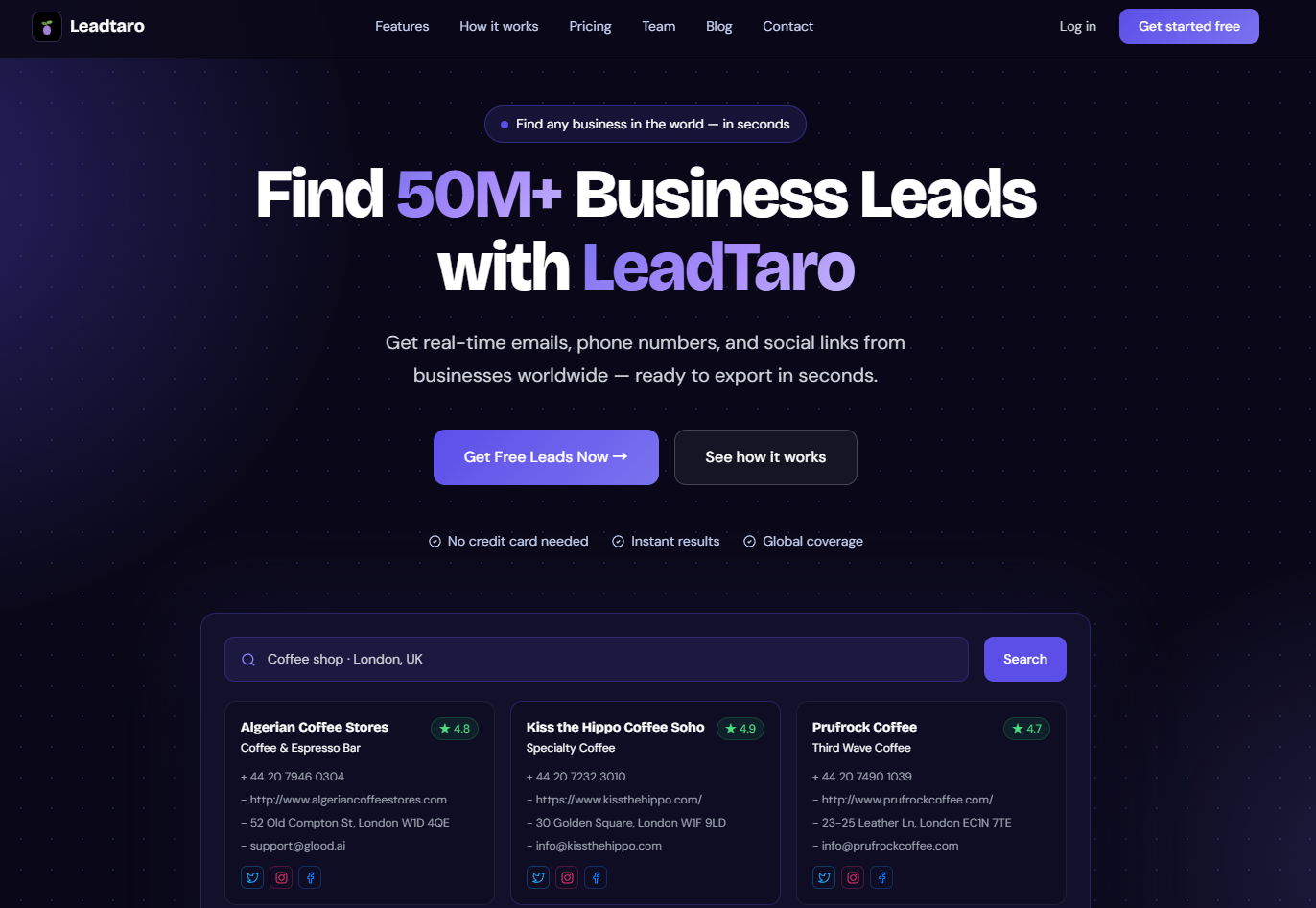
LeadBoba can support this stage by helping you search for businesses by industry, business type, and location. Its Bulk Search uses the existing LeadBoba database, while Fresh Search performs a live search and crawl that may take longer.
Depending on the business record, available information may include company name, category, address, website, phone number, email address, ratings, reviews, or social links. Fields vary by record, so verify important details before relying on them.
For a large campaign, export suitable records to CSV and review them before importing them into your CRM.
Step 3: Research and Qualify Each Account
A target account list should be the beginning of research, not the end.
For each priority company, check its website, product or service offering, operating locations, and any publicly available information relevant to your campaign.
Ask whether the business genuinely fits your ICP and whether your solution addresses a plausible need.
For high-value accounts, document the evidence behind your prioritization. This helps sales representatives personalize their conversations without relying on assumptions.
Step 4: Identify the Relevant Decision-Makers
ABM targets organizations, but people within those organizations make purchasing decisions.
Depending on the product, the relevant contact might be an owner, operations manager, marketing director, IT leader, or procurement specialist.
Map the likely buying group and understand each person's role. A technical decision-maker may care about integrations and security, while a finance leader may prioritize total cost and return on investment.
Use appropriate professional sources and verified business information to identify contacts. Do not assume that a public company phone number or generic email address belongs to a specific decision-maker.
Step 5: Develop Account-Specific Messaging
Effective personalization explains why your offer is relevant to that particular business.
Weak personalization:
"Hi, we help businesses grow. Would you like a demo?"
More relevant personalization:
"We work with regional service businesses that want to reduce the time their teams spend managing customer enquiries. Based on your company's service offering and locations, I thought our scheduling platform might be relevant."
The second example connects the product to a business context. In a real campaign, include only details you have verified and avoid implying that you know private information about the recipient.
Step 6: Coordinate Marketing and Sales Channels
ABM often combines several channels, such as personalized email, professional networking, targeted advertising, sales calls, and relevant content.
Choose channels that fit the audience and the applicable communication rules. The aim is to provide a consistent experience rather than contact the same person repeatedly across every possible channel.
Marketing can create awareness and provide useful information, while sales follows up with qualified accounts and records the results.
Step 7: Track Every Interaction
Use your CRM or sales pipeline to record account status, outreach history, next steps, and outcomes.
LeadBoba includes a CRM-style pipeline with stages such as New Lead, Contacted, Interested, Meeting, and Closed. Its AI-assisted cold email personalization can help teams prepare more relevant outreach, while CSV export allows prospect data to be used in compatible external systems.
These features can support prospecting and account organization. Campaign automation, advertising orchestration, and advanced account intent scoring may require separate tools.
Review your campaign regularly and adjust targeting, messaging, or channel selection based on qualified engagement and pipeline results.
Integrating Account Data With Your CRM
A CRM provides a central place to manage account records, contacts, activities, and opportunities. Integrating suitable business data into that system helps sales and marketing teams work from a shared view.
Standardize Your Data Before Importing
Before importing a list, establish consistent formats for company names, websites, addresses, and other important fields.
Remove obvious duplicates and check that required fields are mapped to the correct CRM properties.
For example, two records with slightly different company names may refer to the same organization. Website domains and addresses can help identify potential duplicates, although they should not be used as the sole matching criteria in every case.
Separate Account Records From Contact Records
An account represents an organization. A contact represents a person associated with that organization.
Keeping these concepts separate helps teams manage businesses with multiple decision-makers or branches.
A company may have one central purchasing team and several local offices. Your CRM should reflect the structure that matters to your sales process.
Establish a Data Refresh Process
Do not assume that imported data remains accurate indefinitely.
Set a schedule for reviewing important fields and rechecking high-priority accounts before outreach. Update closed businesses, changed websites, invalid contact information, and other discrepancies where possible.
The appropriate refresh frequency depends on your industry, campaign length, and how quickly the underlying information changes.
Connect CRM Data With Campaign Results
Track which target accounts receive outreach, which contacts respond, and which activities lead to qualified meetings or opportunities.
Over time, this information helps you identify which industries, territories, account sizes, and messages produce the strongest results.
Keep the data collection proportionate to the campaign's purpose and restrict access to people who need it.
Measuring ABM Performance
ABM success should be measured at the account and revenue levels, not solely by lead volume or email engagement.
Account Engagement
Track the number and proportion of target accounts that demonstrate meaningful engagement.
Depending on your campaign, that might include a relevant reply, a completed meeting, a product evaluation, or participation in a buying process.
An email open alone is a weak indicator because privacy features and automated systems can distort open-rate measurements.
Meetings and Qualified Opportunities
Measure how many target accounts progress to qualified meetings and sales opportunities.
Review the reasons accounts advance or drop out. A campaign with fewer meetings but a stronger opportunity conversion rate may be more valuable than one that generates many unqualified conversations.
Pipeline and Revenue Contribution
Track the value of opportunities created or influenced by the campaign, along with the revenue eventually generated.
Use a consistent attribution approach. Multiple marketing and sales activities may influence the same opportunity, so avoid assigning all credit to a single touchpoint without a defensible method.
Cost per Qualified Account
Include the cost of research, data, advertising, content, and sales time when evaluating campaign efficiency.
Compare results across campaigns and territories to determine whether a focused approach is delivering enough value to justify its additional research and personalization.
Account Progression
For longer sales cycles, monitor how accounts move from initial engagement to discovery, evaluation, negotiation, and closed business.
This reveals where campaigns are helping and where the buying process is becoming stuck.
Common Account-Based Marketing Mistakes
Even well-funded ABM campaigns can underperform when the basics are overlooked.
Targeting Too Many Accounts
A large account list can look impressive but become difficult to personalize and manage.
Start with a manageable segment, validate the ICP, and expand when the campaign demonstrates that it can generate qualified opportunities.
Relying on Inaccurate Data
Incorrect business details and unsuitable contacts waste time and can damage credibility.
Verify high-priority records and maintain a process for handling outdated or incomplete information.
Confusing Personalization With Relevance
Adding a company's name or city to a generic email does not make the message meaningfully personalized.
Connect the message to a verified business characteristic, relevant challenge, or practical use case.
Treating Public Signals as Buying Intent
A business opening a new location or receiving negative reviews does not necessarily indicate that it wants your product.
Use such information to guide research, not to make unsupported claims about the company's needs or intentions.
Ignoring Sales and Marketing Alignment
If marketing measures engagement while sales focuses on unrelated targets, the campaign can generate activity without creating pipeline.
Agree on the ICP, qualification criteria, account ownership, follow-up process, and success metrics before launch.
Measuring Vanity Metrics
Impressions, clicks, and email opens can provide context, but they should not replace qualified engagement, opportunities, and commercial outcomes.
Choose metrics that connect to the original campaign objective.
The Role of AI in Modern ABM
AI can help teams conduct account research, summarize public company information, segment lists, draft outreach, and analyze campaign performance.
Research and Account Prioritization
AI-assisted research can summarize information from company websites and other appropriate sources. Teams can use these summaries to identify accounts for further investigation.
Automated scores should be treated as recommendations, not definitive judgments. Review the underlying evidence, particularly for high-value accounts.
Personalized Outreach at Scale
AI can help adapt messaging to different industries, company types, and business contexts.
For example, the value proposition for a restaurant group may differ from the one used for a manufacturing company, even when both are potential customers for the same software.
LeadBoba's AI-assisted cold email personalization can support this prospecting workflow. Review generated messages before sending them to ensure they are accurate, relevant, and appropriate for the recipient.
Better Analysis of Campaign Results
AI tools can help summarize campaign performance, identify patterns in replies, and suggest segments for further testing.
However, conclusions should be checked against the underlying data. Small sample sizes, inconsistent tracking, and confounding factors can produce misleading recommendations.
Human Oversight Remains Important
AI does not remove the need for sound account selection, data verification, good judgment, or compliance.
Use automation to reduce repetitive work while keeping humans responsible for important targeting decisions, sensitive communications, and final campaign quality.
Data Privacy and Compliance
ABM involves collecting and using business information, and some of that information may identify individuals. Public availability does not automatically mean that all collection, storage, or marketing uses are lawful.
Before launching a campaign, consider the rules that apply to your business, your recipients, and your data sources.
Verify Your Data Sources and Their Terms
Use data sources in accordance with their terms and applicable laws. If a source restricts automated collection or reuse, those restrictions may affect how the data can be obtained and used.
Do not assume that information visible on a website can be copied, stored, and repurposed without limits.
Follow Applicable Marketing Laws
In the UK and EU, direct marketing may involve requirements under data protection and electronic communications laws. The legal basis for processing personal data is a separate question from whether a particular email or message is permitted.
In the UK, for example, the rules can differ depending on whether the recipient is a corporate subscriber, a sole trader, or an individual. Other jurisdictions have their own requirements.
Provide required identification and opt-out mechanisms, maintain suppression lists, and respect objections and unsubscribe requests. Seek qualified legal advice when your campaign crosses jurisdictions or involves personal contact information.
Minimize and Protect Data
Collect only information that is relevant to the campaign's purpose. Establish retention periods, restrict access, and remove data that is no longer needed.
Where personal data is involved, document the purpose of processing and address applicable transparency and individual-rights requirements.
Responsible data practices help protect recipients and reduce risks to your business.
Frequently Asked Questions
What is account-based marketing in B2B?
Account-based marketing is a strategy in which a business selects specific target organizations and coordinates marketing and sales activities to engage them. Rather than focusing only on the number of leads generated, ABM prioritizes accounts that fit the company's ideal customer profile and commercial goals.
What is the difference between ABM and traditional lead generation?
Traditional lead generation often attracts a broad audience and qualifies leads afterward. ABM starts by selecting target accounts, then creates marketing and sales activities tailored to those organizations. Many B2B companies combine both methods.
How do you choose target accounts for ABM?
Define your ICP, identify businesses that match it, and prioritize accounts based on business fit, potential value, relevant needs, and the quality of available information. Verify the records before outreach and refine your selection using campaign results.
Can geographic data improve account-based marketing?
Yes. Geographic data can help businesses prioritize territories, identify regional account clusters, plan sales coverage, and personalize outreach using relevant location context. It is most useful when combined with industry, company, and commercial information.
What tools do you need for an ABM campaign?
A typical ABM workflow may include a B2B lead source, CRM, email or sales engagement platform, analytics tools, and relevant advertising or content systems. Smaller teams can start with a simpler stack and add integrations as their campaign becomes more sophisticated.
Can small businesses use account-based marketing?
Yes. Small businesses can begin with a focused list of suitable accounts in one industry or region. A narrow campaign makes it easier to research prospects, personalize messaging, and learn which accounts are most likely to become customers before expanding.
How can LeadBoba support an ABM workflow?
LeadBoba can help teams find businesses by industry and location, search an existing lead database or perform a live search, export suitable records to CSV, personalize cold emails with AI assistance, and manage prospects through a sales pipeline. It can support the account discovery and prospect management stages of ABM; more advanced account orchestration may require additional tools.
How long does it take to see results from ABM?
It depends on deal size, sales cycle, account quality, and campaign execution. Some campaigns may generate early replies or meetings, while complex B2B purchases can take considerably longer. Track early engagement alongside qualified opportunities and revenue over an appropriate period.
Final Thoughts
Account-based marketing works best when businesses focus on the right accounts, understand why those accounts are relevant, and coordinate marketing and sales around a clear objective.
Geographic data can make account selection more practical for businesses targeting local companies, regional markets, or multi-location organizations. Combined with accurate business information, thoughtful research, and a structured CRM workflow, it can help teams prioritize their effort and personalize outreach more effectively.
Start with a well-defined ICP, build a manageable target account list, verify the information, and measure progress against qualified engagement and pipeline outcomes.
LeadBoba can support the early stages of that process by helping you discover businesses, organize lead lists, export records, personalize cold emails, and track prospects through your sales pipeline.
The goal is not to collect the largest possible list. It is to identify the accounts that make sense for your business and give each one a relevant reason to start a conversation.