Finding B2B leads is only the first step in building a successful sales pipeline. The real challenge is identifying which prospects deserve your attention, when to reach out, and how to turn potential customers into real opportunities.
AI lead scoring helps sales teams prioritize prospects based on company information, business fit, engagement, and other relevant signals. Instead of treating every lead equally, businesses can focus their time on prospects that are more likely to become customers.
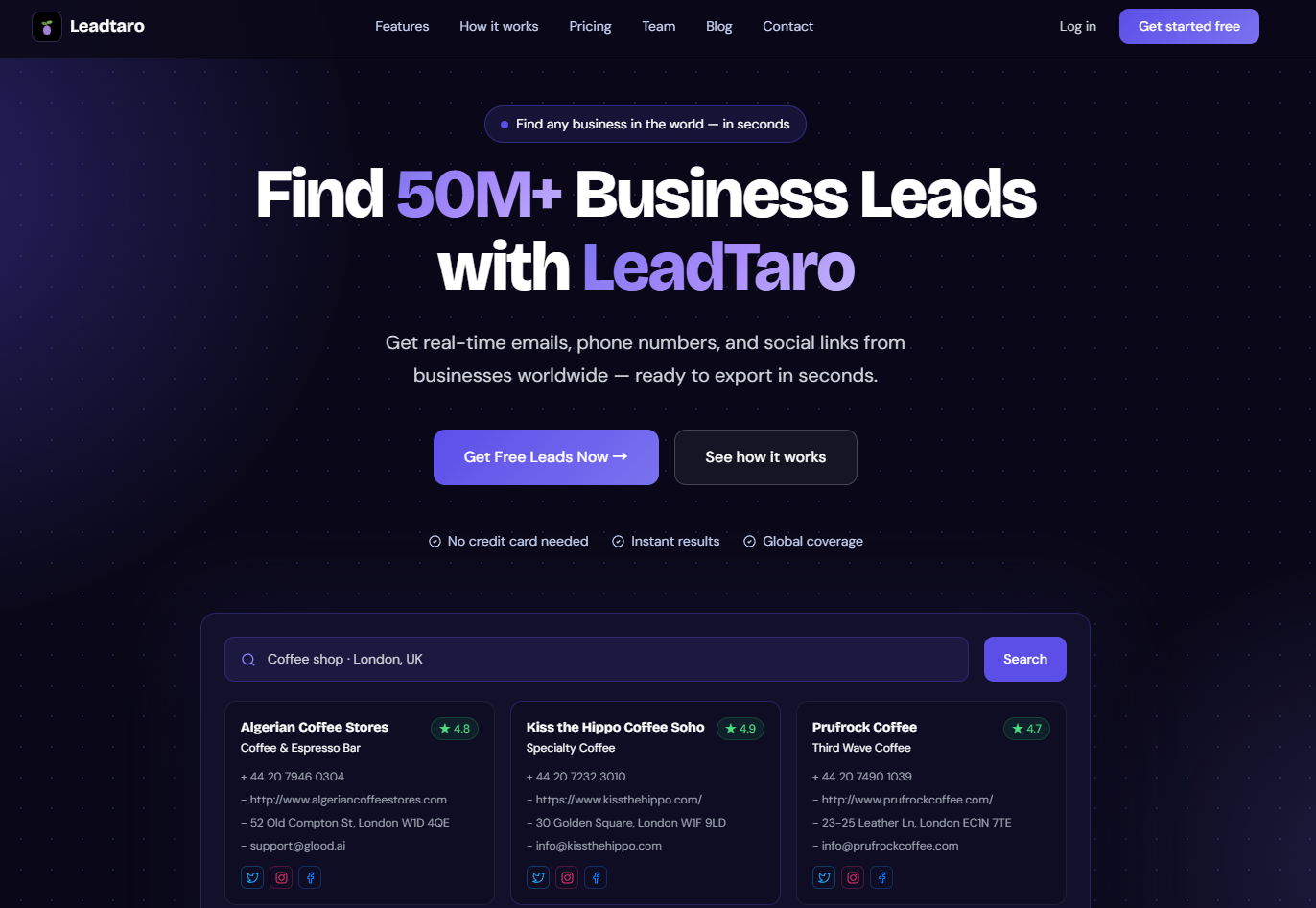
With LeadTaro, you can discover B2B leads, review available business information, generate personalized cold emails with AI, and manage prospects through a CRM pipeline. Combining these capabilities with a consistent lead scoring strategy can help you build a more organized and efficient sales process.
What Is AI Lead Scoring?
AI lead scoring is the process of using artificial intelligence and data analysis to estimate how likely a prospect is to become a customer.
Traditional lead scoring usually relies on predefined rules. For example, a company might receive additional points if it operates in a target industry, matches a preferred location, or has a relevant business website.
AI-powered scoring can go further by identifying patterns in historical sales data, customer behavior, and company characteristics. These patterns can help businesses prioritize prospects more effectively when sufficient reliable data is available.
For B2B sales teams, lead scoring can help answer three important questions:
Which prospects best match our ideal customer profile?
Which businesses should we contact first?
Which leads need further research or follow-up?
The goal is not to assume that every high-scoring prospect will convert. It is to make better-informed decisions about where to spend sales and marketing resources.
Traditional Lead Scoring vs. AI Lead Scoring
Traditional lead scoring uses fixed criteria established by a sales or marketing team. AI lead scoring analyzes available data to identify relationships that may be difficult to recognize manually.
For example, a traditional scoring system might assign points to businesses in a specific industry or location. An AI model could potentially identify combinations of company characteristics and engagement signals associated with successful deals.
Both approaches can be useful.
Traditional scoring is often a practical starting point for startups and small businesses that have limited historical sales data. Predictive AI models become more useful when a business has enough reliable examples of successful and unsuccessful sales outcomes.
Which Data Matters for B2B Lead Scoring?
An effective lead scoring strategy starts with relevant, accurate business information.
1. Company and Industry Information
Evaluate whether a prospect matches your ideal customer profile. Consider industry, company location, business type, company size, and other characteristics relevant to your product or service.
For example, a web design agency may prioritize businesses that operate in its target market and have a website that could benefit from improvement.
2. Website and Online Presence
A company's website can reveal useful information about its products, services, positioning, and potential digital needs.
Businesses with outdated websites, limited online functionality, or unclear service pages may be relevant prospects for certain agencies. These signals should be evaluated in context rather than treated as automatic indicators of purchasing intent.
3. Contact Information
Available business contact information helps sales teams determine whether a prospect can be reached through an appropriate channel.
LeadTaro helps users discover B2B leads with available business details such as websites, phone numbers, email addresses, and social links. The information available can vary by business.
Before launching an outreach campaign, review contact details and verify that your intended communication complies with applicable privacy and marketing requirements.
4. Engagement and Sales History
When available, engagement signals can help improve prioritization. Examples include replies to previous outreach, requests for information, meetings booked, and relevant website interactions.
Historical CRM data is particularly valuable because it helps you evaluate which characteristics are associated with successful sales outcomes.
5. Follow-Up and Pipeline Status
A lead's position in your sales process also matters. A prospect who has requested a quotation may need immediate attention, while a newly discovered business may first require research and qualification.
Tracking these stages helps teams avoid losing opportunities simply because follow-ups were missed.
How to Build a Practical Lead Scoring System
You do not need an advanced machine learning model to start prioritizing B2B leads. A simple scoring framework can provide structure while you gather enough data to improve it.
Step 1: Define Your Ideal Customer Profile
Start by identifying the businesses most likely to benefit from your product or service.
Consider your target industries, geographic markets, business types, company characteristics, and the problems your solution addresses.
For example, a marketing agency might target independent businesses that need better websites, more qualified leads, or improved online visibility.
Step 2: Assign Points to Relevant Signals
Create a scoring system based on criteria that matter to your business.
Here is an illustrative example:
Qualification criterionExample scoreMatches your target industry+20Located in your target market+15Has a relevant business website+10Shows a specific need your service addresses+25Responded positively to outreach+20Contact information needs verificationReview requiredClearly outside your target market-20These values are examples, not a validated predictive model. Adjust them to match your own market and sales results.
Step 3: Find and Organize B2B Leads
Use LeadTaro to discover businesses matching your target market and review their available information.
You can use the results to build a prospect list, identify businesses that deserve further qualification, and organize potential customers for outreach.
For larger prospecting projects, bulk lead search can help you work with businesses in your target market using LeadTaro's available database.
Step 4: Prioritize Prospects
Group prospects into practical categories based on their scores.
High priority: Strong customer fit and a clear reason to initiate contact.
Medium priority: Relevant business, but more research is needed.
Low priority: Weak fit or insufficient information to justify immediate outreach.
Review the highest-priority prospects first, but avoid treating a score as a guarantee of conversion.
Step 5: Create Personalized Outreach
Once you identify suitable prospects, prepare outreach that reflects their business, likely needs, and the service you offer.
LeadTaro's AI cold email generation can help you create personalized first drafts for your prospecting campaigns. Review each message for accuracy and relevance before sending it.
Avoid generic messages that could apply to any business. Explain why you are contacting that particular company and how your offering may be useful.
Step 6: Track Results in Your CRM Pipeline
Lead scoring becomes more valuable when it is connected to a consistent sales process.
Use LeadTaro's CRM pipeline to organize prospects and track their progress through stages such as New Lead, Contacted, Interested, Meeting, and Closed.
Record relevant outcomes, including positive replies, meetings, unsuccessful attempts, and closed deals. These results help you understand whether your scoring criteria are identifying worthwhile prospects.
Step 7: Improve Your Scoring Criteria
Review your results regularly.
Ask questions such as:
Which industries generate the most positive responses?
Which types of businesses progress to meetings?
Which prospects become paying customers?
Which scoring criteria fail to predict meaningful outcomes?
Use these findings to refine your rules. If you eventually have sufficient reliable historical data, you can evaluate whether a predictive machine learning model would offer additional value.
How LeadTaro Supports a More Organized Lead Generation Workflow
LeadTaro brings several stages of B2B prospecting together in one workflow.
B2B lead discovery: Find businesses relevant to your target industry and market.
Business information: Review available contact details, websites, phone numbers, and social links to support prospect research.
AI cold email generation: Create personalized email drafts to make outreach preparation more efficient.
CRM pipeline management: Organize prospects, track follow-ups, and manage opportunities as they progress through your sales process.
Bulk lead search: Work with larger groups of prospects when building and organizing your target lists.
LeadTaro also offers a free plan that lets users access 60 B2B leads without requiring a credit card. This provides a practical way to explore the platform and begin building a prospecting workflow.
Common Lead Scoring Mistakes to Avoid
Relying on Incomplete Information
Missing or outdated company information can lead to poor prioritization. Review important details before contacting a prospect, and avoid assigning high scores solely because a company matches one criterion.
Confusing Business Fit With Buying Intent
A company may match your ideal customer profile without having an immediate need or budget. Separate long-term suitability from signals that suggest a current opportunity.
Overcomplicating the Scoring Model
Starting with dozens of criteria can make a scoring system difficult to maintain. Begin with a small number of meaningful signals and expand only when the evidence supports doing so.
Ignoring Negative Results
Unsuccessful outreach provides useful feedback. If a particular segment consistently produces irrelevant replies or no meaningful opportunities, review whether those businesses belong in your target audience.
Failing to Follow Up
A well-qualified prospect can still be lost when communication is inconsistent. Maintain clear CRM stages and follow-up practices so promising opportunities do not disappear from your pipeline.
Frequently Asked Questions
What is AI lead scoring?
AI lead scoring uses artificial intelligence and data analysis to estimate which prospects are most likely to become customers. It can analyze company characteristics, historical sales outcomes, and engagement signals to support prioritization.
Can small businesses use lead scoring?
Yes. Small businesses can start with a simple points-based framework using industry, location, business fit, and engagement. More advanced predictive models can be considered when sufficient historical data becomes available.
How does lead scoring improve B2B prospecting?
Lead scoring helps teams prioritize relevant prospects, allocate research time more efficiently, and structure follow-up activities around the businesses most likely to be suitable customers.
How can LeadTaro help with lead qualification?
LeadTaro helps users discover B2B businesses, review available business information, prepare personalized cold emails with AI, and organize prospects in a CRM pipeline. These features support a more structured qualification and outreach process.
Does a high lead score guarantee a sale?
No. A lead score is a prioritization tool, not a guarantee of purchasing intent. Sales outcomes also depend on timing, budget, customer needs, competition, and the quality of your outreach.
How should I measure the effectiveness of lead scoring?
Track metrics such as positive reply rate, meetings booked, qualified opportunities, conversion rate, and time spent qualifying prospects. Evaluate these metrics across different lead segments to identify which scoring criteria are genuinely useful.
Conclusion: Turn Lead Data Into Better Sales Priorities
Successful B2B prospecting is about more than collecting a large number of contacts. It requires identifying suitable businesses, understanding their potential needs, reaching out with relevant messages, and consistently managing follow-ups.
A practical lead scoring system gives your sales process more structure. Start with a clear ideal customer profile, assign sensible scores to meaningful business signals, and refine your approach using actual campaign and CRM results.
LeadTaro helps bring lead discovery, AI-assisted cold email creation, and CRM pipeline management into one workflow, making it easier to move from finding prospects to managing sales opportunities.
Ready to improve your B2B prospecting workflow? Start with LeadTaro's free plan, explore 60 B2B leads without a credit card, and build a more organized approach to finding and qualifying potential customers.