Finding the right B2B customers is not just about identifying companies in your industry. It is about understanding which businesses are most likely to need your product, where they operate, and how to reach the decision-makers who can buy from you.
Research frequently identifies a lack of market need as one of the leading reasons startups fail. For sales teams, the lesson is straightforward: generating thousands of leads means little if those leads do not match your ideal customer profile.
Geography is an important part of that equation. A roofing contractor in Phoenix faces different market conditions from one in Portland. A marketing agency in London may serve a completely different customer base from an agency in Manchester. Even businesses in the same industry can have different needs depending on their local competition, customer demographics, and operating environment.
For B2B sales teams, combining geographic targeting with company information and contact data can make prospecting more focused and efficient.
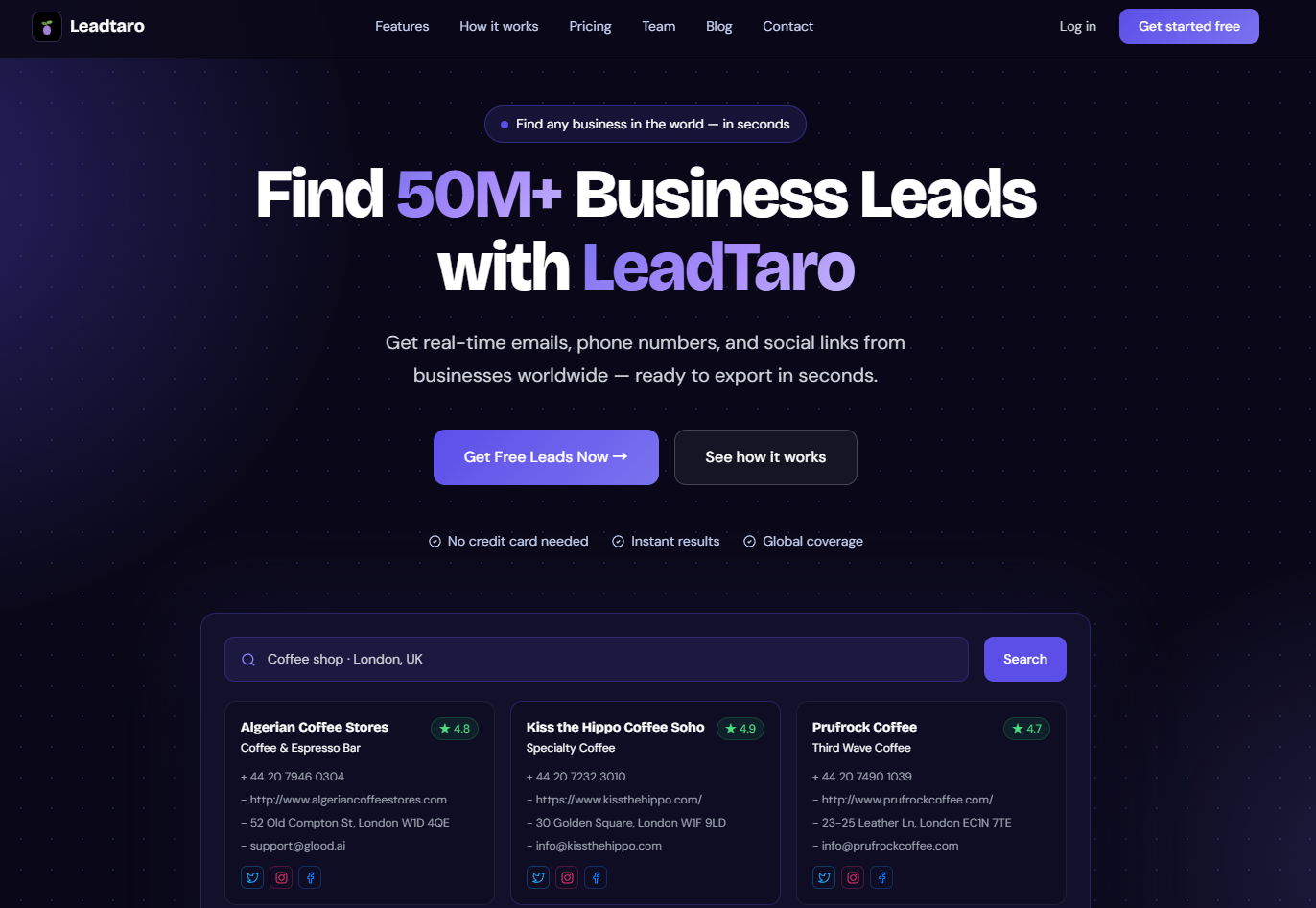
LeadBoba helps businesses discover B2B prospects, find available business contact information, organize leads into a sales pipeline, and prepare personalized cold emails. By combining targeted lead searches with a clearly defined ideal customer profile, sales teams can spend less time sorting through irrelevant companies and more time engaging potential customers.
What Is an Ideal Customer Profile?
ICP Definition: Finding the Right Businesses to Target
An ideal customer profile, or ICP, describes the type of company most likely to benefit from your product or service.
Unlike a buyer persona, which describes an individual decision-maker, an ICP focuses on the company itself.
A B2B ideal customer profile typically includes:
Industry and business category
Company size and estimated revenue
Business location and service area
Products or services offered
Existing technology and operational needs
Potential budget and purchasing capacity
Business challenges that your product can solve
Available contact information and accessibility
For example, a web design agency might target independent restaurants with outdated websites in major UK cities. A software company might focus on small and medium-sized businesses that need better sales automation.
The more clearly you define your ideal customer, the easier it becomes to identify relevant prospects.
However, a useful ICP needs more than firmographic information. Geography can help you narrow your market, prioritize sales territories, and identify businesses operating in locations where your product is most relevant.
Why Geography Matters in B2B Lead Generation
Geographic Targeting Goes Beyond Company Headquarters
A company's registered address does not always represent its entire market.
A business headquartered in London might serve customers throughout the UK. A regional construction company might only accept projects within a 50-mile radius. A software provider might operate nationally but concentrate its sales efforts in cities with large technology communities.
These differences influence how sales teams should approach prospecting.
Geographic targeting can help you answer important questions:
Which cities contain the highest concentration of your target businesses?
Where are your existing customers located?
Which regions offer opportunities for expansion?
Which local businesses are most relevant to your service?
Where can your sales team reach prospects efficiently?
For businesses that depend on local customers, such as marketing agencies, IT service providers, accountants, and commercial contractors, location can be especially important.
For national or international B2B companies, geography can still help prioritize markets and adapt outreach to local business conditions.
Combining Geography With Firmographic Data
Geography alone is rarely enough to identify an ideal customer.
Suppose you sell CRM software to small businesses. Searching for every company in Birmingham might produce thousands of potential prospects, but many may have no need for your product.
A more useful ICP might look like this:
ICP criterionExampleIndustryMarketing agenciesCompany size5–50 employeesLocationBirmingham and surrounding areasBusiness needManaging multiple sales opportunitiesDecision-makerFounder, owner, or sales managerOutreach channelBusiness email and personalized cold outreachThis combination provides a clearer prospecting strategy than targeting businesses by location alone.
With LeadBoba, you can use B2B lead search to discover relevant companies, review available business information, identify accessible contact details, and build a prospect list aligned with your target market.
How to Build a Geographic ICP Step by Step
Step 1: Analyze Your Best Existing Customers
Start with your existing customer base rather than immediately searching for new leads.
Identify the customers that generate the most value for your business. Consider revenue, retention, profitability, sales cycle length, and the resources required to support each account.
Then examine where those customers operate.
Look for patterns such as:
Customers concentrated in particular cities or regions
Industries that perform especially well in specific markets
Businesses located near relevant commercial or industrial hubs
Regional differences in conversion rates
Areas where your product solves a particularly common problem
For example, if your best customers are independent marketing agencies in London and Manchester, these cities may be sensible starting points for your next prospecting campaign.
Do not assume that a geographic cluster automatically proves demand. Treat it as a hypothesis to validate with additional sales research.
Step 2: Define Your Target Business Categories
Once you understand your best customers, translate those insights into searchable business criteria.
A vague target such as "small businesses" is difficult to use effectively. More specific categories produce a more actionable prospecting strategy.
Consider these examples:
IT support providers serving small businesses
Independent dental practices in selected cities
Commercial cleaning companies in major business districts
Digital marketing agencies serving local clients
Accountancy firms working with small and medium-sized enterprises
Construction contractors operating within a defined region
LeadBoba helps you discover businesses that match your target categories and search criteria. You can then review their available company information and contact details to determine whether they fit your ICP.
The objective is not to collect every business in a category. It is to build a relevant list of companies with a credible reason to consider your product.
Step 3: Build a Location-Specific Prospect List With LeadBoba
With your ICP defined, start searching for businesses in your priority markets.
For example, a sales team targeting independent accountants in the UK could begin with a few locations:
London
Manchester
Birmingham
Leeds
Bristol
Instead of combining every market into one enormous prospect list, organize your research by location. This makes it easier to compare the quality of prospects and evaluate which regions deserve more attention.
LeadBoba's B2B lead database contains millions of business records and supports prospect discovery across different industries and markets. Available information can include company names, categories, addresses, websites, phone numbers, email addresses, and social links, depending on the record.
Use the information available for each business to evaluate its relevance before adding it to your active sales pipeline.
Remember that contact information availability varies between businesses. A listing or company record should not automatically be treated as proof that a contact detail is current or that a particular person is responsible for purchasing decisions.
Step 4: Qualify Leads Before Contacting Them
A business can match your industry and location criteria without being a good prospect.
Before beginning outreach, assess each lead against your ICP.
Useful qualification questions include:
Does the business offer the type of service you expect?
Does its website indicate a relevant operational need?
Is it located within your target market?
Does it appear to have the size and structure you want to serve?
Is there a plausible reason for the business to purchase your product?
Is suitable contact information available?
You can also assign a simple lead score to prioritize accounts.
Qualification factorExample scoreMatches target industry0–2Located in a priority region0–2Matches company-size criteria0–2Shows a relevant business need0–2Has accessible contact information0–2A prospect scoring 8 out of 10 could receive higher priority than a business scoring 3 out of 10.
This is an example of a qualification framework, not a claim that LeadBoba automatically calculates this particular score. You can adapt the criteria to your own sales process.
The benefit is simple: your team has a consistent method for deciding which prospects deserve attention first.
Step 5: Segment Prospects by Region
After qualifying your leads, organize them into geographic segments.
For example, a UK-based sales team might create separate prospect groups for London, the Midlands, Northern England, and Scotland.
Each segment can have its own campaign objectives, messaging, and performance targets.
Regional segmentation can help you:
Compare prospect quality across markets
Identify regions with stronger conversion rates
Personalize outreach around relevant local business conditions
Coordinate sales representatives and territory ownership
Allocate prospecting time to the most promising markets
LeadBoba's sales pipeline helps you organize leads by their progress through your sales process. You can track stages such as New Lead, Contacted, Interested, Meeting, and Closed to understand what happens after a prospect enters your pipeline.
Combining geographic segmentation with pipeline tracking allows you to evaluate not just how many businesses you discover, but how many progress toward becoming customers.
Step 6: Personalize Your Cold Emails
Geographic targeting is most valuable when it improves the relevance of your communication.
A generic email sent to hundreds of companies is unlikely to demonstrate that you understand their needs. A better message explains why your product could be relevant to that particular business.
For example, a web design agency contacting independent restaurants could tailor its message around the restaurant's existing website and online ordering experience.
A software provider contacting an IT services company might focus on reducing administrative work or improving sales visibility.
LeadBoba supports AI-assisted cold email creation to help you prepare personalized outreach based on relevant prospect information.
A simple outreach structure includes:
Relevant opening: Introduce a genuine observation about the business.
Business problem: Explain a plausible challenge that your product addresses.
Value proposition: Describe how your solution could help.
Clear call to action: Ask a simple, relevant question.
Avoid inventing details about a prospect or assuming that every company in a particular city shares the same preferences. Personalization should be based on information you can reasonably substantiate.
Geographic ICP Template for B2B Sales Teams
Use the following template to turn your research into a repeatable prospecting strategy.
CategoryQuestions to answerIndustryWhich business categories are most relevant?Company profileWhat size and business model fit your product?Geographic marketWhich cities, regions, or countries should you target?Operating areaWhere does the company actually serve customers?Business needsWhat problems can your product solve?Contact availabilityWhich relevant business contact details are available?QualificationWhat makes a prospect worth contacting?Outreach strategyWhich message and channel suit the prospect?Sales processHow will leads move through your pipeline?Performance metricsWhich regions generate qualified opportunities and customers?Review this profile regularly. As your company acquires customers and learns which prospects convert, adjust the criteria to reflect actual results.
Geographic ICP Examples Across Different Industries
Example 1: Web Design Agencies
A web design agency wants to find local businesses that may benefit from a new website.
Potential ICP:
Industry: Restaurants, trades, professional services
Location: Selected towns and cities
Business signals: Limited website functionality or an outdated online presence
Decision-maker: Owner or manager
Outreach: Website-specific observations and a clear improvement proposal
Using LeadBoba, the agency can discover businesses in its target categories, examine available website information, and organize suitable prospects for outreach.
Example 2: B2B Software Companies
A SaaS company sells sales management software to small and medium-sized businesses.
Potential ICP:
Industry: B2B services and technology
Company size: Small and medium-sized teams
Location: Initial priority markets followed by broader expansion
Business need: Managing sales opportunities and customer follow-ups
Decision-maker: Founder, sales manager, or operations leader
The company can use LeadBoba to identify relevant businesses, build segmented prospect lists, and prepare personalized cold emails.
Geography helps organize the sales strategy, while business relevance determines whether an account should be contacted.
Example 3: Commercial Service Providers
A commercial cleaning company wants to acquire more office contracts.
Potential ICP:
Industry: Offices, commercial facilities, and relevant property businesses
Location: Areas within the company's service radius
Business need: Outsourced commercial cleaning
Decision-maker: Facilities manager, office manager, or business owner
Qualification: Business location, suitability, and likely service requirements
For this company, geographic proximity may be more important than company size alone because travel time and service coverage directly affect profitability.
How to Measure Geographic Lead Generation Performance
A geographic ICP is only useful if it improves sales outcomes.
Track the performance of each region separately rather than judging success solely by the number of leads collected.
1. Lead Qualification Rate
Measure the percentage of discovered businesses that meet your ICP.
A high qualification rate suggests that your search criteria are identifying relevant companies.
2. Contactability Rate
Measure how many prospects have usable contact information and can be approached through an appropriate channel.
Do not confuse an available email address with verified deliverability or a confirmed decision-maker.
3. Positive Reply Rate
Track how many contacted prospects respond with genuine interest.
Compare results by location, industry, and outreach message to understand which combinations perform best.
4. Meeting Conversion Rate
Measure how many contacted prospects agree to a meeting or another meaningful next step.
This indicates whether your targeting and messaging are attracting suitable potential customers.
5. Customer Acquisition Cost
Calculate how much you spend acquiring a customer in each region, including prospecting tools, staff time, outreach costs, and other relevant expenses.
A region with fewer leads may be more valuable if those leads convert more frequently and produce higher-value customers.
6. Revenue by Geographic Segment
Ultimately, evaluate how much revenue each market generates and how profitable those customers are over time.
Use the results to refine your geographic ICP and decide where to focus your next prospecting campaign.
How LeadBoba Supports Your B2B Prospecting Workflow
Building a geographic ICP requires more than identifying cities on a map. You need a repeatable way to discover companies, review contact information, prioritize prospects, and manage follow-up.
LeadBoba brings several parts of that workflow together.
B2B Lead Search
Discover businesses across industries and markets using the available search criteria. LeadBoba's database provides a starting point for building targeted prospect lists without manually researching every company from scratch.
Business Contact Information
Review available phone numbers, email addresses, websites, and social links to identify suitable ways to contact potential customers.
The information available varies by business, and users should validate important contact details before launching large outreach campaigns.
CSV Export
Export eligible lead data for further analysis, reporting, or use in compatible sales workflows. CSV availability depends on your account's access and applicable product limits.
Sales Pipeline Management
Organize prospects and track their progress through stages such as New Lead, Contacted, Interested, Meeting, and Closed.
This helps you connect prospect discovery with the actual sales process rather than treating lead generation as a one-time list-building exercise.
AI-Assisted Cold Emails
Prepare personalized email drafts using relevant business information. Instead of sending identical messages to every company, tailor your outreach to the prospect's business and the problem you can solve.
One Connected Prospecting Process
The overall workflow is straightforward:
Define your ideal customer profile.
Choose priority industries and geographic markets.
Discover matching businesses with LeadBoba.
Review available contact information and qualify prospects.
Organize leads in your sales pipeline.
Prepare personalized outreach.
Track responses and meetings.
Refine your ICP using actual sales results.
The result is a more structured approach to B2B lead generation, from initial research through follow-up.
ICP vs. Buyer Persona: What's the Difference?
An ideal customer profile and a buyer persona serve different purposes.
An ideal customer profile describes the company you want to sell to. It includes industry, size, location, business needs, and other account-level characteristics.
A buyer persona describes the individual involved in the purchasing decision. It may include their job title, responsibilities, goals, challenges, and decision-making authority.
For example, your ICP could be a marketing agency with 10–50 employees in the UK. Your buyer persona might be the agency's founder or head of business development.
The ICP helps you identify suitable accounts. The buyer persona helps you understand whom to contact and how to communicate with them.
Using both makes prospecting more focused.
Best Practices for Responsible B2B Lead Generation
Collecting business information is only one part of responsible prospecting. How you use that information matters too.
Before running an outreach campaign, consider the following:
Data quality: Review important contact information and avoid assuming that every record is current.
Relevance: Contact businesses when your offer has a reasonable connection to their activities.
Privacy: Understand the data protection requirements applicable to your business and target markets.
Email compliance: Follow applicable marketing rules, identify your business accurately, and provide appropriate opt-out mechanisms.
Suppression lists: Respect unsubscribe requests and maintain records of contacts who should not receive further marketing.
Campaign monitoring: Track delivery, complaints, and responses so you can improve targeting and avoid repeatedly contacting unsuitable prospects.
In the UK, electronic marketing rules can differ depending on whether you contact a corporate subscriber, a sole trader, or an individual. UK GDPR and PECR may apply in different ways, so check the requirements relevant to your specific campaign rather than assuming all B2B email outreach is exempt.
For US campaigns, review CAN-SPAM requirements. Other jurisdictions may impose additional restrictions.
Good lead generation combines useful business data with relevant communication and responsible data handling.
Frequently Asked Questions
How do I use business data to build an ideal customer profile?
Start by analyzing your best existing customers. Identify common industries, company characteristics, locations, and business needs. Use those patterns to define your search criteria, discover matching companies through LeadBoba, and qualify prospects before adding them to your outreach workflow.
What is a geographic ideal customer profile?
A geographic ICP combines standard company characteristics with location-related criteria. These can include operating regions, service coverage, proximity to relevant commercial hubs, local competition, and regional market opportunities.
Can I use LeadBoba to find businesses in specific locations?
LeadBoba supports B2B prospect discovery across different markets and business categories. The businesses returned depend on the available database coverage and search criteria. Review the available results to determine whether they match your target geographic market.
How many leads should I collect for a campaign?
There is no universal ideal number. Start with a manageable list of qualified prospects, test your messaging, and measure positive replies and meeting conversions. Expand the campaign once you understand which segments perform well.
A smaller, relevant prospect list can be more useful than a much larger list with poor qualification.
How often should I update my ICP?
Review your targeting whenever you gain meaningful new customer data or notice changes in your market. Many businesses benefit from reviewing performance monthly and reassessing their overall ICP quarterly, although the appropriate frequency depends on the sales cycle and industry.
Contact information should be checked according to its importance and how frequently it changes.
What is the difference between lead generation and lead qualification?
Lead generation identifies potential customers. Lead qualification evaluates whether those prospects are relevant, reachable, and likely to benefit from your product.
LeadBoba can support the discovery and organization stages of this process, while your qualification criteria and sales results help determine which prospects deserve priority.
Can geographic targeting work for international B2B sales?
Yes. You can organize prospecting by country, region, or city, depending on your target market and available data. For international campaigns, consider language, local regulations, time zones, service availability, and regional business requirements.
Is LeadBoba suitable for small businesses and agencies?
LeadBoba is designed to support prospect discovery and sales workflows for founders, freelancers, agencies, and sales teams. Its usefulness depends on your target market, required contact data, account limits, and how effectively you qualify and contact prospects.
Build a More Focused B2B Prospecting Strategy With LeadBoba
Successful lead generation starts with understanding which businesses are most likely to become customers.
A clearly defined ICP gives your sales team direction. Geographic segmentation helps organize your target markets. Relevant business information makes prospect research more efficient, while qualification, personalized outreach, and pipeline management help turn prospects into real opportunities.
With LeadBoba, you can discover B2B businesses, review available contact information, export eligible lead data, manage sales opportunities, and prepare personalized cold emails in a connected prospecting workflow.
Start building your next prospect list with LeadBoba: https://www.leadboba.com/
Define your ideal customers first. Then find the businesses that fit.