Meta Title: How to Convert Scraped Leads Into Paying Customers (2026)
Meta Description: Learn how to convert scraped leads into paying customers with lead qualification, email verification, personalized outreach, follow-ups, and sales automation.
URL Slug: convert-scraped-leads-into-customers
Primary Keyword: how to convert scraped leads into customers
Secondary Keywords: scraped leads not converting, lead conversion strategy, B2B lead generation, cold email outreach, lead qualification, sales pipeline management, B2B customer acquisition
Introduction: Why Scraped Leads Don't Automatically Become Customers
Collecting thousands of business contacts can feel like a major sales achievement. But a large lead list does not automatically create a predictable sales pipeline.
A spreadsheet containing business names, email addresses, phone numbers, and website URLs is only the starting point. To generate revenue, businesses need to identify the right prospects, understand their needs, communicate relevant value, and guide interested buyers toward a purchase.
This is where many lead generation campaigns fail.
Companies often spend time collecting contacts but rush the steps that matter most: lead qualification, data verification, personalization, follow-up, and sales measurement. They send the same generic message to every business and assume that increasing email volume will solve the problem.
A more effective approach is to treat lead generation as a complete sales process rather than a data collection exercise.
In this guide, you'll learn how to convert scraped leads into paying customers through a practical five-phase framework covering prospect research, outreach, follow-ups, objection handling, and sales automation.
1. Why Most Scraped Leads Never Convert
Before improving conversion rates, it helps to understand why campaigns underperform.
Poor Targeting
A lead can have valid contact information and still be completely irrelevant to your offer.
For example, a company selling website design services might collect thousands of businesses across multiple industries. However, businesses with established websites, limited budgets, or no immediate need for redesign may not be strong prospects.
A smaller list of businesses with a clear potential need may produce better results than a much larger, unqualified database.
The solution is to define your ideal customer profile before collecting leads.
Outdated or Incorrect Contact Information
Scraped data can contain missing fields, duplicate records, outdated phone numbers, and email addresses that no longer work.
Sending campaigns to invalid addresses can increase bounce rates and damage sender reputation.
Before launching an outreach campaign, check the quality of your data and validate contact information using appropriate tools and processes.
Generic Sales Messages
Business owners receive sales pitches regularly. A message that simply describes your service without explaining why it matters to the recipient gives them little reason to respond.
Personalization should go beyond inserting a company name.
Relevant details might include the business's industry, location, publicly listed services, website, or a specific challenge that your product can reasonably address.
No Follow-Up Strategy
A prospect may overlook your first message, be busy, or need more information before responding.
However, repeated messages without new value can become intrusive and damage your reputation.
An effective follow-up strategy provides useful context, makes the next step clear, and respects requests to stop contacting someone.
No Measurable Sales Process
If you only measure how many leads you collect or emails you send, you cannot identify where prospects leave the sales funnel.
Track the entire process, from collected records to qualified opportunities and paying customers.
2. Phase One: Build a Strong Lead Conversion Foundation
The first phase is about identifying the right prospects before investing time in outreach.
Define Your Ideal Customer Profile
An ideal customer profile, or ICP, describes the type of business most likely to benefit from your product or service.
Depending on your offering, useful criteria may include:
Industry and business category
Geographic location
Company size
Business model
Website availability
Existing technology or online presence
Potential need for your solution
Ability to purchase your product
For example, a digital marketing agency might target independent restaurants in a specific city that have an established customer base but limited online visibility.
A B2B software company might focus on businesses within an industry where its product solves a clearly defined operational problem.
The more precisely you define your target, the easier it becomes to qualify leads and write relevant messages.
Choose the Right Location and Market
Geographic targeting is particularly useful for local service providers.
A business serving customers in Manchester, for example, may not benefit from collecting companies across the entire United Kingdom if its team cannot service those locations.
Consider the areas you can realistically serve, the industries represented there, and the size of the potential market.
For local businesses, location can also provide context for outreach. A company operating in a specific neighborhood may have different needs from a national organization serving multiple regions.
Filter Leads Before Outreach
Not every business in your database deserves equal attention.
Apply relevant filters before adding prospects to your campaign. Depending on your data source and use case, you might prioritize companies by industry, location, website presence, business category, or available contact details.
A simple qualification table can help:
Qualification CriterionWhat to CheckWhy It MattersIndustry fitDoes the business match your target market?Improves relevanceLocationCan you serve the business?Avoids unsuitable prospectsContact availabilityIs there an appropriate contact channel?Supports practical outreachBusiness needIs there a credible reason to offer your solution?Improves message relevancePurchase potentialDoes the business appear suitable for your offer?Helps prioritize sales effortAvoid treating assumptions as verified facts. For example, a company without a visible website may have a limited online presence, but that alone does not prove that the owner wants a website.
Use a Simple Lead Scoring Model
Lead scoring helps sales teams prioritize prospects.
You can create a straightforward scoring system using three dimensions:
Fit: How closely does the business match your ICP?
Need: Is there evidence of a problem your product solves?
Readiness: Is there a signal that the business may be open to a solution?
Assign each dimension a score from 1 to 5, using documented criteria.
A company with a strong industry fit, a relevant business need, and a clear buying signal should generally receive more attention than a company that only matches the industry category.
Lead scores should guide research and prioritization, not be treated as guarantees of future purchases.
Verify and Clean Your Data
Before sending messages, review your dataset.
A practical quality checklist includes:
Remove duplicate businesses and contacts.
Check email addresses with a suitable verification service.
Normalize phone numbers and website URLs.
Identify missing or uncertain information.
Record the source and collection date.
Exclude contacts that should not be approached.
Check whether the intended outreach is permitted.
Verification can reduce avoidable delivery problems, but it cannot guarantee inbox placement or establish permission to send marketing messages.
3. Phase Two: Write Outreach Messages That Earn Responses
Once you've selected suitable prospects, the next challenge is starting a meaningful conversation.
Lead With the Prospect's Problem
Many cold emails begin by describing the sender's company, product features, and experience.
That approach puts the seller's priorities first.
Instead, start with a relevant observation, explain why it may matter, and ask a simple question.
For example, a web design agency contacting a restaurant might write:
Subject: question about your website
Hi there,
I came across your restaurant while researching local dining businesses. I couldn't find a website linked to your business listing, so I wanted to ask whether you're currently relying on social media and directory listings for online discovery.
We help restaurants improve their online presence and make it easier for customers to find important information.
Would it be useful if I shared a couple of ideas?
Best,
Your Name
This message works as a starting point because it references a relevant business observation and offers a clear next step without assuming that the prospect has a problem.
Only use observations that you have actually checked. Never invent research, customer results, or competitor comparisons.
Keep Your First Email Focused
A first-touch email should make it easy for the recipient to understand:
Why you are contacting them.
What relevant problem you may help solve.
What small next step you are proposing.
Avoid lengthy company histories, large feature lists, and multiple competing calls to action.
A brief message is often easier to evaluate, especially when contacting a busy business owner.
Personalize Using Relevant Business Information
Scraped business data can provide useful context for personalization.
For example:
Available InformationPossible Outreach AngleBusiness categoryExplain how your solution supports that industryLocationReference a relevant local market or service areaWebsiteDiscuss a specific, verified website issuePublic business servicesExplain how your product supports those servicesPublic reviewsDiscuss reputation management only when relevant and appropriateBusiness technologyMention a compatible workflow or integration if verifiedPersonalization should be useful, accurate, and respectful.
Avoid referencing sensitive personal information or using public data in ways that could surprise or unsettle the recipient.
Use a Clear Call to Action
A call to action, or CTA, tells the prospect what to do next.
Examples include:
Would a short overview be useful?
Is improving this process a priority for your team?
Would you be open to a brief conversation?
Should I send over a relevant example?
Choose one CTA that matches the purpose of the message.
For early-stage cold outreach, a small request can be more appropriate than immediately asking someone to book a lengthy meeting.
Build a Short, Relevant Email Sequence
One message is not always enough to start a conversation. A structured sequence can help you follow up without improvising every time.
Here is an example:
Email 1 — Initial contact
Introduce the relevant observation, explain the potential value, and ask one question.
Email 2 — Additional context
Send a short follow-up with a useful idea, clarification, or resource that relates to the prospect's business.
Email 3 — Relevant example
Share a genuine example, demonstration, or case study that illustrates how your solution may help. Do not invent results or imply that a customer had an experience that cannot be substantiated.
Email 4 — Close the conversation
Politely indicate that you will stop following up unless the prospect wants to continue the conversation.
The timing and number of follow-ups should depend on your market, applicable marketing rules, and the prospect's engagement. Stop contacting people who opt out or ask you not to contact them.
4. Phase Three: Use Multiple Channels Responsibly
Email is only one possible communication channel. Depending on the business and the rules that apply, other channels may support the sales process.
Phone Outreach
A publicly listed business phone number can help sales teams contact relevant prospects when telephone outreach is appropriate and permitted.
Before calling, prepare a short introduction and a clear reason for the call.
For example:
"Hello, I'm calling because I work with businesses in your industry on improving their online lead generation. I wanted to ask whether attracting more customers through your website is something you're currently working on."
Then listen to the response.
Avoid launching into a long pitch before understanding whether the prospect is interested.
LinkedIn and Professional Networks
Professional networks can help sales teams research companies, understand business roles, and build relevant professional relationships.
When using these channels, follow platform policies and applicable privacy and marketing rules.
A useful interaction might involve sharing relevant professional content or responding thoughtfully to a business discussion. Avoid sending repetitive connection requests or automated messages that ignore recipient preferences.
Contact Forms
Some companies provide contact forms for business enquiries.
Use these forms only when your message fits the form's stated purpose and the website's policies. A form intended for customer support, reservations, or existing clients should not be treated as an unrestricted sales channel.
A relevant business enquiry is more appropriate than sending the same promotional pitch through every available form.
Coordinate Channels Instead of Spamming
A multichannel strategy should make communication more relevant, not simply increase the number of interruptions.
A practical process might involve researching a company, sending one appropriate introductory message, following up with relevant information, and using a suitable alternative channel only when justified.
Keep records of your communication history and respect opt-outs across channels.
5. Phase Four: Handle Objections and Move Qualified Prospects Forward
A reply does not necessarily mean a prospect is ready to purchase.
The goal is to understand their situation, answer relevant questions, and determine whether your solution is a good fit.
Objection: "We're Not Interested"
Do not argue with the prospect or assume that they secretly want to buy.
A respectful response might be:
"Understood. Thank you for letting me know. I won't keep following up. If this becomes relevant in the future, you're welcome to get in touch."
If the prospect explicitly requests no further contact, record the request and stop the relevant outreach.
Objection: "We Already Have a Solution"
This response may mean that the business is satisfied with its current provider, contract, or internal process.
You can ask a relevant question if the person is open to continuing the conversation.
For example:
"That makes sense. If you're comfortable sharing, is your current solution meeting the needs you had when you selected it?"
If the prospect does not want to discuss it, respect that decision.
The objective is to understand whether there is a genuine opportunity, not to manufacture dissatisfaction.
Objection: "Send Me More Information"
Provide information that matches the prospect's stated interests.
Rather than sending a large generic brochure, you might share a concise overview, a relevant case study, or a demonstration of the specific feature they asked about.
You can also ask which part of the solution they want to understand better.
Objection: "It's Too Expensive"
Price objections require context.
A prospect may have a limited budget, may not understand the value, or may be comparing your offer with a different solution.
Explain the relevant outcomes, costs, and limitations honestly. If the product is not suitable for the prospect's budget or requirements, acknowledge that rather than applying pressure.
Qualify Before Scheduling a Meeting
Not every interested contact is a qualified opportunity.
Before investing significant sales time, establish whether the prospect has a relevant problem, whether your solution can address it, and whether there is a realistic next step.
Useful discovery questions include:
What are you trying to improve?
How are you handling this process today?
What is most difficult about the current approach?
What would a successful outcome look like?
What would need to happen before you could consider a change?
Use the answers to decide whether a demonstration, proposal, further research, or no additional action makes sense.
Respond Promptly to Interested Prospects
When someone requests information or agrees to a conversation, respond within a reasonable timeframe.
Fast, useful responses reduce unnecessary friction and help maintain the context of the discussion.
Set up notifications or CRM tasks so that interested prospects do not disappear into an unattended inbox.
6. Phase Five: Automate, Measure, and Improve Your Sales Pipeline
Once you have a process that works, automation can reduce repetitive work and make results easier to track.
However, automation should support a proven workflow rather than multiply the mistakes of a poorly targeted campaign.
Organize Leads in a CRM
A customer relationship management system helps sales teams keep track of prospects, conversations, tasks, and opportunities.
A basic pipeline might include these stages:
New lead: A relevant business has been identified.
Data checked: Contact information and key business details have been reviewed.
Qualified: The prospect meets your initial criteria.
Outreach started: An appropriate first contact has been made.
Engaged: The prospect has responded or shown meaningful interest.
Discovery: The team is evaluating needs and fit.
Proposal: A relevant offer has been presented.
Won or lost: The opportunity has reached an outcome.
Adapt the stages to your sales process. A short transactional sale may need fewer stages than an enterprise sales cycle.
Automate Repetitive Tasks
Depending on your tools and permissions, automation can help with:
Importing lead records into a CRM.
Assigning leads to the right sales representative.
Tagging records by industry or location.
Creating follow-up tasks.
Updating pipeline stages.
Flagging missing or outdated fields.
Generating performance reports.
Keep appropriate human review for important decisions, especially where data accuracy, customer suitability, or compliance is involved.
Track the Metrics That Matter
The most useful metrics help identify where prospects stop progressing.
MetricWhat It MeasuresWhat to Investigate if It UnderperformsData validity rateShare of records with usable, accurate informationSource quality and verificationBounce rateShare of sent emails that cannot be deliveredInvalid addresses and list hygieneReply rateShare of delivered outreach that receives a responseTargeting, message relevance, and deliverabilityPositive reply rateShare of outreach that generates genuine interestICP quality and value propositionMeeting booking rateShare of outreach that leads to meetingsCTA, qualification, and scheduling frictionOpportunity rateShare of leads that become qualified opportunitiesSales qualification and product fitClose rateShare of qualified opportunities that become customersPricing, product fit, trust, and sales executionCustomer acquisition costCost of acquiring a customerTotal campaign costs and conversion efficiencyDefine each metric consistently. For example, reply rate can be calculated using delivered emails or total sent emails, so your reporting should state which denominator you use.
Do not evaluate success using reply rates alone. A campaign can generate many replies but few qualified opportunities, or fewer replies that convert into valuable customers.
Calculate Customer Acquisition Cost
Customer acquisition cost (CAC) estimates how much you spend to acquire a new customer.
A simple formula is:
CAC = Total acquisition costs ÷ Number of new customers acquired
Include the relevant costs for your chosen period, such as data tools, software subscriptions, sales labor, verification, and outreach operations.
For example, if a campaign costs £1,000 in total and produces five new customers, the campaign CAC is £200 per customer.
This is more informative than comparing the cost of scraping a list with the price of purchasing contacts. Data collection is only one part of the overall acquisition cost.
Run Small Experiments Before Scaling
Before increasing campaign volume, test your approach with a limited, relevant audience.
Compare variations in:
Industry targeting
Lead qualification criteria
Message relevance
Offer positioning
CTA wording
Follow-up timing
Change one important variable at a time where practical. Record the results and use them to decide what to test next.
Scale only when your data quality, deliverability, qualified opportunities, and customer economics support doing so.
7. How to Turn Scraped Leads Into Customers: A Practical Example
Imagine a small agency offering website design and online marketing services to local businesses.
The agency initially collects a broad list of 2,000 companies. Instead of contacting every business immediately, it follows a structured process.
Step 1: Narrow the Audience
The agency selects a specific business category and service area, then removes companies that do not fit its ideal customer profile.
Step 2: Review Business Information
It checks websites, business categories, available contact information, and relevant public signals.
The agency avoids assuming that a business needs a new website simply because it has a limited online presence.
Step 3: Prioritize Prospects
The team ranks businesses according to industry fit, potential need, and whether its services are relevant.
Step 4: Create Targeted Messages
Rather than using one generic email, the agency develops messaging for different business types and references only verified observations.
Step 5: Track Responses
Every contact is recorded in the CRM. The team distinguishes between positive replies, requests for information, negative responses, and opt-outs.
Step 6: Qualify Interested Businesses
Prospects who express interest are asked about their objectives, current process, and requirements.
Step 7: Present a Relevant Offer
The agency proposes a service based on the prospect's actual needs rather than offering the same package to everyone.
Step 8: Review the Results
The team measures how many qualified opportunities and paying customers came from the campaign, along with the total cost.
The agency can then improve its targeting and messaging using observed results rather than assumptions.
This example illustrates the process; it does not represent a guaranteed conversion rate or a documented customer case study.
8. Legal and Ethical Considerations When Using Scraped Leads
Collecting business information and contacting people are separate activities, and both require appropriate care.
The fact that contact details are publicly visible does not automatically mean they can be used for every marketing purpose.
Requirements vary by country, recipient type, communication channel, data category, and the circumstances of collection.
Before launching an outreach campaign:
Review applicable data protection and electronic marketing laws.
Check the terms and restrictions of your data sources.
Collect only information relevant to a defined business purpose.
Maintain accurate records of where data came from.
Use appropriate security and retention practices.
Identify your business clearly when contacting prospects.
Provide the required opt-out mechanism.
Honor objections and suppression requests.
Check local requirements before using email, telephone, SMS, or social messaging.
For example, businesses contacting UK recipients should assess the UK GDPR and PECR requirements that apply to their activity. US campaigns should consider CAN-SPAM and other applicable federal or state requirements. EU campaigns require an assessment of GDPR and relevant national electronic marketing rules.
Legal requirements should be verified for the actual campaign. A generic compliance checklist is not a substitute for jurisdiction-specific advice.
9. Common Mistakes That Prevent Lead Conversion
Mistake 1: Prioritizing Quantity Over Fit
Collecting more contacts does not fix poor targeting.
Better approach: Define your ICP and qualify prospects before outreach.
Mistake 2: Sending the Same Message to Everyone
Generic emails provide little evidence that you understand the recipient's business.
Better approach: Segment prospects and use accurate, relevant observations.
Mistake 3: Skipping Data Verification
Invalid information creates wasted effort and can harm deliverability.
Better approach: Validate contact information and maintain clean records.
Mistake 4: Following Up Without Adding Value
Repeatedly asking for a response can become irritating.
Better approach: Provide useful context, keep messages relevant, and stop when asked.
Mistake 5: Automating Before Testing
Automation can quickly multiply ineffective messages or incorrect data.
Better approach: Test a small campaign, review its performance, and automate only appropriate steps.
Mistake 6: Ignoring the Sales Conversation
A response is not the same as a qualified opportunity, and a meeting is not the same as a customer.
Better approach: Ask discovery questions, establish fit, and present a relevant offer.
Mistake 7: Measuring Only Email Replies
Reply rates do not show whether a campaign is profitable.
Better approach: Track qualified opportunities, customer conversions, total costs, and CAC.
10. Frequently Asked Questions
How do I convert scraped leads into paying customers?
Start by defining your ideal customer profile, filtering and verifying your lead list, and prioritizing businesses with a relevant potential need. Send personalized outreach, follow up appropriately, qualify interested prospects, and track progress through a CRM. Improve the process using customer conversion data rather than increasing volume blindly.
Why are my scraped leads not converting?
Common reasons include poor targeting, inaccurate contact information, generic messaging, weak offers, insufficient qualification, and a lack of follow-up structure. Review each stage of the funnel to identify the actual problem before changing your entire campaign.
How many scraped leads do I need to get customers?
There is no universal number. Results depend on your target market, product, price, data quality, outreach approach, and sales process. Begin with a manageable, relevant sample, measure the results, and estimate the volume needed using your own observed conversion rates.
Should I buy leads or scrape them myself?
It depends on your requirements, budget, data source, and permitted access methods. A data provider may save research time, while permitted automated collection can provide flexibility for specific projects. Compare total cost, coverage, freshness, validation, and compliance requirements rather than assuming either approach is always better.
What is a good cold email reply rate?
There is no single benchmark that applies to every industry, audience, and campaign. Results vary according to targeting, offer, deliverability, message quality, and how replies are measured. Compare campaigns using consistent definitions and prioritize qualified interest and customer acquisition cost over raw reply volume.
How many follow-up emails should I send?
The appropriate number depends on the audience, context, communication rules, and the prospect's response. Use a short, relevant sequence that adds value and stops when the recipient opts out or asks not to be contacted. More messages are not automatically better.
Can I automate scraped lead generation and outreach?
You can automate suitable tasks such as importing records, assigning leads, creating CRM tasks, and generating reports. Outreach automation should include appropriate safeguards, accurate data, sensible sending limits, and mechanisms for honoring opt-outs. Automation does not remove legal responsibilities or guarantee better conversions.
How do I calculate the ROI of scraped leads?
Track all relevant acquisition costs, including data collection, software, verification, staff time, and outreach operations. Compare those costs with the revenue or gross profit attributable to acquired customers. Customer acquisition cost and customer lifetime value can help you assess whether the campaign is economically sustainable.
Is it legal to contact scraped business leads?
It depends on the jurisdiction, data involved, recipient, communication channel, and intended use. Public availability alone does not guarantee permission to send marketing messages. Review applicable privacy and electronic marketing rules before contacting prospects.
Conclusion: Build a Sales System, Not Just a Lead List
Scraped leads can support business growth, but collecting contact information is only the beginning.
The strongest process connects targeted data collection with qualification, verification, relevant outreach, thoughtful follow-up, and measurable sales outcomes.
Start by identifying the businesses most likely to benefit from your offer. Check your data before contacting them. Explain why your solution may be relevant, listen to interested prospects, and measure how many opportunities become paying customers.
Then use those results to improve your next campaign.
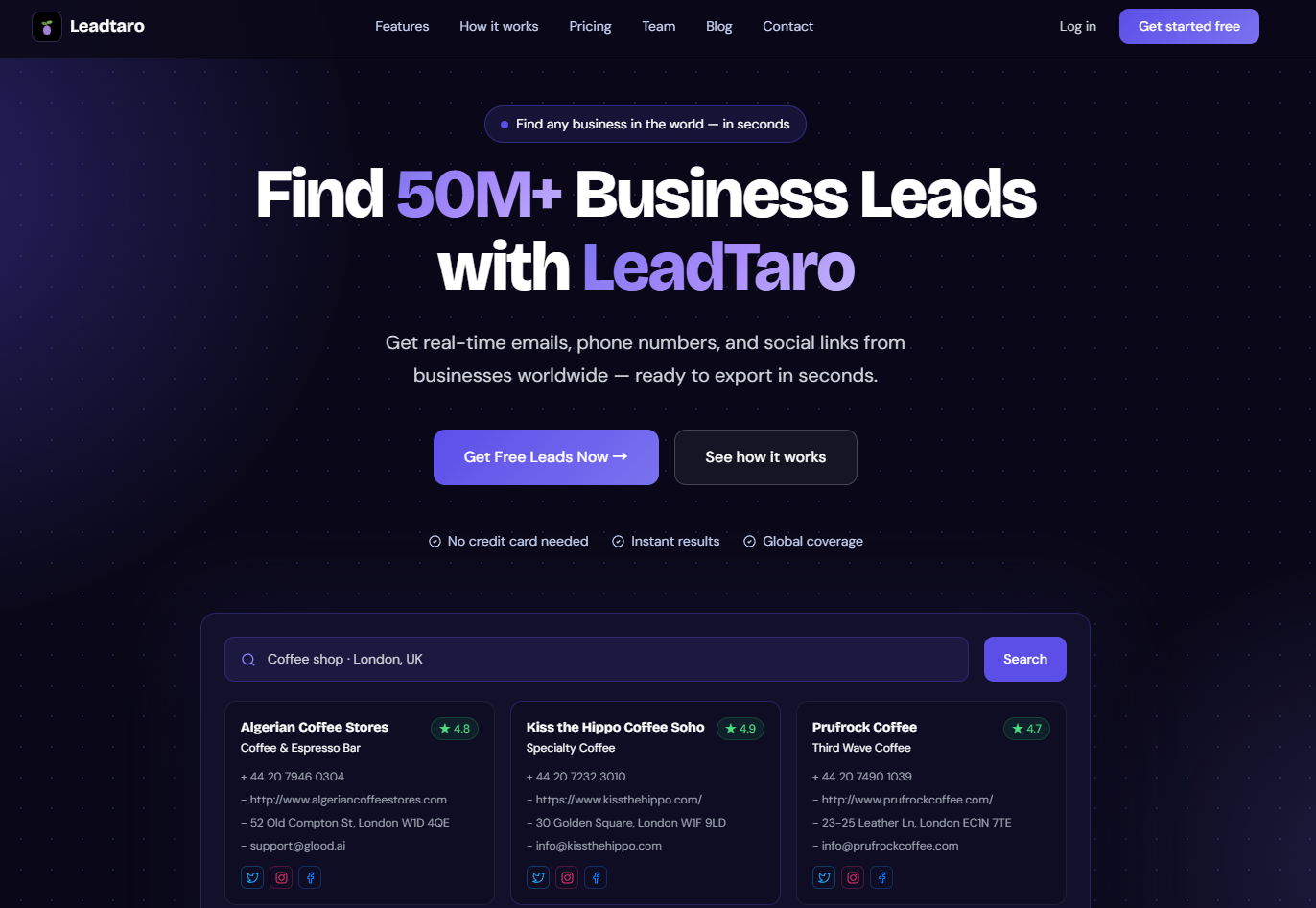
For businesses building a B2B sales pipeline, LeadTaro can be part of the prospect discovery process. Use a clearly defined target market to identify relevant businesses, organize prospects, and create a more focused starting point for customer acquisition.
The goal is not to collect the largest possible list. It is to build a repeatable process that turns relevant prospects into genuine business relationships and paying customers.