Articles » Lead Generation » LinkedIn Statistics 2026: Key Data Every B2B Marketer Needs
LinkedIn has become one of the most important platforms for B2B marketing, professional networking, and sales prospecting. Businesses use it to identify decision-makers, research potential customers, build professional relationships, and generate sales opportunities.
But understanding LinkedIn's reach is only part of the picture.
For B2B marketers, the more important question is how to turn professional networking data into qualified leads, meaningful conversations, and revenue. A large audience does not automatically translate into more customers, and a successful prospecting strategy requires more than collecting names and job titles.
In this guide, we'll explore the key LinkedIn statistics marketers should understand in 2026, examine how businesses use the platform for B2B lead generation, and explain how to turn these insights into a more effective prospecting strategy with business data, lead qualification, and tools like LeadTaro.
Table of Contents
Key LinkedIn Statistics for 2026
LinkedIn Users and Audience Reach
LinkedIn Demographics and Professional Audiences
LinkedIn Usage and Engagement Statistics
LinkedIn B2B Lead Generation Statistics
LinkedIn Advertising and Marketing Benchmarks
LinkedIn Revenue and Business Growth
The Limitations of LinkedIn for B2B Prospecting
How to Turn LinkedIn Insights Into Qualified Leads
How LeadTaro Supports B2B Lead Generation
Frequently Asked Questions
Key LinkedIn Statistics for 2026
LinkedIn's size and professional focus make it an important channel for businesses targeting other businesses. However, marketers should distinguish between official platform figures, third-party estimates, and campaign-specific benchmarks.
The following table summarizes important metrics to investigate when planning your B2B marketing strategy.
MetricWhat It Tells YouTotal LinkedIn membersThe overall size of the professional networkMonthly active usersHow frequently members use the platformMember demographicsWhich professional audiences you may be able to reachCompany page countThe scale of business representation on LinkedInB2B lead generation performanceHow LinkedIn contributes to lead acquisitionAdvertising cost per clickThe cost of attracting paid trafficLead form conversion rateHow effectively advertising traffic becomes leadsPlatform revenueThe commercial importance of LinkedIn's advertising and subscription businessesA key consideration is that total membership does not equal active reach. Likewise, platform-wide marketing statistics do not guarantee the same results for your business.
Before using a number in a business presentation or marketing forecast, check the original source, publication date, methodology, and definition of the metric.
LinkedIn Users and Audience Reach
LinkedIn's extensive professional network gives marketers access to people across industries, company sizes, and geographic markets.
However, there is an important distinction between registered members and active users.
Registered membership represents accounts on the platform, while active-user figures measure usage over a defined period. These numbers cannot be treated as interchangeable.
Why Active Usage Matters
Imagine that your target audience consists of founders of small software companies in the United Kingdom.
The total number of LinkedIn members worldwide tells you very little about the number of relevant founders you can realistically reach.
A more useful analysis considers:
How many target companies operate in your market?
Which decision-makers work at those companies?
How many of those professionals use LinkedIn?
Can you reach the relevant people through your available channels?
How many prospects match your ICP?
What proportion of your outreach generates qualified conversations?
These questions connect platform statistics to actual sales opportunities.
Registered Members vs. Reachable Prospects
Not every registered member is active, relevant to your offer, or accessible through your chosen prospecting method.
Your addressable audience depends on several factors, including industry, seniority, geography, company size, platform usage, and your ability to identify the correct decision-maker.
For B2B marketers, a carefully defined target audience is more useful than a large but poorly qualified audience.
LinkedIn Demographics and Professional Audiences
LinkedIn is particularly relevant to marketers targeting professionals, business leaders, and people working in organizations with established purchasing processes.
Its audience can be segmented by professional characteristics, including:
Job title and seniority
Industry
Company
Geographic location
Professional experience
Company size
Business function
The availability of specific filters depends on the LinkedIn product and search method being used.
Targeting Decision-Makers
Consider a company selling CRM software to small and medium-sized businesses.
Its ideal contacts might include founders, sales directors, revenue operations managers, and business development leaders.
LinkedIn can help the company identify professionals with relevant responsibilities and research their organizations before initiating outreach.
However, job titles alone do not establish purchasing authority. A director at one company may control the budget, while an employee with a different title may lead the buying process at another.
Use professional information to identify likely stakeholders, then confirm their roles and requirements through appropriate research or direct conversations.
Geographic Targeting
Geography is another important factor in B2B prospecting.
A company selling services exclusively in the UK should not automatically prioritize businesses in North America or Asia simply because they match its industry criteria.
Build your target audience around the markets you can serve, and consider location alongside company characteristics and business needs.
For businesses selling locally, company directories and business lead databases can complement professional research by helping identify potential customers within a particular service area.
LinkedIn Usage and Engagement Statistics
LinkedIn provides opportunities for businesses to reach professional audiences through content, networking, and advertising.
However, engagement varies significantly depending on the audience, content format, industry, and campaign objective.
What Types of Content Should B2B Marketers Publish?
B2B content can support several stages of the buying process.
Educational content: Explain common industry problems and practical solutions.
Original research: Share findings, benchmarks, and useful insights relevant to your target audience.
Case studies: Demonstrate how a product or service addresses a real business challenge.
Product demonstrations: Show how a solution works and who benefits from using it.
Founder and employee perspectives: Share professional experiences and useful lessons that help build credibility.
A consistent publishing strategy can help a business build awareness and give prospects a reason to engage before a sales conversation begins.
Personal Profiles vs. Company Pages
Personal profiles and company pages serve different purposes.
Company pages help establish an official brand presence, publish company updates, and provide information about the business.
Personal profiles allow employees and founders to share professional perspectives and build relationships with their networks.
A practical strategy combines both: use the company page for official information and encourage team members to share relevant expertise through their own professional networks.
Best Time to Post on LinkedIn in 2026
There is no universally optimal posting time for every LinkedIn audience.
Engagement patterns vary according to the location, industry, seniority, and working habits of your audience.
To identify the best publishing schedule for your business:
Choose several posting windows that suit your target audience.
Publish comparable content across those windows.
Measure impressions, engagement, link clicks, and qualified website visits.
Compare results over multiple weeks.
Prioritize the times that consistently produce meaningful outcomes.
Do not optimize for engagement alone. A post with fewer impressions may be more valuable if it attracts the right business owners or generates qualified leads.
LinkedIn B2B Lead Generation Statistics
LinkedIn is widely used for B2B lead generation because it provides professional context that many general-purpose social networks do not emphasize.
Marketers can research companies, identify relevant job roles, share educational content, run advertising campaigns, and build relationships with potential customers.
However, claims about LinkedIn's share of B2B social leads or its conversion advantage over other channels depend on the source, study period, and methodology.
Before using a headline statistic to justify your marketing budget, examine how the study defines a lead, which channels it compares, and whether the results apply to your market.
Why LinkedIn Works for B2B Prospecting
LinkedIn can support B2B sales in several ways.
Professional discovery: Identify people whose responsibilities align with your product.
Account research: Learn about target companies and their business activities.
Relationship building: Engage with relevant professionals before approaching them directly.
Content distribution: Share insights that attract people interested in your industry.
Targeted advertising: Reach professional audiences using the targeting options available to your campaign.
These activities are especially useful when the buying process involves identifiable stakeholders and professional relationships.
Why Lead Quality Matters More Than Raw Volume
Suppose two sales teams each collect 1,000 prospects.
The first team contacts every prospect using the same message. The second team filters its list by company size, industry, geographic market, and likely business need.
The second team has a better foundation for relevant outreach because its prospects have been selected against defined criteria.
That does not guarantee a higher conversion rate, but it gives the team a more disciplined way to allocate research and sales effort.
The objective is to create qualified opportunities, not simply accumulate contacts.
LinkedIn Advertising and Marketing Benchmarks
LinkedIn advertising can help B2B marketers reach professional audiences, but campaign costs vary considerably.
Your actual cost per click, cost per lead, and conversion rate depend on factors such as:
Target audience size
Industry and seniority
Geographic market
Campaign objective
Advertising format
Competition for the audience
Offer and landing page quality
Campaign measurement and attribution
Understanding LinkedIn Advertising Costs
A high cost per click does not automatically make a campaign unprofitable. Equally, inexpensive clicks do not guarantee profitable customer acquisition.
The relevant question is how much you spend to generate a qualified opportunity and ultimately acquire a customer.
Consider a hypothetical campaign:
MetricExampleAdvertising spend£2,000Leads generated40Cost per lead£50Qualified leads12Cost per qualified lead£166.67New customers3Customer acquisition cost£666.67These are illustrative figures, not LinkedIn industry benchmarks.
The example shows why measuring qualified leads and customer acquisition cost can be more useful than evaluating cost per click in isolation.
LinkedIn Lead Gen Forms vs. Landing Pages
Lead Gen Forms can make it easier for users to submit their details without completing a separate website form.
Landing pages, on the other hand, give businesses more control over messaging, product education, tracking, and the conversion experience.
Neither approach is universally superior.
Test both where appropriate, and compare lead quality, conversion rates, and the number of opportunities that eventually become customers.
LinkedIn Revenue and Business Growth
LinkedIn operates as part of Microsoft's broader business, with products spanning professional networking, recruitment, advertising, and sales solutions.
Its commercial model demonstrates that professional networks can create value through multiple activities, including paid subscriptions, advertising, recruitment services, and sales tools.
For B2B marketers, the practical takeaway is not simply that LinkedIn is a large business.
It is that professional data, audience access, and business relationships can play important roles in customer acquisition.
However, the platform's revenue growth does not automatically mean that every advertiser will achieve a positive return. Campaign profitability still depends on audience fit, conversion performance, customer value, and acquisition costs.
When reviewing LinkedIn's financial performance, use Microsoft's official earnings announcements for reported revenue and growth figures, and distinguish those figures from third-party forecasts.
The Limitations of LinkedIn for B2B Prospecting
LinkedIn is a useful prospecting channel, but it should not be treated as a complete database of every potential business customer.
Some businesses maintain detailed company pages and active professional profiles. Others have limited platform activity or little publicly visible information.
This is especially relevant for businesses that sell to local service providers, small independent companies, and organizations whose owners spend more time operating their businesses than publishing professional content.
Examples include:
Plumbers and electricians
Restaurants and independent retailers
Dental and healthcare practices
Local accounting firms
Cleaning and maintenance companies
Construction contractors
Regional service businesses
These companies may still be viable B2B customers even when their LinkedIn presence is limited.
Use More Than One Source to Discover Prospects
A more flexible prospecting strategy combines professional research with appropriate business data sources.
LinkedIn can help identify professionals and understand their roles.
Company websites can provide information about services, positioning, and business activities.
Business directories and B2B lead generation platforms can help discover relevant companies and available contact information.
CRM records and previous sales conversations can reveal which accounts have already been contacted and which have shown interest.
The key is to combine sources carefully, validate records, and avoid assuming that information from one source is complete.
How to Turn LinkedIn Insights Into Qualified Leads
Statistics become useful when they influence practical decisions.
Use the following workflow to turn your understanding of LinkedIn and B2B marketing into a repeatable prospecting process.
Step 1: Define Your Ideal Customer Profile
Specify the types of companies that benefit most from your product.
Include industry, company size, geography, business model, and the problems your solution addresses.
For example, a sales automation platform might focus on B2B companies with dedicated sales teams and recurring outbound prospecting requirements.
Step 2: Choose Your Prospecting Channels
Decide where you can find the companies and decision-makers that match your ICP.
Depending on your target market, this may include LinkedIn, company websites, business directories, professional associations, and B2B lead generation platforms.
Choose channels based on audience relevance and data quality rather than popularity alone.
Step 3: Build a Relevant Lead List
Collect the business records required for your campaign.
Useful fields may include company name, website, industry, location, relevant contact information, and source.
Keep your list focused on the types of customers your product can realistically serve.
Step 4: Enrich and Validate the Data
Review company information and validate contact details where possible.
Remove duplicates, flag incomplete records, and distinguish confirmed information from assumptions.
This makes your list more reliable and supports better outreach decisions.
Step 5: Qualify and Score Prospects
Assign scores based on ICP fit, available contact information, and evidence of a relevant business need.
Keep unconfirmed criteria separate from verified signals.
For example, a company may fit your target industry without having a confirmed budget or immediate purchasing requirement.
Step 6: Personalize Your Outreach
Use relevant business context to explain why your offer might be useful.
Avoid generic messages that simply mention a person's job title or company name without providing a meaningful reason for contacting them.
Personalization should be accurate, relevant, and respectful.
Step 7: Measure and Improve
Track qualified replies, meetings booked, opportunities created, and closed revenue.
Compare performance across industries, company sizes, channels, and message variations.
Use the results to refine your ICP and allocate more effort to the segments that generate meaningful business outcomes.
How LeadTaro Supports B2B Lead Generation
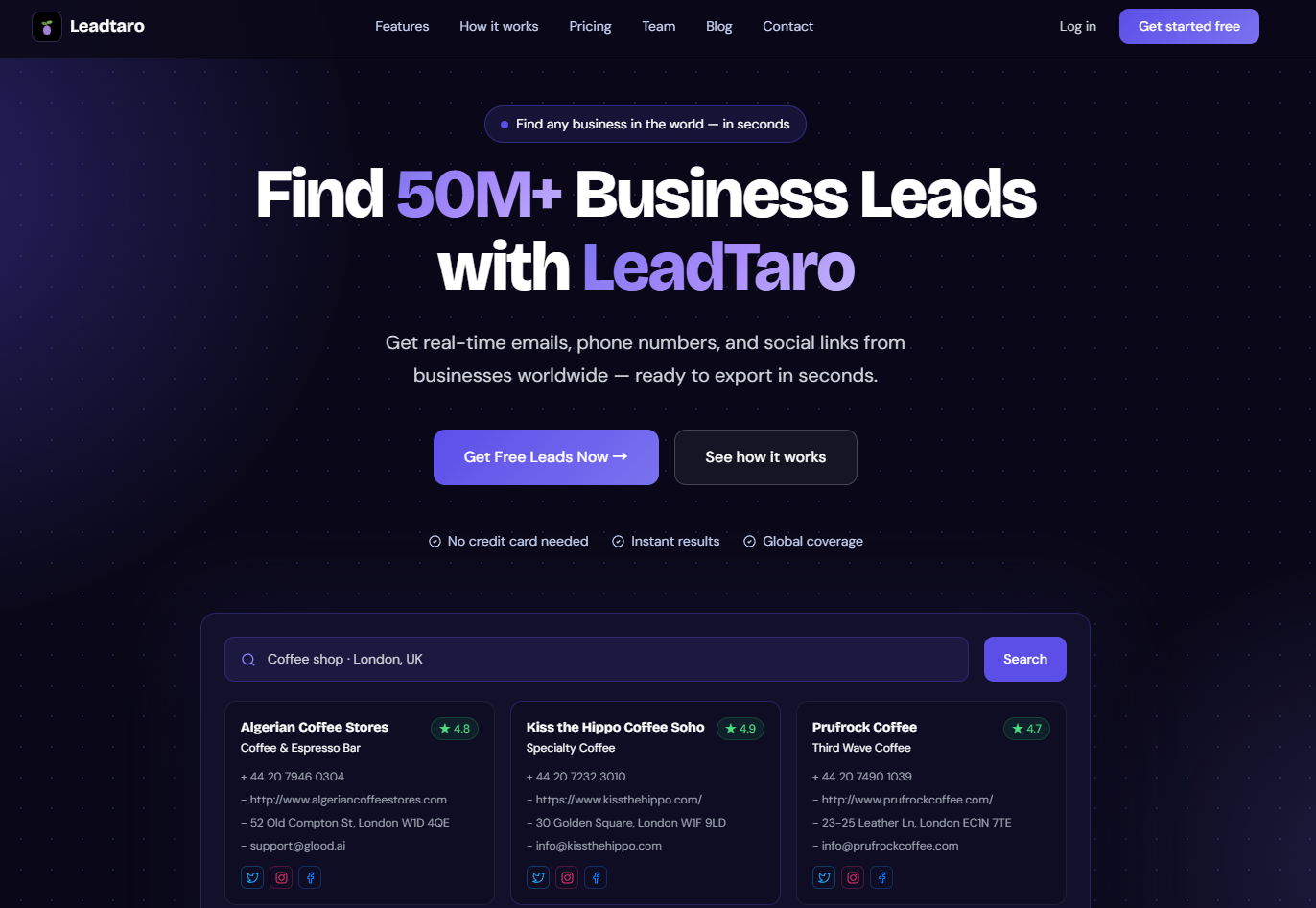
LeadTaro helps users find B2B business leads and access business contact information for prospecting.
You can use it as part of a broader strategy for discovering potential customers, organizing business records, and preparing a targeted outreach campaign.
For example, if you sell software to marketing agencies, your workflow might involve:
Defining the types of agencies that fit your ICP.
Using LeadTaro to find relevant business leads.
Reviewing company websites and available business details.
Checking and validating contact information.
Prioritizing prospects according to their fit and likely use case.
Researching relevant decision-makers where necessary.
Personalizing outreach and measuring the results.
If LinkedIn is already part of your sales process, you can use professional research to complement your business lead discovery workflow.
The important distinction is that LinkedIn statistics help you understand the professional network, while your prospecting process determines which companies are worth pursuing.
LeadTaro supports the lead discovery stage. Your ICP, data validation, qualification criteria, and outreach strategy determine how effectively those leads contribute to your sales pipeline.
Frequently Asked Questions
How many LinkedIn users are there in 2026?
For an accurate 2026 figure, consult LinkedIn's latest official membership announcement and distinguish total members from active users. Third-party estimates may use different definitions and reporting periods, so they should not be treated as directly comparable.
Is LinkedIn still useful for B2B lead generation in 2026?
Yes. LinkedIn can be valuable for researching decision-makers, identifying target accounts, distributing professional content, and building relationships. Its effectiveness depends on your audience, offer, targeting, and ability to turn engagement into qualified opportunities.
What are the most important LinkedIn statistics for B2B marketers?
The most useful metrics depend on your campaign. Consider audience demographics, relevant reach, engagement, qualified lead volume, cost per qualified lead, conversion rates, and customer acquisition cost. Use official platform data and well-documented research for external benchmarks.
What is the best time to post on LinkedIn in 2026?
There is no universal best time. Test different posting windows based on your audience's location and working patterns, then compare engagement and qualified traffic over several weeks.
Is LinkedIn advertising worth the cost?
It can be worthwhile when your target audience is clearly defined and the value of the resulting customers justifies the acquisition cost. Evaluate cost per qualified lead, opportunity conversion, and customer acquisition cost rather than judging campaigns by clicks alone.
Can LinkedIn statistics help improve lead generation?
Yes. Audience and engagement data can help you choose channels, develop content, refine targeting, and establish realistic campaign assumptions. Combine those insights with your own conversion data to determine which activities produce actual sales opportunities.
Can LeadTaro replace LinkedIn for B2B prospecting?
LeadTaro and LinkedIn serve different purposes. LinkedIn supports professional research and networking, while LeadTaro helps users find B2B business leads and access business contact information for prospecting. Depending on your target audience, the two approaches can complement each other.
How can I generate more qualified B2B leads?
Start with a specific ICP, choose relevant prospecting channels, build a focused list, validate available contact information, and qualify companies before investing heavily in outreach. Measure positive replies, qualified meetings, and conversions to improve your process over time.
Conclusion
LinkedIn remains an important channel for professional networking and B2B marketing, but platform size alone does not determine your sales results.
The most effective prospecting strategies combine audience research, clear ICP criteria, accurate business data, relevant messaging, and consistent performance measurement.
Use LinkedIn to understand professional audiences and research decision-makers. Complement that research with appropriate business data sources when you need to discover companies beyond your existing network.
LeadTaro can help you get started by finding B2B business leads and accessing business contact information for prospecting. Combine lead discovery with careful qualification and personalized outreach to build a more focused sales pipeline.
Start with the right businesses, use reliable information, and turn your prospecting efforts into measurable sales opportunities.