Local lead generation remains one of the most practical ways for agencies, consultants, and B2B service providers to find new customers. Whether you sell website design, digital marketing, CRM implementation, or business software, the challenge is the same: finding the right businesses, identifying the people worth contacting, and turning those prospects into paying customers.
The problem is that many businesses still approach lead generation without a clear system. They collect hundreds of company names, add them to a spreadsheet, send generic emails, and hope someone responds.
A better approach starts with targeted prospecting, reliable business data, and a repeatable process for qualifying leads before investing time in outreach.
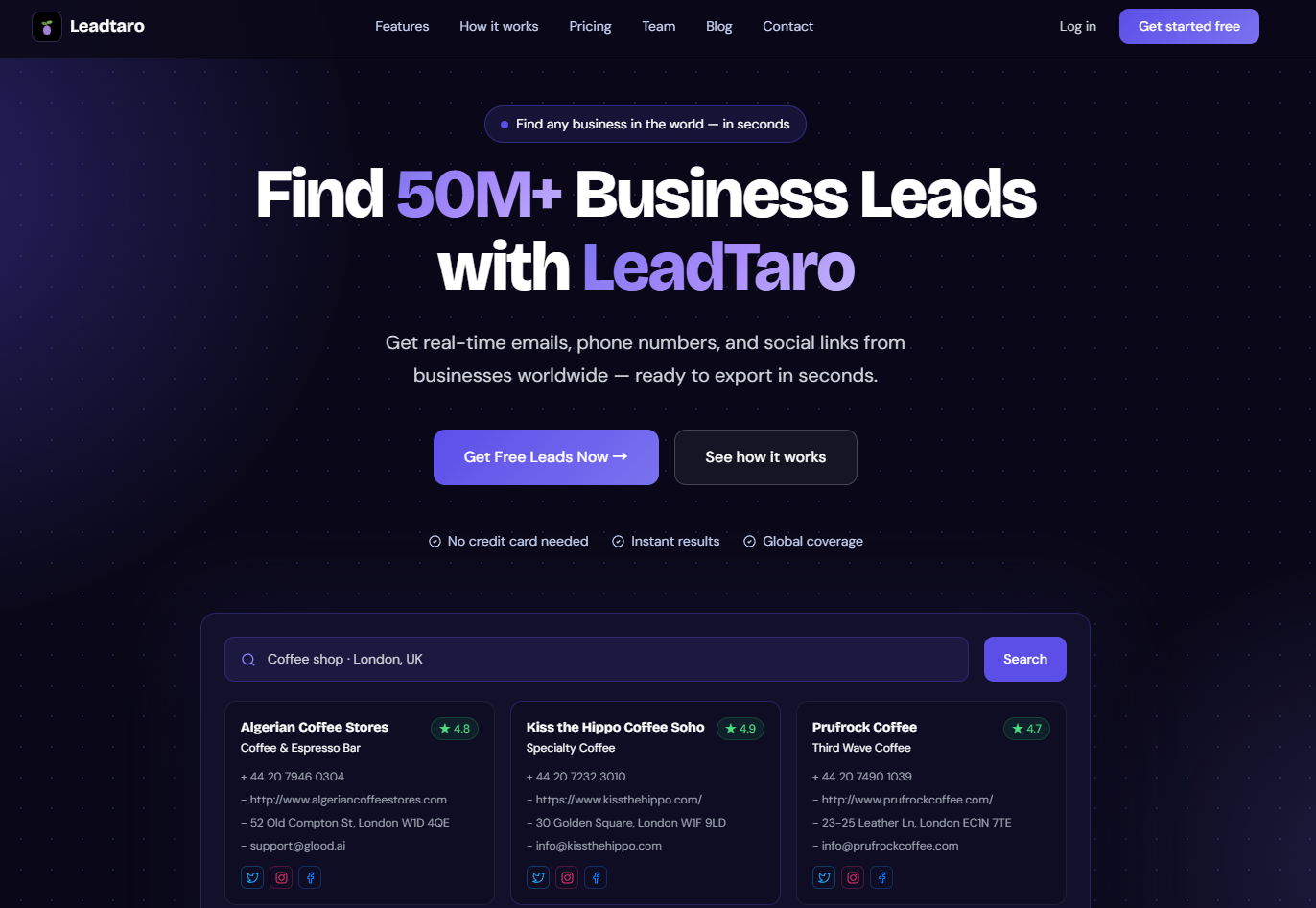
That's where a structured platform like LeadTaro can help businesses organize their prospecting workflow and turn scattered lead data into a more actionable sales pipeline.
What Is Local Lead Generation?
Local lead generation is the process of identifying potential customers within a specific geographic area and collecting the business information needed to reach them.
For B2B companies, this often means finding local businesses that match an ideal customer profile, researching their needs, identifying relevant contacts, and initiating personalized outreach.
Common local lead generation methods include:
Business research: Identifying companies by industry, location, size, or other relevant characteristics.
Search engine optimization: Attracting potential customers through useful content and local search visibility.
Cold email outreach: Contacting relevant businesses with personalized messages.
Cold calling: Speaking directly with business owners or decision-makers.
Networking and referrals: Building relationships through local business communities and professional networks.
Lead management: Organizing prospect information, tracking interactions, and prioritizing follow-ups.
The most effective approach depends on your target market, available resources, and sales process. For many B2B teams, combining targeted prospecting with organized lead management provides a practical foundation for consistent growth.
Why Local Lead Generation Matters in 2026
Finding potential customers is only the beginning. Businesses also need to determine which prospects are worth pursuing and how to approach them efficiently.
A large prospect list is not necessarily a valuable one. A smaller list of businesses that closely match your ideal customer profile may produce better conversations and more qualified opportunities.
Three factors make a structured approach particularly useful.
1. Better Targeting
Broad prospecting often wastes time on companies that have little need for your product or service.
Defining an ideal customer profile helps narrow your search to businesses with relevant characteristics, such as:
Industry and business category
Geographic location and service area
Company size and operating model
Likely business needs
Available contact information
Compatibility with your offer
For example, a web design agency targeting independent dental practices should prioritize businesses that fit its service offering rather than contacting every company in a city.
2. More Efficient Prospecting
Manual research can become difficult to manage as your target market grows. Switching between search engines, directories, spreadsheets, and email tools introduces unnecessary work.
A consistent workflow makes it easier to collect prospect information, organize records, identify missing fields, and prepare leads for outreach.
LeadTaro can fit into this process by helping teams manage their prospecting activities and keep lead information organized as they work through their target markets.
3. A More Consistent Sales Pipeline
Lead generation should not stop when a contact list is created.
A useful prospecting system connects research, qualification, outreach, follow-ups, and performance measurement. This allows sales teams to understand where opportunities come from and which activities contribute to conversions.
The goal is not simply to generate more leads. It is to create a repeatable process for finding and converting the right prospects.
7 Local Lead Generation Strategies That Work in 2026
There is no single channel that works for every business. The strongest strategy combines appropriate lead sources with effective qualification and follow-up.
1. Build Targeted Business Prospect Lists
Start by identifying the types of businesses most likely to benefit from your offering.
Instead of collecting as many contacts as possible, define your target industry, geographic area, and qualification criteria before building your list.
For example, a marketing agency could target:
Independent restaurants in a specific city
Dental practices in selected neighborhoods
Home service companies in a defined service area
Professional service firms with outdated websites
Growing small businesses that may need CRM or automation services
Once you have defined your target market, collect relevant business information and organize it into a consistent format.
Useful fields may include company name, website, business category, location, contact details, source, qualification status, and outreach history.
The result is a prospect database that supports focused sales activity rather than an unstructured collection of names.
2. Use Local SEO to Attract Inbound Leads
Local SEO helps businesses become visible when potential customers search for relevant products or services.
A strong local SEO strategy can include:
Publishing useful, search-focused website content
Creating dedicated pages for important service areas
Maintaining an accurate Google Business Profile where applicable
Collecting genuine customer reviews
Improving website speed and mobile usability
Building relevant local partnerships and citations
Unlike outbound prospecting, local SEO attracts people who are already searching for a solution.
However, meaningful organic visibility can take time to develop. Businesses that need to generate sales conversations sooner may benefit from running outbound campaigns while investing in long-term search visibility.
3. Personalize Cold Email Outreach
Cold email can introduce your business to potential customers who have not discovered you through search or referrals.
The biggest mistake is sending the same generic message to every company on a list.
Effective outreach starts with understanding why a particular business might benefit from your offer.
For example, a web design agency could reference a specific usability issue on a prospect's website. A marketing consultant might discuss an opportunity to improve a business's local search visibility.
A practical cold email should:
Explain why you are contacting that particular business.
Identify a relevant problem or opportunity.
Communicate a clear and credible value proposition.
Keep the message concise.
Suggest a simple next step.
Respect applicable marketing and privacy regulations.
Personalization does not require writing every email from scratch. Segmenting prospects by industry, location, and business needs can make relevant outreach easier to scale.
4. Prioritize Leads Using Qualification Criteria
Not every business on your prospect list deserves the same amount of attention.
Lead qualification helps determine which companies are the best fit for your offering and which prospects should receive attention first.
You can evaluate businesses using criteria such as:
Qualification factorWhat to evaluateIdeal customer fitDoes the business match your target market?Business needIs there evidence of a problem your service can solve?Contact availabilityCan you reach an appropriate business contact?Commercial potentialCould the opportunity justify the sales effort?TimingIs there a relevant reason to start a conversation now?Assigning scores to these criteria can help sales teams prioritize prospects consistently.
For example, a business that closely matches your ideal customer profile and has an identifiable need may deserve more attention than a company with little evidence of demand.
Lead scoring should be treated as a prioritization tool, not a guarantee that a prospect will buy. Review actual outreach and conversion results regularly to improve your criteria.
5. Combine Email and Phone Outreach
Different prospects respond to different communication channels.
Some prefer email, while others are more receptive to a brief phone conversation. A coordinated outreach process gives your team more opportunities to start a relevant conversation.
A simple sequence might look like this:
Research the business and identify a relevant reason to contact it.
Send a personalized introductory email.
Follow up with a phone call where legally permitted.
Share a useful resource or a specific recommendation.
Record the outcome and schedule an appropriate next step.
Avoid contacting prospects excessively or using multiple channels without a clear purpose. Each interaction should add value rather than repeat the same sales pitch.
6. Create Useful Content for Local Businesses
Content marketing can help establish credibility with the businesses you want to reach.
Instead of publishing broad articles that could apply to anyone, focus on questions your target customers actually ask.
Examples include:
How local service businesses can improve their online visibility
Common website problems that discourage potential customers
How small businesses can organize their sales pipeline
Practical CRM workflows for growing companies
How to evaluate the effectiveness of outbound campaigns
Useful content can attract inbound prospects, support conversations with outbound leads, and give your sales team relevant material to share during follow-ups.
7. Manage Prospects in One Organized Workflow
Prospecting becomes harder when company information, contact details, and outreach history are spread across different spreadsheets and applications.
A structured lead management process should make it easy to answer questions such as:
Which businesses match our target market?
Which prospects have been researched but not contacted?
Who has already received an email?
Which prospects need follow-up?
Which conversations have generated qualified opportunities?
Which lead sources produce the best results?
LeadTaro can support a more organized prospecting workflow by helping businesses manage the information and activities associated with their leads.
The objective is to reduce unnecessary manual work, maintain consistent records, and make it easier to move prospects from initial research toward meaningful sales conversations.
How to Build a Local Business Lead Database
A useful lead database needs more than company names. It should contain relevant information that helps your team qualify businesses, personalize outreach, and track results.
There are three common ways to build one.
Method 1: Manual Business Research
You can research companies through search engines, business directories, company websites, professional networks, and local business listings.
This method offers flexibility and allows you to investigate each business individually.
However, manual research becomes time-consuming when you need to evaluate hundreds or thousands of prospects. It can also create inconsistent records when different team members collect information in different formats.
Manual research is most useful for small, highly targeted prospect lists or for researching high-value accounts in greater depth.
Method 2: Business Data and Prospecting Tools
Business data tools can help teams discover companies, collect relevant information, and organize prospect lists more efficiently.
When evaluating a tool, consider:
Available industries and geographic coverage
Contact data availability and accuracy
Data freshness and source transparency
Search and filtering capabilities
Export formats and integration options
Duplicate detection and record management
Pricing and usage limits
The right tool depends on the market you target and the information your sales process requires.
LeadTaro can be part of a broader prospecting workflow in which business information is collected, organized, qualified, and prepared for outreach. Confirm the platform's available data sources, enrichment features, and integrations against your actual requirements before choosing a workflow.
Method 3: Professional Data Providers
Professional data providers offer business and contact information that can help teams build prospect lists without researching every company individually.
Before relying on a provider, evaluate how frequently its data is updated, how contact information is sourced, what verification methods are used, and whether its practices meet the requirements of your target markets.
A large database is only valuable when the records are relevant, sufficiently accurate, and suitable for your intended use.
What Should a Local Business Lead Database Include?
Consider maintaining the following fields:
FieldPurposeBusiness nameIdentifies the prospectWebsiteSupports research and personalizationIndustryEnables segmentationLocationConfirms geographic fitContact name and roleHelps identify the relevant decision-makerBusiness email or phoneSupports appropriate outreachLead sourceRecords where the information originatedQualification scoreHelps prioritize prospectsOutreach statusTracks sales activityLast contacted dateSupports timely follow-upsNext actionKeeps the pipeline movingNot every lead will have every field. Start with the information necessary for your sales process and enrich records when doing so is useful and lawful.
How to Turn Local Business Leads Into Customers
Generating a list is only the first stage. Converting prospects requires a process that connects research with relevant communication and consistent follow-up.
Step 1: Define Your Ideal Customer Profile
Describe the businesses most likely to benefit from your offer.
Specify your preferred industries, geographic areas, business characteristics, and the problems your product or service solves.
Step 2: Build a Relevant Prospect List
Identify companies that match your criteria and collect the business information needed for qualification.
Use a consistent format so that prospects can be compared, filtered, and assigned to team members.
Step 3: Qualify and Prioritize Prospects
Evaluate each prospect based on fit, potential need, contact availability, and commercial opportunity.
Focus your initial effort on the businesses with the strongest combination of fit and evidence of a relevant need.
Step 4: Personalize Your Outreach
Use your research to explain why your product or service might be useful to that particular business.
A specific observation and a clear value proposition are generally more helpful than a generic introduction.
Step 5: Track Responses and Follow Up
Record emails sent, calls made, replies received, meetings booked, and opportunities created.
Use reasonable follow-up intervals and respect opt-outs and other applicable communication restrictions.
Step 6: Measure Results and Improve
Review which industries, locations, lead sources, and outreach messages generate qualified opportunities.
Use those findings to refine your ideal customer profile and improve your future prospecting campaigns.
This creates a continuous cycle: research, qualify, contact, measure, and improve.
How to Measure Local Lead Generation Performance
A prospecting strategy should be evaluated by the quality of the opportunities it creates, not simply by the number of records collected.
The following metrics provide a useful starting point.
MetricWhat it tells youLeads collectedThe number of prospects added to your databaseQualification rateThe proportion of collected leads that meet your criteriaContact coverageThe proportion of leads with usable contact informationEmail bounce rateThe proportion of sent emails that cannot be deliveredReply rateThe proportion of delivered outreach emails that receive repliesPositive reply rateThe proportion of outreach emails that generate meaningful interestMeeting booking rateThe proportion of prospects who book a meetingLead-to-customer conversion rateThe proportion of leads that become customersCost per qualified leadThe cost of acquiring each qualified prospectCustomer acquisition costThe overall cost of converting a prospect into a customerTrack these metrics by campaign and lead source whenever possible.
For example, a campaign that generates fewer replies but more qualified meetings may be more valuable than one with a high response rate and little genuine buying interest.
Local Lead Generation Compliance: What Businesses Need to Know
Lead generation involves collecting and using business information, so compliance should be part of the process from the beginning.
Requirements vary by country, the type of contact information collected, the recipient, and the communication channel.
United Kingdom: UK GDPR and PECR
Businesses prospecting in the UK should consider the UK GDPR, the Data Protection Act 2018, and the Privacy and Electronic Communications Regulations (PECR).
Rules for marketing emails differ depending on whether the recipient is a corporate subscriber, a sole trader, or certain types of partnership. Personal data requirements may also apply when contacting an identifiable individual at a business.
Do not assume that information being publicly available automatically makes every form of collection, profiling, or outreach lawful.
United States: CAN-SPAM and Telephone Marketing Rules
Commercial email campaigns must comply with applicable CAN-SPAM requirements, including accurate sender information, non-deceptive subject lines, a valid postal address, and a functioning opt-out mechanism.
Telephone and text-message outreach may be subject to additional federal and state requirements, including consent rules in certain circumstances.
Practical Compliance Checklist
Before launching a campaign:
Document where prospect information came from.
Collect only information relevant to your business purpose.
Establish an appropriate legal basis where required.
Check the rules applicable to each recipient and channel.
Provide required privacy information and opt-out mechanisms.
Maintain suppression lists and honor opt-out requests.
Review your data providers' terms and collection practices.
Avoid misleading claims or unsupported personalization.
For campaigns targeting multiple countries, obtain appropriate legal guidance rather than assuming a single compliance approach works everywhere.
FAQ: Local Lead Generation
What is local lead generation?
Local lead generation is the process of finding and qualifying potential customers in a defined geographic area. Businesses use methods such as business research, local SEO, targeted email outreach, phone calls, and referrals to create new sales opportunities.
How do I find local business leads?
Start by defining your target industry and location. Research relevant companies through business directories, search engines, company websites, and appropriate business data tools. Organize the information into a structured database, qualify prospects against your ideal customer profile, and prioritize the businesses most likely to benefit from your offer.
What is the best local lead generation strategy for beginners?
Choose one industry and one geographic area. Define your ideal customer profile, build a small and relevant prospect list, and test a personalized outreach campaign. Measure qualified replies and meetings before expanding into additional industries or locations.
Is local lead generation profitable in 2026?
It can be profitable when the value of the customers acquired exceeds the combined costs of prospecting, outreach, sales, and service delivery. Profitability depends on factors such as lead quality, conversion rates, average customer value, and operating costs. Test your economics with a small campaign before scaling.
How can I qualify local business leads?
Evaluate prospects based on their fit with your target market, evidence of a relevant business need, availability of appropriate contact information, commercial potential, and timing. A consistent scoring model helps prioritize outreach, but actual conversion results should guide improvements to the model.
How can LeadTaro help with local lead generation?
LeadTaro can be positioned within a structured B2B prospecting workflow that helps businesses organize lead information, evaluate prospects, and manage the steps between lead discovery and outreach. The exact workflow will depend on the platform's available features and integrations.
What is the difference between lead generation and lead management?
Lead generation focuses on identifying potential customers and creating opportunities to contact them. Lead management covers what happens afterward, including organizing records, qualifying prospects, tracking communications, scheduling follow-ups, and monitoring progress through the sales pipeline.
Build a More Effective Local Lead Generation Process With LeadTaro
Successful local lead generation is not about collecting the largest possible list. It is about identifying the right businesses, gathering useful information, prioritizing the best opportunities, and following up consistently.
Start with a clear ideal customer profile. Build a relevant prospect database. Use personalized outreach to initiate conversations, and measure which activities generate qualified opportunities.
As your process develops, LeadTaro can be part of the workflow that helps you keep your prospecting organized and turn business research into actionable sales activity.
The result is a more systematic approach to local lead generation: less time spent managing scattered information, clearer priorities for your sales team, and a stronger foundation for sustainable customer acquisition.