Articles » Lead Generation » Omnichannel Outreach in 2026: The B2B Strategy That Turns Prospects into Customers
Table of Contents
What Is Omnichannel Outreach?
Omnichannel vs Multichannel vs Cross-Channel
Why Single-Channel Outreach Is Limiting B2B Growth in 2026
The Channels That Matter in a B2B Outreach Strategy
How to Build an Omnichannel Outreach Sequence: A 5-Step Framework
The Data Foundation: Why Outreach Campaigns Fail
How to Measure Omnichannel Outreach Performance
Staying Compliant Across Every Channel
Five Omnichannel Outreach Mistakes to Avoid
FAQ: Omnichannel Outreach
What Is Omnichannel Outreach?
Omnichannel outreach is a coordinated approach to B2B prospecting that combines channels such as email, LinkedIn, phone calls, and other appropriate communication methods into a consistent customer journey.
Instead of treating every channel as a separate campaign, businesses coordinate their messages, timing, and follow-up activities around the same prospect.
For example, a sales representative might introduce a company's services by email, connect with the prospect on LinkedIn, and follow up with a relevant phone call. Each interaction should provide additional value rather than repeat the same sales pitch.
The goal is simple: create a more relevant and consistent experience while increasing the opportunities for meaningful conversations.
What Does Omnichannel Mean in Marketing?
In marketing, omnichannel means connecting customer interactions across different channels so that the overall experience remains consistent.
For B2B sales teams, this involves coordinating prospect research, outreach messages, responses, and follow-up activities.
Imagine that a prospect replies to your cold email and asks for more information. Continuing to send automated introductory messages after that reply creates a poor experience. A coordinated workflow should recognize the interaction and adjust the next step accordingly.
Similarly, if a prospect books a meeting, unnecessary follow-up messages should stop.
This is the difference between sending more messages and building a structured sales process.
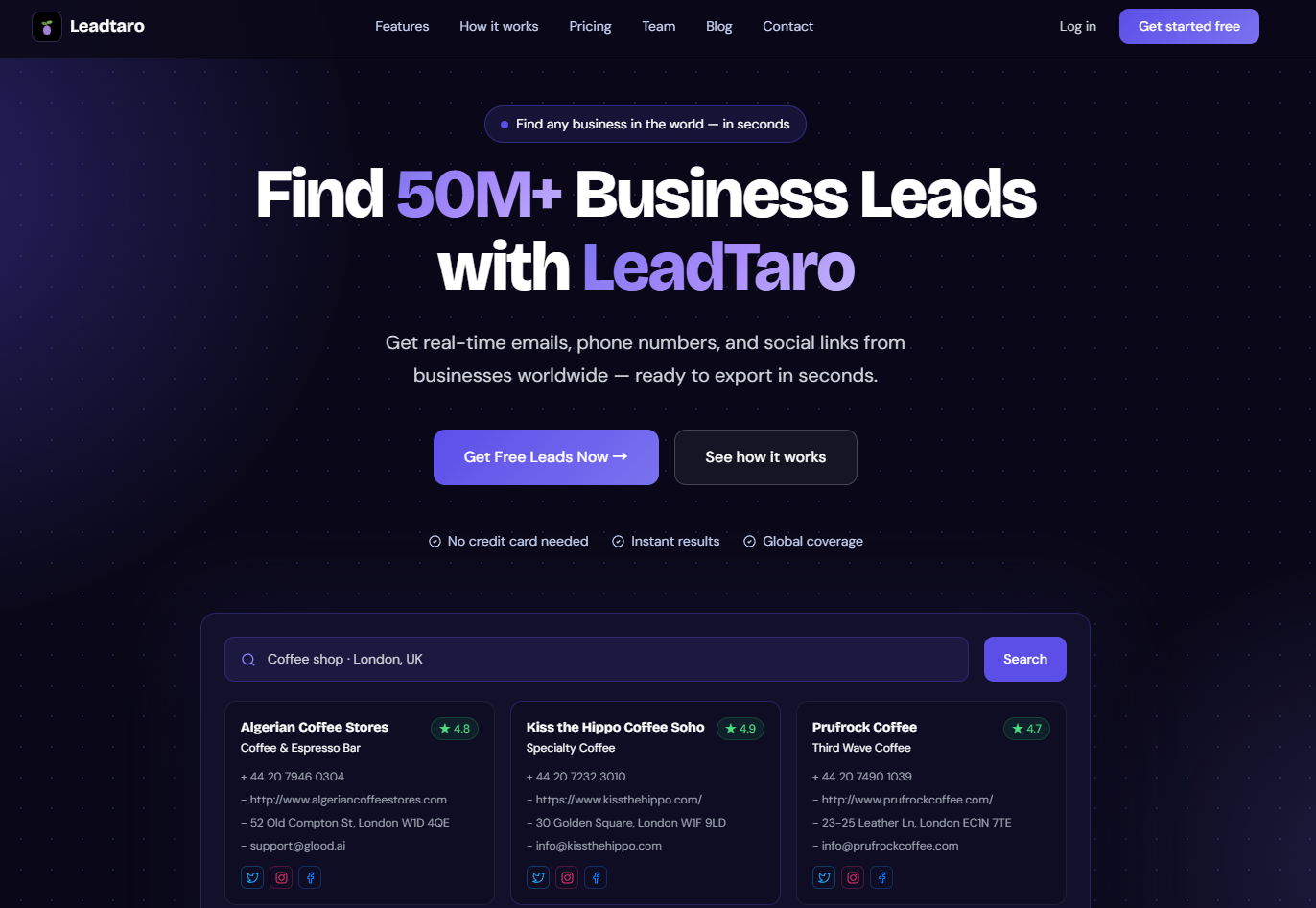
LeadTaro helps businesses manage important parts of this process by combining B2B lead discovery, available business contact information, AI-assisted cold email generation, and CRM pipeline management.
Although a complete omnichannel workflow may require additional integrations or communication tools, starting with organized prospect data and consistent follow-up gives sales teams a stronger foundation.
Omnichannel vs Multichannel vs Cross-Channel
The terms omnichannel, multichannel, and cross-channel are closely related, but they describe different approaches to customer communication.
DimensionMultichannelCross-ChannelOmnichannelChannel setupMultiple separate channelsChannels with some coordinationConnected customer journeyData managementOften separated by toolPartially sharedDesigned around a unified prospect viewMessage coordinationMay be inconsistentSome coordinationCoordinated across touchpointsFollow-upOften managed separatelyPartially connectedAdjusted according to interactionsMain objectiveReach prospects on multiple channelsImprove handoffsDeliver a consistent experienceMultichannel Outreach
Multichannel outreach means using several communication channels to reach potential customers.
A business might run cold email campaigns, make phone calls, and send LinkedIn connection requests. However, if each activity operates independently, prospects may receive repetitive messages without any coordination.
Cross-Channel Outreach
Cross-channel outreach connects some activities across channels. For example, a sales team might track email and phone activity in the same CRM but still need to coordinate follow-ups manually.
Omnichannel Outreach
Omnichannel outreach aims to make every interaction part of a consistent journey. Ideally, prospect replies, meeting bookings, and opt-out requests influence subsequent activities across the relevant channels.
For smaller businesses, the distinction matters because it helps identify what needs improvement first.
You do not necessarily need an expensive enterprise platform to begin. You need reliable prospect records, a clear outreach sequence, and a process for recording interactions and adjusting follow-ups.
Why Single-Channel Outreach Is Limiting B2B Growth in 2026
Cold email remains a useful B2B prospecting channel, but relying on email alone can limit your ability to reach relevant decision-makers.
Some prospects prefer email. Others respond more readily to professional networking, phone conversations, or introductions through existing relationships.
A single-channel strategy also makes your results more dependent on the performance of one communication method.
If your email deliverability declines or your messaging fails to resonate with a particular audience, your entire outreach process can suffer.
A coordinated B2B outreach strategy creates additional opportunities to establish contact while allowing each channel to serve a distinct purpose.
Three Reasons to Diversify Your Outreach
1. Reach prospects through appropriate communication channels
Different industries and decision-makers have different communication preferences. Using more than one suitable channel can create additional opportunities to begin a conversation.
2. Build familiarity over time
A prospect who sees a relevant company update, receives a useful email, and then has a personalized conversation may develop a clearer understanding of your offer.
The objective is not to overwhelm the prospect. Each interaction should have a reason to exist.
3. Improve follow-up consistency
A structured sequence helps sales teams remember when to follow up, which message was sent, and whether the prospect has responded.
LeadTaro's CRM pipeline supports this organizational aspect by helping users track prospects through stages such as New Lead, Contacted, Interested, Meeting, and Closed.
The important principle is that additional channels should improve relevance and continuity, not simply increase message volume.
The Channels That Matter in a B2B Outreach Strategy
Each outreach channel has different strengths. Effective omnichannel marketing assigns each one a clear role instead of copying the same message across every platform.
Email: The Foundation of Scalable Outreach
Email allows sales teams to explain their offer, provide useful information, and make a specific request without requiring an immediate response.
It is particularly useful for introducing a business problem, explaining a potential solution, or sharing a relevant case study.
However, generic messages are easy to ignore. Effective cold emails should demonstrate an understanding of the recipient's business and communicate a clear reason for getting in touch.
LeadTaro helps users discover B2B prospects and generate AI-assisted cold email drafts. Users can adapt these drafts to the prospect's business, review their accuracy, and choose an appropriate next step.
LinkedIn: Professional Context and Relationship Building
LinkedIn can help sales teams understand a prospect's professional background, company role, and publicly shared business interests.
Rather than sending an immediate sales pitch, consider engaging with relevant professional content or making a connection request that explains why the relationship could be useful.
Keep outreach personal and follow the platform's rules. Avoid excessive automation or repetitive messages that may damage your reputation or lead to account restrictions.
Phone Calls: Direct Conversations
Phone calls can be useful when a prospect has shown interest, when the product requires a more detailed explanation, or when a conversation is more efficient than a long email exchange.
Before calling, review the available business information and prepare a concise introduction.
A relevant call should explain who you are, why you are contacting the business, and how the conversation might benefit the recipient.
Respect applicable calling restrictions and do not assume that a publicly listed telephone number automatically authorizes every type of marketing call.
SMS: Short, Contextual Follow-Ups
SMS can be useful for appointment reminders and time-sensitive communications when the recipient has agreed to receive them or the communication is otherwise legally permitted.
It should not automatically be added to every cold outreach sequence. Business mobile numbers are not proof of consent, and rules governing marketing texts can be strict.
Use SMS selectively, prioritize recipient preferences, and ensure that your process respects applicable consent and opt-out requirements.
CRM: The Coordination Layer
A CRM helps sales teams maintain a consistent record of their interactions with prospects.
Without centralized records, one representative might send an introductory email while another makes an identical pitch by phone. A prospect could also continue receiving automated messages after expressing interest.
LeadTaro's CRM pipeline provides a way to organize prospects and track their sales status.
Combined with a clearly defined outreach process, this helps teams manage follow-ups more consistently and understand which prospects need attention.
How to Build an Omnichannel Outreach Sequence: A 5-Step Framework
An effective omnichannel outreach strategy starts with the right prospects and ends with measurable sales outcomes.
The following five-step framework can help small businesses, agencies, freelancers, and B2B sales teams build a repeatable process.
Step 1: Define Your Ideal Customer Profile
Before launching an outreach campaign, identify the businesses most likely to benefit from your product or service.
Consider:
Industry and business category
Target country, city, or region
Company size and business model
Relevant services or products
Likely business challenges
The role of the person responsible for purchasing
For example, a web development agency might target local professional services businesses with outdated websites. A SaaS company might focus on businesses in a particular industry that could benefit from workflow automation.
A clear ideal customer profile helps you avoid spending time contacting businesses that are unlikely to become customers.
Step 2: Build a Relevant B2B Prospect List
Once your target audience is defined, identify businesses that match your criteria.
Collect the business information that is relevant to your outreach process, such as company name, website, available email address, phone number, location, and relevant professional profiles.
Contact availability varies by business, so do not assume every record will contain every field.
LeadTaro helps users search for B2B leads, access available business contact information, and organize prospects for subsequent outreach.
Its database search and real-time web crawling capabilities support different prospect research workflows, depending on the selected functionality and available data.
Where necessary, validate contact details before launching a campaign.
Step 3: Assign a Purpose to Each Channel
Decide what each communication channel should accomplish.
For example:
Email introduces the problem and explains the potential value.
LinkedIn helps establish relevant professional context.
A phone call allows a more direct discussion when appropriate.
A follow-up email provides additional information or answers a question.
The CRM records the interaction and determines the next action.
Do not use every channel simply because it is available. Choose channels based on your audience, business context, and applicable communication rules.
Step 4: Create a Coordinated Outreach Sequence
A sequence provides a practical structure for following up without contacting prospects randomly.
Here is an illustrative 14-day B2B outreach schedule.
DayActivityPurposeDay 1Research the business and send a personalized emailIntroduce the offerDay 3Review relevant professional context on LinkedInPrepare a more informed follow-upDay 5Send a useful follow-up email if appropriateClarify the potential valueDay 8Make a relevant business call where permittedExplore whether there is a fitDay 11Share a case study or helpful resourceAddress a likely concernDay 14Send a concise closing message if appropriateEnd the sequence respectfullyThis is an example, not a universal schedule. Adapt the timing and channels to the audience, sales cycle, and previous interactions.
Most importantly, stop or change the sequence when a prospect replies, requests no further contact, books a meeting, or otherwise indicates that the next automated step is no longer appropriate.
LeadTaro can support the prospecting, email preparation, and pipeline tracking aspects of this workflow. Fully automated cross-channel triggers may require additional tools or integrations.
Step 5: Measure Results and Improve the Sequence
Track more than the number of messages sent.
Useful metrics include:
Email delivery and bounce rates
Positive reply rate
Meetings booked
Qualified opportunities generated
Conversion rate by channel
Time spent on prospect research
Cost per qualified lead
Customer acquisition cost
Compare results between campaigns that target similar audiences.
If one sequence produces more positive replies but fewer qualified meetings, review the quality of those replies and the qualification process. If a channel generates little engagement, reconsider whether it suits your target audience.
The objective is continuous improvement rather than simply increasing the number of touches.
The Data Foundation: Why Outreach Campaigns Fail
An omnichannel strategy depends on accurate and useful prospect information.
A carefully written email cannot compensate for an incorrect address. A well-timed phone call is ineffective if the number belongs to the wrong business. A personalized LinkedIn message can feel irrelevant if the recipient's role has been misunderstood.
Data quality affects every stage of the sales process.
The Essential Fields for B2B Prospecting
Data FieldWhy It MattersCompany nameIdentifies the businessBusiness categoryHelps assess relevanceWebsiteProvides company and service contextEmail addressSupports appropriate email outreachPhone numberSupports permitted business callsLocationHelps identify geographic fitSocial linksProvides additional professional contextLead statusTracks progress and follow-upResearch notesSupports personalizationNot every prospect will have all these fields. The objective is to gather the information required for a particular campaign and avoid collecting unnecessary data.
How LeadTaro Supports Prospect Research
LeadTaro helps businesses discover B2B prospects through its business lead database and real-time web crawling functionality.
Depending on the source and available records, users can access business details such as company names, websites, phone numbers, email addresses, and social links.
These details can help sales teams identify relevant companies and prepare more contextual outreach.
LeadTaro also includes AI-assisted cold email generation to help users prepare personalized drafts and a CRM pipeline for tracking prospects as they move through the sales process.
This creates a more organized workflow:
Search for businesses that match your target audience.
Review available business and contact information.
Prioritize relevant prospects.
Prepare personalized outreach.
Record interactions and manage follow-ups.
Measure which prospects and campaigns produce meaningful results.
LeadTaro is not a substitute for every email sequencing or multichannel automation platform. Instead, it provides core prospecting and sales organization capabilities that can form part of a broader outreach stack.
Why Data Quality Matters More Than Raw Volume
Collecting 10,000 poorly matched contacts may create more work than collecting 500 relevant prospects.
Large lists can include businesses outside your target market, incomplete records, outdated contact details, and addresses that are unsuitable for outreach.
Focus on relevance, appropriate validation, and clear qualification criteria before expanding the volume of your campaigns.
This helps control research costs and makes performance comparisons more meaningful.
How to Measure Omnichannel Outreach Performance
An omnichannel outreach campaign should be evaluated according to its contribution to qualified opportunities and revenue, not just its activity levels.
1. Track Performance by Channel
Record the source of each interaction and the outcome associated with it.
For example, compare the performance of email-first campaigns with campaigns that include appropriate phone or LinkedIn follow-ups.
Avoid assuming that one channel caused a conversion simply because it was the last interaction. Multiple touchpoints may contribute to the final decision.
2. Calculate Cost per Qualified Lead
Use the following formula:
Cost per Qualified Lead = Total Campaign Costs ÷ Number of Qualified Leads
Include relevant software subscriptions, data acquisition expenses, staff time, and other campaign costs.
A channel that generates many inexpensive contacts may still be inefficient if few meet your qualification criteria.
3. Measure Meeting and Customer Conversion
Track the percentage of qualified prospects that book meetings and eventually become customers.
For example, if 100 qualified prospects generate 10 meetings, the qualified-prospect-to-meeting rate is 10%.
If two of those meetings eventually produce customers, the meeting-to-customer conversion rate is 20%.
These figures are illustrative. Your own results will depend on the offer, market, sales process, and qualification standards.
4. Use CRM Data to Improve Follow-Up
A clear pipeline makes it easier to identify stalled opportunities and missed follow-ups.
LeadTaro helps users track prospects through stages such as New Lead, Contacted, Interested, Meeting, and Closed.
Reviewing these stages regularly can help you identify where prospects disengage and where your sales process needs improvement.
Staying Compliant Across Every Channel
Multichannel outreach involves several communication methods, each of which may be subject to different legal requirements and platform rules.
A prospect's business contact information being publicly available does not automatically give you permission to contact them through every channel.
Email Marketing
In the United States, CAN-SPAM establishes requirements for commercial email, including accurate sender information, appropriate identification, and a functioning opt-out mechanism.
In the UK, electronic marketing rules under PECR depend on the recipient's status and the type of communication. Rules can differ for corporate subscribers, sole traders, and certain partnerships. Data protection obligations may also apply.
Under UK GDPR and EU GDPR, where applicable, businesses must establish an appropriate lawful basis for processing personal data and meet relevant transparency and individual-rights requirements.
Phone Calls
Check the rules applicable to the recipient's location, the type of number, and the purpose of the call.
In the UK, businesses may need to screen against applicable telephone preference registers and comply with direct marketing requirements. Other jurisdictions have their own restrictions.
A business telephone number does not automatically make every unsolicited call permissible.
SMS and Mobile Messaging
Marketing texts can be subject to specific consent requirements and restrictions. Requirements vary by jurisdiction and communication type.
Do not assume that having a mobile number is equivalent to having consent to send marketing messages. Follow applicable opt-out requirements and retain records of relevant permissions.
Manage Opt-Outs Across Your Workflow
If a prospect objects to further marketing, ensure that the objection is recorded and respected across the channels to which it applies.
Keep suppression records where necessary to prevent the person from being contacted again inadvertently.
Use appropriate access controls, maintain accurate records, and review the privacy and compliance requirements of any tools or integrations in your workflow.
LeadTaro helps organize prospecting information and sales activity, but users remain responsible for ensuring that their data collection and outreach comply with applicable laws.
Five Omnichannel Outreach Mistakes to Avoid
Even a well-designed outreach strategy can underperform if execution is inconsistent.
1. Sending the Same Message Everywhere
A LinkedIn connection request, a cold email, and a phone call serve different purposes.
Copying the same sales pitch across all three channels can make outreach feel automated and irrelevant.
Adapt each message to its channel and the recipient's previous interactions.
2. Contacting Prospects Too Frequently
More touchpoints do not automatically mean better results.
Repeated messages over a short period can frustrate prospects and damage your sender reputation.
Set reasonable intervals, monitor responses, and stop outreach when a prospect requests no further contact.
3. Building Lists Without Qualification
A large prospect list is only useful if it contains businesses that fit your target audience.
Define your ideal customer profile and review available company information before prioritizing contacts.
LeadTaro's lead discovery capabilities can help you organize relevant prospects rather than relying entirely on manual research.
4. Ignoring Replies and Pipeline Status
Continuing an introductory sequence after a prospect has replied creates a disconnected experience.
Record interactions and update lead status so the next action reflects the current relationship.
Use your CRM pipeline to distinguish new prospects from interested leads, scheduled meetings, and closed opportunities.
5. Measuring Activity Instead of Outcomes
Sending thousands of emails does not necessarily produce qualified sales opportunities.
Evaluate positive replies, meetings, qualified leads, conversion rates, and customer acquisition costs.
Use these metrics to determine whether a sequence is creating business value.
FAQ: Omnichannel Outreach
What does omnichannel mean in simple terms?
Omnichannel means coordinating multiple communication channels so that interactions form one consistent customer journey. Instead of treating every message as a separate activity, businesses use the context of previous interactions to guide the next step.
What is omnichannel outreach in B2B sales?
Omnichannel outreach is a B2B prospecting strategy that coordinates channels such as email, LinkedIn, phone calls, and other appropriate communication methods to engage potential customers.
The aim is to provide relevant follow-ups, improve continuity, and create more opportunities for meaningful sales conversations.
What is the difference between omnichannel and multichannel outreach?
Multichannel outreach uses several channels, which may operate independently. Omnichannel outreach aims to coordinate those channels using shared prospect information, interaction history, and consistent follow-up rules.
The practical difference is how well each interaction reflects what has already happened.
How many channels should a B2B outreach sequence use?
There is no universal number. Email alone may be sufficient for some audiences, while other campaigns can benefit from a combination of email, professional networking, and phone calls.
Choose channels based on your audience, available data, communication preferences, and compliance requirements.
Do I need expensive software to run an omnichannel campaign?
Not necessarily. Smaller teams can start with a reliable prospect list, a structured email workflow, and a CRM for recording interactions.
More advanced automation may require additional integrations or sales engagement software.
LeadTaro provides B2B lead discovery, AI-assisted cold email generation, and CRM pipeline management to help businesses organize important parts of their prospecting workflow.
How can I find B2B leads for an omnichannel campaign?
Start by defining your ideal customer profile and identifying businesses that match it.
Use a business lead database or suitable web research tools to collect relevant company details and available contact information. Review the data, validate important fields, and prioritize prospects before starting outreach.
LeadTaro helps users discover business prospects and organize them for subsequent sales activities.
Can AI help with omnichannel outreach?
AI can help research business context, prepare email drafts, summarize prospect information, and support personalization.
However, AI-generated content should be reviewed for accuracy and relevance. Automated follow-ups should also respect prospect responses, communication preferences, and applicable legal requirements.
LeadTaro's AI-assisted cold email generation can help users prepare outreach drafts as part of their prospecting workflow.
How do I know whether my omnichannel strategy is working?
Track qualified leads, positive replies, meetings booked, conversion rates, and customer acquisition costs. Where possible, compare similar campaigns and examine how prospects move between channels.
The goal is to identify which combinations of research, messaging, and follow-up produce the best business outcomes.
The Bottom Line
Omnichannel outreach is not about contacting every prospect through every available channel. It is about creating a coordinated, relevant, and consistent experience throughout the B2B sales process.
The strongest strategy starts with a clear ideal customer profile, reliable prospect information, appropriate channel selection, and a structured follow-up process.
LeadTaro helps businesses bring essential parts of that workflow together through B2B lead discovery, available business contact information, AI-assisted cold email generation, and CRM pipeline management.
For startups, agencies, freelancers, and growing sales teams, a more organized prospecting process can reduce repetitive research, improve follow-up consistency, and make it easier to measure campaign performance.
Start with relevant prospects, personalize your outreach, track every meaningful interaction, and optimize your process using real results.
Start with 60 free B2B leads on LeadTaro, with no credit card required, and build a more organized approach to B2B prospecting.