Articles » Lead Generation » Signal-Based Selling in 2026: How to Use Business Signals for Smarter B2B Prospecting
Table of Contents
What Is Signal-Based Selling?
Why Traditional Cold Outreach Needs Better Targeting
The 5 Types of Buying Signals That Matter
How to Identify Business Signals for B2B Lead Generation
How to Build Your Signal-Based Selling Playbook
Tools and Technology for Signal-Based Selling in 2026
Signal-Based Selling: Compliance and Best Practices
Frequently Asked Questions
Conclusion
B2B prospecting is not simply about finding as many contacts as possible. It is about identifying businesses that fit your target market, understanding their potential needs, and reaching out with a relevant message.
This is where signal-based selling can make a difference.
Instead of contacting every prospect with the same generic email, sales teams can use business information, company developments, online activity, and customer engagement to decide which prospects deserve attention first.
For example, a newly established business may need help building its website. A growing company may be looking for marketing support, while a business with an outdated online presence may benefit from digital services.
These signals do not guarantee that a business is ready to buy. However, they can help sales teams identify relevant opportunities and make their outreach more targeted.
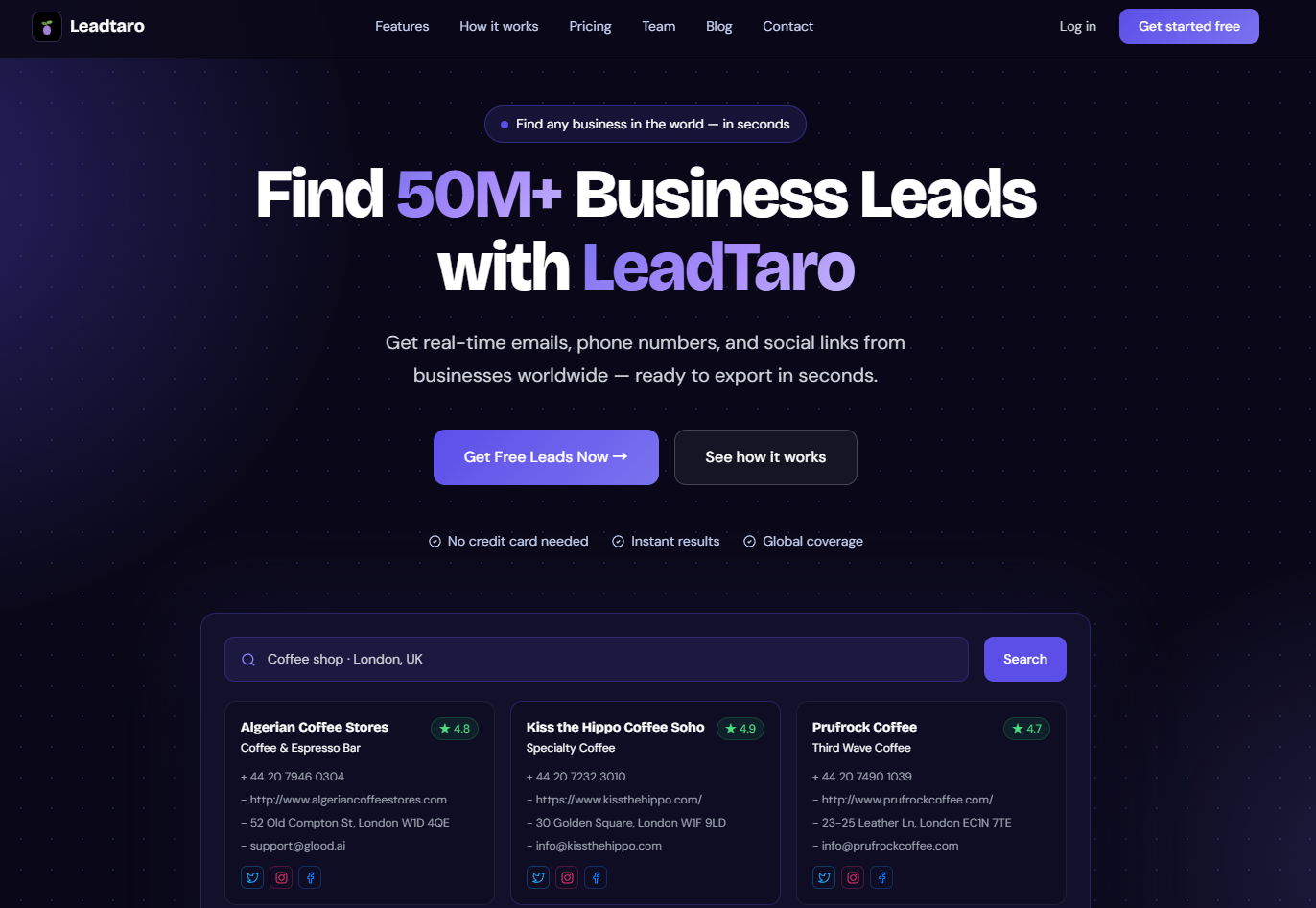
With LeadTaro, you can discover B2B leads, review available business information, generate personalized cold emails with AI, and manage prospects through a CRM pipeline. Combining these capabilities with a structured signal-based selling strategy helps connect lead discovery with practical sales activities.
What Is Signal-Based Selling?
Signal-based selling is a B2B sales strategy that uses relevant information about businesses and their activities to determine whom to contact, when to reach out, and what message to deliver.
Traditional prospecting often starts with a broad list of companies. Sales representatives then work through the list, frequently using similar messaging for every prospect.
Signal-based selling takes a more focused approach. It considers the circumstances that might make a particular business a suitable prospect.
Examples include:
A company entering a new geographic market.
A recently established business that needs professional services.
A business expanding its product or service offering.
A company whose website or online presence could be improved.
A prospect who has responded positively to previous outreach.
An existing lead who has requested additional information.
The objective is to use these signals to improve prospect selection and personalize outreach.
Signal-based selling is particularly useful when combined with a clear ideal customer profile, reliable business information, and a consistent process for tracking sales opportunities.
Why Traditional Cold Outreach Needs Better Targeting
Cold outreach remains a useful way to introduce a business to potential customers. However, sending large numbers of generic messages can waste time and produce disappointing results.
There are several common reasons why outreach campaigns underperform.
Poor Prospect Selection
A large contact list does not necessarily represent a strong sales opportunity. Businesses outside your target market may have little need for your product or service.
Defining your ideal customer profile helps narrow the list to prospects that are more likely to benefit from your offering.
Irrelevant Messaging
A generic message rarely explains why a particular company should care about your solution.
Personalized outreach connects your offer to a relevant business characteristic, challenge, or opportunity.
Incorrect Timing
A company may be a good fit but have no immediate need for your service. Business developments and engagement signals can help you identify more appropriate moments to initiate a conversation.
Inconsistent Follow-Up
Even relevant prospects can be lost when sales teams fail to track previous conversations or follow up at the right time.
A CRM pipeline helps maintain visibility into each prospect's progress and ensures that potential opportunities are not overlooked.
The answer is not simply to send more emails. It is to improve targeting, provide relevant context, and manage the sales process consistently.
The 5 Types of Buying Signals That Matter
Not all signals have the same importance. Some indicate that a business fits your target market, while others provide stronger evidence of an immediate need or active interest.
Understanding the difference helps sales teams prioritize effectively.
1. Business and Firmographic Signals
Firmographic signals describe the characteristics of a company.
Examples include:
Industry and business category.
Geographic location.
Company size, where available.
Type of products or services offered.
Business model and target market.
These signals help determine whether a prospect matches your ideal customer profile.
For example, a marketing agency specializing in hospitality businesses can prioritize restaurants, hotels, and other relevant businesses rather than contacting companies across unrelated industries.
LeadTaro helps users discover B2B businesses and review available business information to support this qualification process.
2. Business Growth Signals
Business developments can indicate changing needs.
Examples include:
Opening a new location.
Expanding into another market.
Introducing new services.
Increasing recruitment activity.
Announcing a significant business partnership.
A company expanding into a new market may need additional marketing, recruitment, software, or operational support.
These developments should be treated as reasons to investigate a potential opportunity, not proof that the company intends to purchase a particular service.
3. Digital Presence Signals
A company's website and online presence can reveal potential opportunities for service providers.
Examples include:
An outdated or poorly structured website.
Limited online booking functionality.
Missing information about services.
Weak visibility across relevant digital channels.
An online presence that does not reflect the company's current offering.
For a web development agency, these characteristics may help identify businesses that could benefit from a website redesign.
For a digital marketing agency, they may indicate opportunities to improve content, search visibility, or customer acquisition.
The key is to connect the signal to a service that genuinely addresses the business's needs.
4. Engagement Signals
Engagement signals describe how a prospect interacts with your business.
Examples include:
Replying to an email.
Requesting a quotation.
Booking a meeting.
Asking for additional product information.
Returning to an active sales conversation.
These signals can be particularly useful because they provide direct evidence of engagement.
However, not all engagement has the same meaning. An email open, for example, is weaker evidence of buying intent than a request for a proposal.
Prioritize meaningful interactions and avoid assuming that every interaction indicates an intention to buy.
5. Sales Pipeline Signals
Your CRM contains information about where each prospect stands in the sales process.
Examples include:
A newly discovered lead that still requires qualification.
A prospect who has been contacted but has not replied.
An interested lead requesting more information.
A prospect who has agreed to a meeting.
A customer who has completed a purchase.
These signals help determine the next appropriate action.
LeadTaro's CRM pipeline allows users to organize prospects through stages such as New Lead, Contacted, Interested, Meeting, and Closed.
By tracking these stages consistently, sales teams can focus on relevant follow-ups instead of repeatedly researching the same prospects.
How to Identify Business Signals for B2B Lead Generation
Finding useful signals begins with understanding which businesses you want to reach and what problems your product or service solves.
Start With Your Ideal Customer Profile
Define your target industries, geographic markets, business types, and other relevant characteristics.
For example, a company offering appointment-booking software might target service businesses that rely on customer appointments.
A web development agency might prioritize businesses with websites that lack important functionality.
The clearer your target profile, the easier it becomes to recognize relevant prospects.
Find Businesses Matching Your Target Market
Use LeadTaro to discover businesses relevant to your industry and location.
Depending on the available information, you can review details such as business names, websites, email addresses, phone numbers, and social links.
These details provide a starting point for evaluating whether a prospect fits your ideal customer profile.
For larger prospecting projects, LeadTaro's bulk search can help you work with groups of businesses from its available database.
Research Potential Buying Signals
Once you have identified a relevant business, investigate the circumstances that may create an opportunity.
Review its website, services, public business information, and any relevant company announcements.
Ask yourself:
Does the company match our ideal customer profile?
Is there a specific problem our product or service could solve?
Has the business recently changed or expanded?
Is there evidence of relevant engagement?
What information would make our first message more useful?
This process turns a basic contact list into a more informed prospecting list.
Prioritize Prospects
A simple scoring framework can help you decide which businesses to research or contact first.
For example:
SignalIllustrative scoreMatches the target industry+20Located in the target market+15Has a relevant business need+25Shows a meaningful growth signal+15Has responded positively to outreach+25Clearly falls outside the target market-20These scores are examples, not validated predictions. Adjust the criteria according to your business model and actual sales results.
A high score should indicate that a prospect deserves attention, not that a sale is guaranteed.
How to Build Your Signal-Based Selling Playbook
A successful signal-based selling strategy needs a repeatable process. Collecting business information is only the beginning; the value comes from using that information to guide outreach and follow-up.
Step 1: Define Your Signal Priorities
Start by deciding which signals matter most for your product or service.
For example, a website agency may prioritize businesses with outdated websites, while a recruitment company may focus on businesses expanding their teams.
Separate signals that indicate general customer fit from those that suggest an immediate opportunity.
This makes prioritization more meaningful and prevents your team from treating every observation as equally important.
Step 2: Discover and Qualify Leads
Use LeadTaro to find businesses matching your target criteria.
Review the available information and identify prospects that warrant additional research.
Organize your list according to business fit, potential needs, and any relevant signals you discover.
For a small sales team, even a straightforward process of identifying and reviewing the most relevant prospects can improve consistency.
Step 3: Create Signal-Specific Outreach
Once you identify a relevant signal, use it to shape your message.
Avoid making assumptions about a company's finances, internal challenges, or purchasing intentions. Instead, reference observable business information and explain how your offering may help.
For example, a web design agency contacting a business with an outdated website might write:
"Hi [Name], I was looking at [Company Name]'s website and noticed there may be an opportunity to make the service information easier for potential customers to navigate. We help businesses improve their websites and customer experience. Would you be open to a brief conversation?"
This message connects the outreach to an observable characteristic without claiming to know the company's internal priorities.
LeadTaro's AI cold email generation can help you prepare personalized first drafts. Review each draft to ensure that the business details are accurate and the message is relevant before sending it.
Step 4: Track Outcomes and Improve
Record what happens after each outreach attempt.
Track metrics such as:
Positive reply rate.
Meetings booked.
Qualified sales opportunities.
Conversion rate.
Time spent researching each prospect.
Results by industry or signal type.
Use these results to identify which signals are associated with meaningful sales outcomes.
If prospects from a particular segment consistently respond positively, investigate why. If another segment rarely progresses beyond the first contact, reconsider its place in your targeting strategy.
LeadTaro's CRM pipeline helps you organize prospect stages and maintain visibility into follow-up activities.
Over time, this creates a more informed process for deciding which businesses to prioritize.
Tools and Technology for Signal-Based Selling in 2026
You do not necessarily need a large collection of sales tools to build a practical signal-based selling process.
Start with the capabilities that address your immediate needs.
CapabilityHow it supports signal-based sellingB2B lead discoveryFind businesses matching your target marketBusiness information researchReview available company and contact detailsAI-assisted email writingPrepare personalized outreach draftsCRM pipeline managementTrack conversations, stages, and follow-upsReporting and analysisEvaluate which prospects and signals produce resultsLeadTaro brings several of these activities together in one prospecting workflow.
Users can discover B2B leads, review available business information, generate cold email drafts with AI, and manage opportunities through a CRM pipeline.
This can reduce the need to switch between separate tools for basic prospecting and pipeline organization.
For businesses that need more advanced intent data, automated workflows, or specialist enrichment services, additional tools may complement their existing process. The right setup depends on the target market, budget, technical requirements, and the signals available to the sales team.
The most important consideration is not how many tools you use. It is whether your process helps you identify relevant prospects and turn useful information into meaningful conversations.
Signal-Based Selling: Compliance and Best Practices
Signal-based prospecting should be built around responsible data handling and relevant communication.
Publicly accessible business information is not automatically exempt from privacy, data protection, or marketing rules. Requirements depend on the type of data, the recipient, the jurisdiction, and the communication channel.
Keep these practices in mind.
Use Relevant Business Information
Collect and use information that is appropriate for your business purpose.
Avoid gathering unnecessary personal information, and ensure that your prospecting activities follow applicable data protection requirements.
Verify Important Details
Business information can become outdated. Check important contact details and confirm that your message refers to the correct company and relevant circumstances.
Do not present assumptions as verified facts.
Personalize Outreach Honestly
Reference legitimate business characteristics or publicly available developments. Avoid misleading claims about monitoring a prospect or knowing their purchasing intentions.
Follow Applicable Marketing Rules
Depending on the recipient and jurisdiction, B2B outreach may be subject to requirements under laws such as the UK GDPR, the Data Protection Act 2018, PECR, EU data protection rules, or the US CAN-SPAM Act.
The rules differ by location, communication channel, and whether you contact a company or an individual subscriber. Identify the applicable requirements before launching a campaign.
Respect Objections and Opt-Out Requests
Maintain an appropriate suppression list and stop marketing communications when required.
Make it straightforward for recipients to understand who is contacting them and how to object to further marketing.
Measure Quality, Not Just Volume
A large prospect list is not necessarily a valuable one. Monitor the relevance of your leads, the quality of your outreach, and the outcomes of your sales process.
Responsible targeting helps build a more sustainable approach to B2B prospecting.
Frequently Asked Questions
What is signal-based selling?
Signal-based selling is a B2B sales approach that uses relevant business information, company developments, and engagement signals to help determine which prospects to contact and how to prioritize them.
What are examples of buying signals?
Examples include company expansion, new business locations, relevant hiring activity, changes to a company's digital presence, positive replies, requests for quotations, and meetings booked.
These signals vary in strength. A business characteristic may indicate a good customer fit without proving that the company is ready to buy.
How do you implement signal-based selling?
Start by defining your ideal customer profile, identifying relevant business signals, discovering and qualifying prospects, creating personalized outreach, and tracking outcomes in your CRM.
Review your results regularly and adjust your criteria based on actual sales performance.
How can LeadTaro support signal-based selling?
LeadTaro helps users discover B2B leads, review available business information, generate personalized cold email drafts with AI, and manage prospects through a CRM pipeline.
These capabilities support a structured workflow from lead discovery through outreach and opportunity management.
Do I need expensive intent data to start?
No. You can begin with business information, a clear target customer profile, and a simple lead qualification framework.
Specialist intent data and advanced automation may become useful as your sales process grows, but they are not prerequisites for getting started.
How is signal-based selling different from traditional cold outreach?
Traditional cold outreach often starts with a broad list and a relatively generic message. Signal-based selling uses relevant information to select prospects, prioritize outreach, and make each message more specific to the business.
The aim is to improve relevance and focus rather than simply increase the number of messages sent.
How can I measure whether my signal-based selling strategy works?
Track positive reply rates, meetings booked, qualified opportunities, conversion rates, and the time required to qualify prospects.
Compare results across different industries, prospect segments, and signal types. Use the findings to improve your targeting and outreach process.
Conclusion: Turn Business Signals Into Better B2B Opportunities
Signal-based selling gives B2B teams a practical way to move beyond broad prospect lists and focus on businesses that fit their target market and show relevant signs of opportunity.
The process starts with a clear ideal customer profile. From there, identify useful business signals, qualify prospects, personalize outreach, and track the results consistently.
LeadTaro supports this workflow with B2B lead discovery, available business information, AI-assisted cold email generation, and CRM pipeline management.
Whether you are a founder building your first prospect list, a freelancer looking for potential clients, or an agency developing a repeatable outbound process, a structured approach can help you make better use of your prospecting time.
LeadTaro offers a free plan with 60 B2B leads and no credit card requirement, giving you a way to explore the platform and begin organizing your prospecting workflow.
Start with LeadTaro and turn B2B lead discovery into a more focused, personalized, and organized sales process.