Articles » Lead Generation » Signal-Based Selling in 2026: How to Use Buying Signals for Smarter B2B Prospecting
B2B sales is not just about finding more prospects. It is about identifying the right businesses, understanding when your solution might be relevant, and reaching out with a message that makes sense to the recipient.
Traditional prospecting often starts with a large contact list and a generic outreach campaign. Signal-based selling takes a different approach. It uses relevant business information, changes in company circumstances, and engagement data to help sales teams decide which prospects to prioritize.
For startups, agencies, freelancers, and growing sales teams, this approach can make prospecting more focused and easier to manage.
In this guide, we explain what signal-based selling is, the buying signals worth monitoring in 2026, how to build a repeatable prospecting workflow, and how a B2B lead generation platform such as LeadTaro can support your sales process.
Table of Contents
What Is Signal-Based Selling?
Why Traditional Cold Outreach Needs Better Targeting
The 5 Types of Buying Signals That Matter
How to Identify Buying Signals in B2B Prospecting
How to Build Your Signal-Based Selling Playbook
Tools and Technology for Signal-Based Selling in 2026
Compliance and Best Practices
Frequently Asked Questions
What Is Signal-Based Selling?
Signal-based selling is a B2B sales approach that uses relevant information about potential customers to determine who to contact, when to contact them, and what to say.
Instead of treating every prospect equally, sales teams look for signals that indicate a business may be a suitable customer or could have a relevant need.
Examples include:
A company expanding into a new location.
A business hiring employees for a new department.
A prospect engaging with relevant product or service content.
A company changing its technology or business operations.
A business showing signs of growth that align with your offering.
These signals do not guarantee that a company is ready to buy. They provide context that can help salespeople make better decisions about where to focus their efforts.
For example, a web design agency targeting newly established businesses might prioritize companies that have recently started operating and have an identifiable need for a professional website. A CRM provider might prioritize businesses whose sales operations appear to be expanding.
The goal is to replace indiscriminate outreach with more relevant, evidence-based prospecting.
Signal-Based Selling vs. Traditional Prospecting
Traditional prospecting often begins with a broad list of potential customers. Salespeople then contact those businesses using a standard sequence, sometimes without a clear reason for reaching out at that particular moment.
Signal-based selling adds another layer: prioritization based on relevant information.
Traditional ProspectingSignal-Based SellingStarts with a broad prospect listStarts with a target profile and relevant signalsOften uses the same message for many prospectsUses context to make outreach more relevantPrioritizes leads by list order or basic criteriaPrioritizes leads using fit, timing, and available evidenceRelies heavily on manual researchCan incorporate structured data and automationMeasures activity such as emails sentAlso evaluates outcomes by signal and prospect segmentSignal-based selling does not eliminate cold outreach. It improves how teams select prospects and prepare their messages.
Why Traditional Cold Outreach Needs Better Targeting
Cold outreach can still generate customers, but sending more messages is not always the best way to improve results.
When a prospect does not match your ideal customer profile, even excellent copy may fail. Similarly, a relevant offer can be ignored if the message arrives at the wrong time or does not address a recognizable business need.
Signal-based prospecting helps address these problems in several ways.
Better Prospect Relevance
The first step is ensuring that a prospect could realistically benefit from your product or service.
A business selling accounting software, for example, may prioritize companies with relevant operational needs rather than contacting every business in a geographic area.
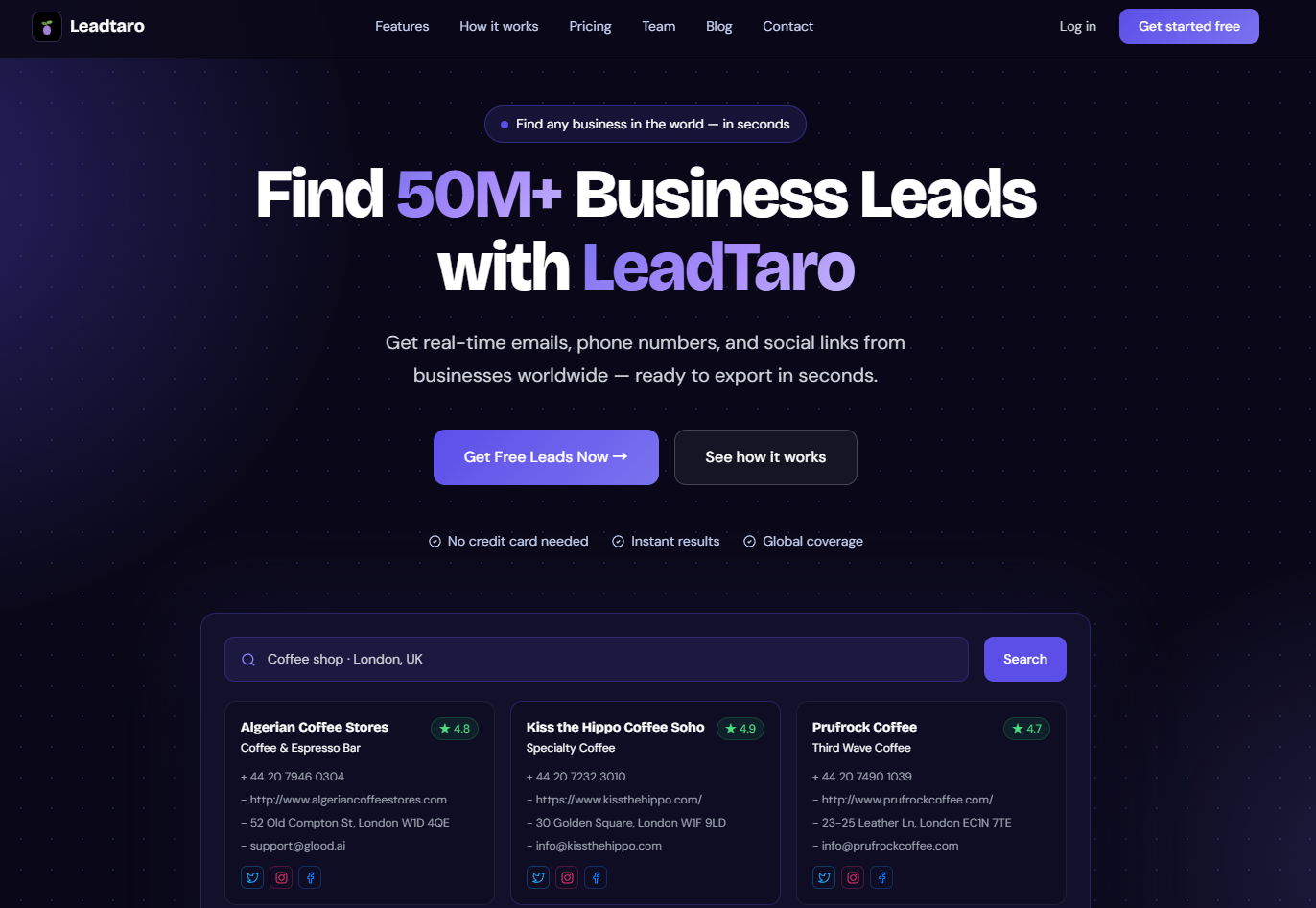
A prospecting platform such as LeadTaro can help you discover B2B leads and build a list of potential customers. You can then evaluate those businesses against your ideal customer profile and determine which prospects deserve further research.
More Relevant Outreach
Signals give you a reason to personalize your message.
Instead of writing, "We help businesses grow," you might explain how your service relates to a specific, verified characteristic of the prospect's business.
For example, a marketing agency contacting a company that has recently opened a second location could discuss the challenges of maintaining consistent marketing across locations.
The important distinction is that personalization should be grounded in reliable information. Do not assume that a business has a problem simply because it matches a particular category.
More Efficient Sales Workflows
When sales teams define clear qualification criteria, they can spend less time repeatedly researching unsuitable prospects.
A structured process allows you to:
Find potential customers.
Evaluate their fit with your ideal customer profile.
Identify relevant buying signals.
Prioritize outreach.
Track responses and sales outcomes.
Refine your targeting based on what works.
This process is useful even if you do not have access to sophisticated intent-data software or predictive AI.
The 5 Types of Buying Signals That Matter
Buying signals can come from several sources. The most useful signals depend on your product, target market, and sales cycle.
Here are five categories to consider when building a signal-based selling strategy.
1. Intent Signals
Intent signals indicate that a prospect may be researching a product category or solution.
Examples include:
Visiting a pricing page.
Downloading a relevant guide.
Requesting a product demonstration.
Searching for information related to a business problem.
Comparing solutions or reviewing product documentation.
These signals can be valuable when you have legitimate access to the underlying data. However, they are not always available for prospects who have never interacted with your company.
A pricing-page visit, for example, may indicate interest, but it does not necessarily mean the visitor has purchasing authority or an immediate budget.
2. Trigger Events
Trigger events are changes in a company's circumstances that may create new needs.
Examples include:
Opening a new office or business location.
Expanding into a new market.
Hiring employees for a new team.
Announcing a new product or service.
Changing leadership.
Receiving new investment.
Consider a business that opens a second location. It may need additional marketing, equipment, staffing, software, or operational support.
That creates a reasonable opportunity to investigate whether your offering is relevant.
However, a trigger event should be treated as a reason to research a prospect, not proof that the company is ready to purchase.
3. Engagement Signals
Engagement signals describe how a prospect interacts with your business or content.
Examples include:
Replying to an outreach email.
Attending a webinar.
Requesting additional information.
Using a free product or trial.
Engaging with relevant marketing content.
These signals can help distinguish an actively interested prospect from someone who has not interacted with your business.
Not all engagement is equally meaningful. A direct request for a quotation is generally more actionable than a single content view.
Use engagement data appropriately and avoid treating email opens or other uncertain tracking events as definitive evidence of buying intent.
4. Technographic Signals
Technographic signals describe the technologies a business uses.
Examples include:
A company adopting a new CRM.
A business changing its e-commerce platform.
A website using a particular content management system.
A company adding software that complements your product.
These signals can be particularly useful for SaaS providers and technology consultants.
For example, an agency specializing in e-commerce optimization may prioritize businesses whose websites use platforms it supports.
Technographic data can be incomplete or outdated, so verify important details before using them to personalize outreach.
5. Business Growth and Digital Presence Signals
Business characteristics can also provide useful context for prospecting, particularly when targeting local businesses and small or medium-sized companies.
Examples include:
A business announcing a new location.
A company expanding its service offerings.
An increase in publicly reported hiring activity.
A business launching a new website.
A company developing a stronger online presence.
A business receiving new customer reviews or updating its public business information.
These observations may help you identify companies worth researching.
For instance, a new business might need help with branding, accounting, customer acquisition, or operational software. A company expanding into a new market might need additional suppliers or marketing support.
However, individual signals are rarely sufficient on their own. A growing review count does not necessarily prove revenue growth, and a weak online presence does not prove that a company has a marketing budget.
The strongest prospecting decisions combine several relevant signals with a clear understanding of the target customer.
How to Identify Buying Signals in B2B Prospecting
Finding buying signals starts with knowing what your ideal customers look like and which business changes matter to your offering.
Start With Your Ideal Customer Profile
Before collecting signals, define your ideal customer profile, or ICP.
Consider:
Industry or business category.
Geographic location.
Company size.
Products or services offered.
Typical customer needs.
Budget and purchasing capacity, where known.
Problems your product or service can solve.
For example, a software company targeting independent retailers might prioritize businesses in its supported markets that have relevant operational requirements.
A web design agency might target businesses whose online presence does not adequately reflect their services.
A clear ICP prevents your team from confusing general business activity with a genuine sales opportunity.
Build a Relevant Prospect List
Once you have defined your target market, identify companies that fit the profile.
LeadTaro can help you discover B2B prospects and access available business lead information, giving you a starting point for targeted prospecting.
Instead of collecting contacts without a clear purpose, organize your list around a defined campaign. You might focus on one industry, one geographic market, or one type of business need.
LeadTaro's free plan includes 60 verified B2B leads without requiring a credit card. This gives you a way to explore the platform and test your prospecting workflow before scaling your lead generation efforts.
Research and Record Signals
For each prospect, document the information that supports your decision to reach out.
Depending on your target market and available sources, useful fields may include:
Company name and industry.
Business location.
Website and available contact information.
Relevant company announcements.
Evidence of expansion or hiring.
Technology or service requirements.
Previous engagement with your business.
The reason the prospect may benefit from your offer.
Keep observations separate from assumptions. For example, record "announced a second location" rather than "needs a new marketing agency" unless the latter has been independently established.
Prioritize Prospects by Fit and Timing
A simple scoring framework can help your team decide which prospects to research or contact first.
Consider using two separate dimensions:
Company fit: How closely does the business match your ideal customer profile?
Signal strength: How relevant and recent is the evidence that your offering may be useful?
A business with excellent company fit but no immediate buying signal may belong in a nurturing workflow. A business with a relevant trigger event and strong ICP fit may deserve faster follow-up.
This approach makes prioritization more transparent without pretending that a score can perfectly predict buying intent.
How to Build Your Signal-Based Selling Playbook
A signal-based selling strategy works best when it becomes a repeatable process rather than a collection of disconnected observations.
Step 1: Define Your Signal Hierarchy
Decide which signals matter most for your business.
For example, a B2B software company might prioritize a direct product inquiry over a general website visit. A supplier serving new restaurants might prioritize verified information about a newly opened restaurant that fits its service area.
Create a hierarchy based on relevance, reliability, and recency.
A simple framework could look like this:
PrioritySignal ExampleSuggested ActionHighDirect inquiry or request for a quotationRespond promptlyHighVerified business event closely related to your offerResearch and personalize outreachMediumStrong ICP fit with a relevant but indirect signalQualify furtherLowGeneral company activity with no clear connection to your offerMonitor or deprioritizeAdjust these categories to your sales process and the resources available to your team.
Step 2: Combine Multiple Signals
One signal may be misleading, but several independent signals can create a stronger reason to investigate a prospect.
Imagine a marketing agency targeting small businesses. A company might match the agency's target industry, operate in its service area, and have recently announced a new location.
Together, those observations may justify prioritizing the business for research.
However, do not count several versions of the same underlying fact as independent evidence. A company announcement repeated across three websites does not necessarily represent three separate buying signals.
Step 3: Create Signal-Specific Outreach
The purpose of identifying signals is to make outreach more relevant.
Avoid sending the same generic message to every prospect. Instead, connect your offer to the specific context you have verified.
Example: Outreach to a business opening a new location
Subject: Supporting your expansion
Hi [First Name],
I noticed that [Company Name] recently announced its expansion into [Location].
We help businesses with [specific service] so they can [relevant business outcome]. I thought it might be worth connecting to see whether this could support your plans for the new location.
Would you be open to a brief conversation?
Best regards,
[Your Name]
Example: Outreach to a business with an outdated website
Subject: A quick idea for [Company Name]
Hi [First Name],
I came across [Company Name] while researching businesses in [Industry].
We help businesses improve their online presence and make it easier for potential customers to understand their services. I had a couple of ideas that may be relevant to your website.
Would you be interested in hearing more?
Best regards,
[Your Name]
Only use a trigger or observation if you have verified it. Avoid implying that you know the prospect's internal priorities when you do not.
Step 4: Organize Follow-Ups in Your Sales Pipeline
A signal is useful only if it leads to an appropriate next action.
Organize prospects into clear pipeline stages, such as:
- New Lead
- Contacted
- Interested
- Meeting
- Closed
Record the signal that prompted the outreach and the result of each interaction.
This makes it easier to determine which prospecting approaches generate meaningful conversations rather than simply increasing the number of messages sent.
LeadTaro can support the prospecting side of this workflow by helping you find and organize B2B leads. Combining structured lead information with a consistent follow-up process helps turn prospect research into an actionable sales pipeline.
Step 5: Measure Results and Improve
Track performance at the signal and campaign levels.
Useful metrics include:
Percentage of prospects matching your ICP.
Valid contact rate.
Email delivery and bounce rates.
Positive reply rate.
Meetings booked.
Qualified opportunities created.
Conversion rate by prospect segment.
Revenue generated by campaign.
Compare these outcomes across different signal types.
If a particular trigger consistently produces relevant conversations, consider prioritizing similar prospects. If another signal produces little engagement, reassess its relevance or the way you use it.
Do not assume a signal works simply because it sounds persuasive. Let actual results guide your decisions.
Tools and Technology for Signal-Based Selling in 2026
You do not need a large collection of expensive sales tools to start using buying signals. Begin with the information you can access reliably and build a workflow around your team's needs.
B2B Lead Generation: LeadTaro
LeadTaro helps businesses discover B2B prospects and access available lead information for prospecting and outreach.
It is useful when the first challenge is identifying potential customers and building a structured list to work from.
The free plan provides 60 verified B2B leads without requiring a credit card, allowing you to evaluate the platform before expanding your prospecting activity.
CRM Platforms
A CRM helps you maintain company records, track interactions, and manage follow-ups.
Examples include HubSpot and Salesforce. The appropriate option depends on your sales process, required integrations, budget, and team size.
A CRM can also help you record which signals led to a conversation or qualified opportunity.
Data Enrichment Tools
Enrichment tools can supplement existing records with additional company or contact information.
They may be useful when your current lead list lacks important fields. Before using an enrichment provider, review its data coverage, accuracy, permitted uses, and integration requirements.
Sales Engagement Platforms
Sales engagement tools help coordinate outreach and follow-up tasks across email and other supported channels.
Examples include Instantly and Lemlist. Their usefulness depends on your outreach volume, personalization requirements, and compliance obligations.
Automation should support relevant communication rather than turn every prospect into the recipient of an identical sequence.
Analytics and Automation
Reporting tools and workflow automation can help connect lead sources, qualification rules, CRM records, and campaign outcomes.
For a small business, a spreadsheet and a CRM may be enough to begin. More complex workflows can be introduced when manual work becomes a genuine bottleneck.
The best technology stack is not necessarily the one with the most features. It is the one that helps your team find suitable prospects, act on relevant information, and measure the outcomes.
Signal-Based Selling: Compliance and Best Practices
Using buying signals for B2B prospecting requires careful handling of data and outreach.
Information being publicly available does not automatically mean it can be collected, stored, or used without restrictions. Requirements depend on the information involved, the individuals and businesses targeted, the jurisdiction, and the communication channel.
Businesses operating in the UK or European markets should consider the applicable data protection and electronic marketing rules. US businesses should review relevant federal and state requirements, including CAN-SPAM where applicable.
Follow these practices to build a more responsible prospecting process.
Verify Information Before Using It
Check important details before mentioning a signal in an outreach message.
Outdated company information or an incorrect assumption can undermine trust and make personalization counterproductive.
Use Relevant Data
Collect and retain information that is appropriate for your business purpose. Avoid gathering unnecessary personal information simply because it is available.
Personalize Without Being Intrusive
A relevant company announcement can provide a natural opening for a conversation. Referencing excessive behavioral detail or making assumptions about an individual's activity may feel invasive.
Focus on business context and explain how your offering could be useful.
Respect Marketing Rules and Opt-Outs
Make sure your outreach follows the requirements that apply to your recipient, location, and communication channel. Identify yourself honestly, provide required information, and honor valid objections or opt-out requests.
B2B outreach is not automatically exempt from privacy and marketing laws.
Keep Your Data Organized and Secure
Maintain appropriate access controls and remove or correct information when required. Establish a process for reviewing data quality and handling requests from individuals.
Measure Quality, Not Just Volume
Sending more messages does not necessarily mean your strategy is working.
Monitor the proportion of suitable prospects, positive responses, qualified meetings, and actual sales. Use these outcomes to improve the targeting process.
Frequently Asked Questions
What is signal-based selling?
Signal-based selling is a B2B sales approach that uses relevant business information, trigger events, and engagement data to prioritize prospects and personalize outreach. Instead of treating every lead equally, sales teams focus on businesses whose characteristics or circumstances make them more relevant potential customers.
What are examples of buying signals?
Examples include a direct request for a quotation, a product demonstration request, a company expansion, a new business location, relevant hiring activity, a technology change, or engagement with product-related content. The usefulness of each signal depends on how closely it relates to your offering.
How do you implement signal-based selling?
Start by defining your ideal customer profile. Identify the signals most relevant to your product, build a prospect list, research and record those signals, prioritize suitable accounts, and personalize outreach. Track replies, qualified meetings, and sales outcomes to refine the process.
What tools are used for signal-based selling?
A practical stack may include a B2B lead generation platform, a CRM, data enrichment tools, sales engagement software, and analytics. LeadTaro can help with B2B prospect discovery, while CRM and engagement platforms can support qualification, follow-up, and performance tracking.
Is signal-based selling only for enterprise companies?
No. Small businesses, freelancers, startups, and agencies can all use signal-based selling. A simple process based on a clear ICP, a manageable prospect list, and a few meaningful signals can be useful without an enterprise sales technology budget.
How is signal-based selling different from cold outreach?
Cold outreach describes contacting a prospect without an established relationship. Signal-based selling describes how prospects are selected and prioritized. The two can work together: signal-based selling helps you identify a relevant reason to contact a prospect, while cold outreach provides one possible way to start the conversation.
Can LeadTaro help with signal-based prospecting?
LeadTaro helps users discover B2B prospects and access available business lead information. You can use that information to build target lists, research potential customers, and organize your prospecting workflow around relevant buying signals. The platform's free plan includes 60 verified B2B leads without requiring a credit card.
What is the most important buying signal?
There is no single buying signal that is best for every business. A direct inquiry may be especially useful for one company, while a verified expansion event may be more relevant for another. Prioritize signals based on your ideal customer profile, their reliability, and your own sales results.
Conclusion: Make Every Prospecting Decision More Relevant
Signal-based selling is not about collecting every available data point or predicting exactly when a customer will buy. It is about using relevant evidence to make better prospecting decisions.
Start with a clear ideal customer profile, identify the signals that matter to your market, and build a repeatable process for researching, prioritizing, and contacting potential customers.
Use actual sales outcomes to evaluate your assumptions. Over time, this will help you understand which signals are worth acting on and which ones create unnecessary work.
If you need a starting point for your B2B prospecting workflow, LeadTaro helps you discover potential customers and organize your lead generation efforts. You can try the free plan with 60 verified B2B leads and no credit card required.
Find relevant B2B prospects with LeadTaro, then turn better targeting into more focused sales conversations.