Ideal Customer Profile vs Buyer Persona
An ideal customer profile (ICP) describes the type of company you want to sell to. A buyer persona describes the person inside that company you need to reach. They work together, but they solve two different problems — get either one wrong and your outreach suffers. This guide covers the difference, how to build both from real data, and how to turn your ICP into an actual B2B prospect list.
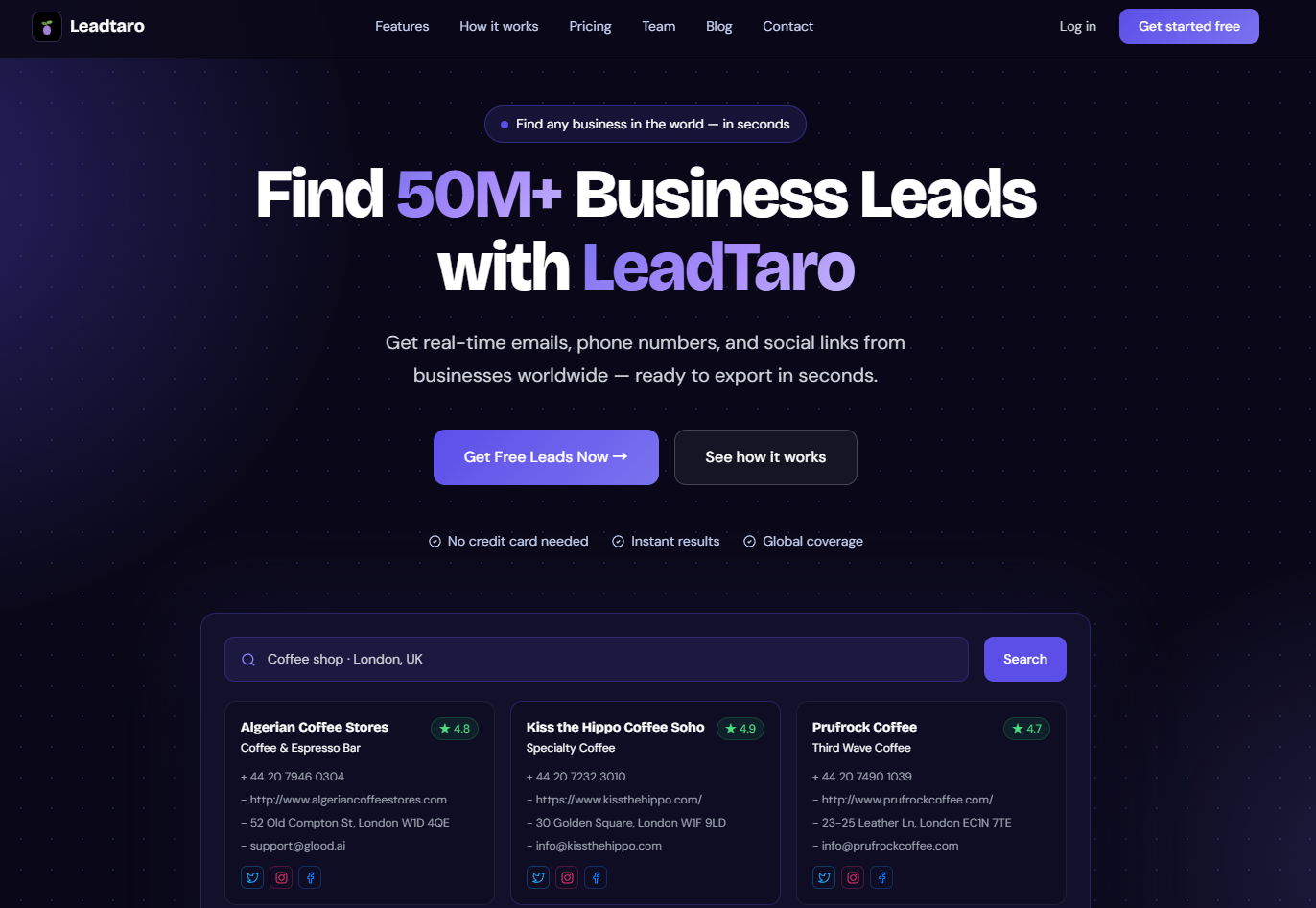
Search and filter business leads with LeadTaro.
Your ICP answers: which businesses should we target? Your buyer persona answers: who inside those businesses should we talk to, and what do they care about?
Get the first part wrong and you waste time contacting companies that are unlikely to buy. Get the second part wrong and you can reach the right company with the wrong message. This guide explains the difference between an ICP and a buyer persona, how to build both, and how to turn your ICP into an actual B2B prospect list you can manage and contact.
ICP vs Buyer Persona: The Short Answer
Think of your ICP as the container and your buyer persona as the person inside the container.
| Attribute | Ideal Customer Profile | Buyer Persona |
|---|---|---|
| Describes | A company | A person |
| Focus | Company characteristics | Individual characteristics |
| Data | Industry, location, size, business type | Role, goals, pain points, objections |
| Main question | Who should we target? | Who should we contact? |
| Used for | Lead generation and targeting | Messaging and outreach |
| Example | Marketing agencies with 10–50 employees | Agency owner responsible for acquiring clients |
ICP: UK-based digital marketing agencies with 5–50 employees that actively serve local businesses.
Buyer persona: Founder or agency owner responsible for sales and client acquisition.
The ICP tells you which companies belong on your prospecting list. The buyer persona tells you who you want to reach within those companies.
What Is an Ideal Customer Profile (ICP)?
An ideal customer profile is a description of the type of company most likely to benefit from your product or service. It's primarily used in B2B sales, lead generation, account-based marketing, and customer acquisition.
A good ICP isn't simply "companies that might need our product" — that's too broad. Instead, it describes the characteristics that make a business particularly relevant to your offer:
- Industry & business category
- Company size & revenue range
- Location & geographic coverage
- Business model & existing technology
- Online presence & website
- Buying triggers & growth stage
- Specific problems your product solves
ICP example for a B2B SaaS company
Imagine a SaaS platform that helps businesses manage sales outreach:
| Industry | Marketing agencies |
| Location | UK, US, Canada |
| Business size | 5–50 employees |
| Sales activity | High |
| Primary problem | Finding and contacting new prospects |
| Potential trigger | Hiring sales staff or expanding into new markets |
Now there's a set of criteria that can be turned into an actual prospecting workflow instead of searching randomly for companies.
What Is a Buyer Persona?
A buyer persona describes the individual person you're trying to reach within your target company. While an ICP focuses on the organization, a buyer persona focuses on the human — commonly including:
- Job title & responsibilities
- Goals & KPIs
- Pain points & objections
- Buying motivations & budget considerations
- Preferred communication channels
- Decision-making authority
| Role | Founder / Owner |
| Company | Digital marketing agency |
| Goal | Generate more clients |
| Pain point | Sales prospecting takes too much time |
| Objection | "We already have a lead source." |
| Motivation | More qualified prospects without hiring another salesperson |
| Preferred channel | Email and LinkedIn |
Now outreach can speak directly to the person you're trying to reach — a message built around "finding new local-business prospects manually is taking hours every week" lands very differently than "our platform helps businesses improve sales."
The Key Differences
The biggest difference between an ICP and a buyer persona is company vs person.
Firmographics vs psychographics
- Industry
- Location
- Employee count
- Revenue
- Business category
- Company size
- Goals
- Concerns
- Motivations
- Responsibilities
- Objections
- Buying behavior
You need both. Firmographics help you find the right businesses; persona research helps you communicate with the right people.
Why You Need Both an ICP and a Buyer Persona
An ICP and buyer persona aren't competing frameworks — they solve different parts of the same problem. Your ICP might say "target marketing agencies with 5–50 employees," but that alone doesn't tell you who to contact or what to say.
- Without an ICP: you might contact thousands of people who fit your persona but work for companies that aren’t good customers.
- Without a buyer persona: you might find hundreds of perfect companies but send the same generic message to everyone.
- With both: you can define right company → right person → right message.
Which Comes First: ICP or Buyer Persona?
In most B2B prospecting workflows, start with the ICP — first understand which companies are worth targeting, then determine which people inside those companies are worth contacting.
This creates a repeatable process instead of relying on random prospecting.
How to Build an ICP From Real Business Data
Don't begin with assumptions — start with evidence.
1. Look at your best customers
Identify the ones who spend the most, stay the longest, convert quickly, need less support, purchase additional products, or generate referrals. Then look for patterns — one industry, one location, one company-size range.
2. Identify common characteristics
For example: local marketing agencies, 5–30 employees, UK-based, actively acquiring clients, working with multiple small businesses. That's a far stronger ICP than "B2B companies."
3. Add negative criteria
A good ICP also defines who not to target — e.g. don't target companies with fewer than 2 employees, or businesses outside the countries you serve. Negative criteria can save as much prospecting time as positive criteria.
4. Turn your ICP into search criteria
This is where an ICP becomes operational — "find marketing agencies in London with websites," or "find dentists in Manchester with 50+ reviews and websites." Now it's a prospecting query, not a theoretical description.
A screenshot of a location + category search fits well here
How to Build a Buyer Persona From Real Data
A common mistake is creating a fictional persona with a name, age, and favorite podcast — details that don't necessarily help you sell. Focus on information that changes your messaging.
Talk to existing customers
Ask why they bought, what problem they were solving, what alternatives they considered, what almost stopped them, who else was involved, and what result they wanted.
Analyze sales conversations
Look for recurring phrases. "We don't have time to find leads" is a useful pain point. "We already use another database" is a potential objection.
Analyze your existing customers
Look at job titles, company sizes, industries, acquisition channels, sales cycle, and common objections — the actual buyer may be different from who you originally expected.
Turning Your ICP Into a Real Lead List
Defining "our ICP is independent restaurants in London" is useful — but you still need the actual restaurants. That's where a lead-generation platform like LeadTaro fits into the workflow: search for businesses by industry and location, review available lead information, save relevant leads, and keep working with those prospects inside your sales process.
LeadTaro can also use lead-specific variables in outreach, such as [companyname], [reviews], [rating], [location], [category], [address], and [website] — inserted automatically for each lead instead of researching every company by hand.
A screenshot of the CRM pipeline / kanban board fits well here
ICP, Buyer Persona, and Lead Qualification
Think of B2B targeting as three layers, each removing uncertainty:
4 ICP and Buyer Persona Mistakes to Avoid
Even experienced B2B teams make these mistakes.
You create the perfect buyer persona but never define which companies they should work for. The result is contacting lots of people who look right on paper but work for businesses that aren’t good prospects.
"Small businesses" isn’t an ICP — there are millions of small businesses with completely different needs. "Independent dental clinics in a specific region with an established website and active customer reviews" is something a sales team can actually search for.
Adding "Hi Sarah" doesn’t automatically make an email personalized. Real personalization connects your message to something relevant about the prospect — business type, location, website, reviews, company size, or a specific problem.
Your best customers change, your market changes, and your product changes — so an ICP written once and left alone drifts out of date.
Frequently Asked Questions
ICP vs Buyer Persona Isn't an Either-Or Decision
Your ICP defines the right companies. Your buyer persona defines the right people. Your lead-generation workflow turns those definitions into real prospects — and your outreach turns those prospects into conversations.
The most important part isn't creating the perfect one-page ICP document — it's being able to turn that ICP into a real, usable sales pipeline. That's where LeadTaro fits: find local companies, save and organize prospects, manage them through a CRM pipeline, and launch personalized outreach from the same workflow.
Define your ideal customer. Find the businesses that match.
Turn your ICP into an actual sales pipeline — search, save, and reach out to your next customers, all inside one workflow.
Leads Generator
Target businesses you won't find on LinkedInExtract leads from Google Maps, Apple Maps and Bing Maps
Restaurant in your area